The musical Newsies appears, at first glance, to be a lively underdog story about children striking against powerful newspaper publishers in turn‑of‑the‑century New York. Beneath its choreography and optimism, however, lies a deeply political narrative about labor, media control, and the manipulation of public truth. It portrays a world where institutions dictate narratives, exploit the vulnerable, and rely on silence to maintain authority — yet insists that ordinary people can disrupt systems that seem untouchable.
In an era dominated by debates over “fake news,” media bias, and populist rebellion, Newsies feels unexpectedly contemporary. Its conflict is not merely economic; it’s about who controls public understanding. Joseph Pulitzer, the magnate who raises the price of newspapers for child sellers, manipulates information as much as labor. The newsies, poor and voiceless, become challengers to a media empire that assumes they have no political significance. Their rebellion becomes symbolic of broader struggles that persist today.
The Story Beneath the Spectacle
Adapted from the 1992 Disney film and inspired by the real Newsboys Strike of 1899, the musical centers on Jack Kelly, a teenage newsboy dreaming of escape to Santa Fe — a fantasy of freedom from urban capitalism. When Pulitzer raises newspaper prices, transferring risk onto impoverished children, Jack organizes a strike. The newsies refuse to sell papers, facing police violence, propaganda, and betrayal. Katherine Plumber, a young reporter, joins their cause and uses journalism to expose corruption.
Their victory is modest but meaningful: they secure fairer treatment and prove that solidarity can challenge power. Beneath the triumphant ending lies a serious political framework — a meditation on class conflict and the unequal distribution of power.
Media, Truth, and Control
Pulitzer embodies concentrated authority: wealthy, connected, and able to shape public perception through his newspapers. This dynamic parallels modern concerns about media monopolies. Today, a handful of corporations control vast portions of global information flow. Public understanding often bends to institutional interests rather than objective truth.
The phrase “fake news” has become both critique and weapon. Originally describing fabricated stories, it now signals distrust toward media itself. Newsies anticipates this tension. Pulitzer’s papers suppress sympathetic coverage of the strike because truth threatens profit. Journalism becomes a battleground where narratives are manipulated to maintain control.
Modern media ecosystems amplify this problem through algorithms that reward outrage and speed over accuracy. The result is a fragmented public sphere where shared truth erodes. Newsies mirrors this earlier stage of struggle: if newspapers refuse to tell the truth, the public never sees exploitation. The strike thus becomes a fight for visibility — a theme that resonates powerfully in the age of social media activism.
Katherine’s character embodies journalism’s ethical potential. Her decision to report honestly demonstrates that truth depends on individual courage within corrupt systems. The musical’s nuance — neither condemning nor sanctifying journalism — mirrors today’s debates about media responsibility and bias.
Labor and Exploitation
Child labor in Newsies is not incidental cruelty but structural exploitation. Pulitzer justifies his actions through market logic: profit over welfare. This reasoning echoes modern capitalism’s defense of inequality. Debates over minimum wage, unionization, and gig‑economy labor all hinge on similar questions of justice versus efficiency.
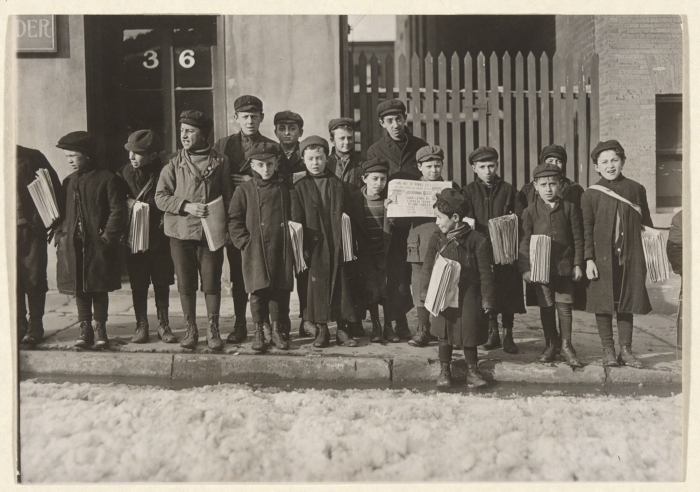
The newsies’ strike reveals how economic systems rely on the compliance of workers deemed disposable. When they collectively withdraw labor, they expose the fragility of power built on inequality. That insight remains potent today, as teachers, healthcare workers, and delivery drivers organize against corporate giants.
Public sympathy becomes a crucial battleground. Like the newsies, modern workers must convince society that their grievances are legitimate. The musical’s emotional core — songs like “Seize the Day” — transforms political struggle into communal identity. Art becomes activism, reminding audiences that rebellion is sustained by imagination as much as logic.
Rebellion and Representation
Newsies belongs to a long tradition of stories about collective action. Jack Kelly’s evolution from escapist dreamer to organizer reflects the shift from individualism to solidarity. Modern culture often celebrates personal success, yet systemic problems — inequality, racism, environmental collapse — demand collective solutions.
The musical challenges the myth of powerlessness. The newsies win not because they overpower Pulitzer, but because they act together. Their strike disrupts the newspaper industry and forces compromise. This message remains vital in an age of cynicism and institutional distrust.
Still, Newsies doesn’t romanticize rebellion. Fear, division, and sacrifice accompany the strike. Jack nearly abandons the cause under pressure — a reminder that activism is rarely clean or easy. Modern movements face similar obstacles: surveillance, propaganda, and burnout. Maintaining solidarity under such conditions is the hardest victory of all.
Criminalizing Dissent
Pulitzer frames the newsies as criminals, and police violence reinforces that narrative. This dynamic persists whenever protest is portrayed as disorder rather than justice. Labor strikes and racial‑justice demonstrations are often condemned for disruption while their causes are ignored.
Whoever controls information controls legitimacy. If protesters are depicted as irrational or violent, their demands can be dismissed. Newsies asks whether truth is determined by reality or by whoever owns the loudest platform. The newsies counter Pulitzer’s narrative through spectacle — rallies, songs, and public visibility. They force society to confront truths the newspapers suppress.
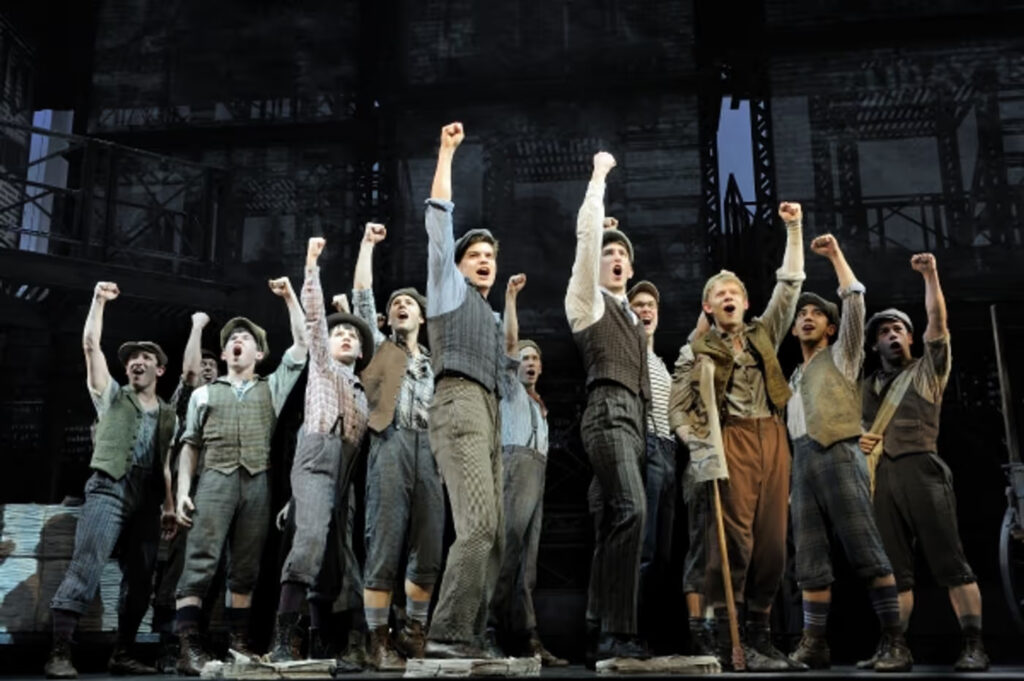
Social media now plays a similar role. It allows marginalized voices to bypass gatekeepers, fueling movements like #MeToo and Black Lives Matter. Yet it also spreads misinformation and outrage. Newsies foresaw this duality: information is both weapon and liberation, depending on who wields it.
Youth and Moral Force
One of the musical’s most striking dimensions is generational politics. The newsies are children challenging adult authority — vulnerable yet symbolically powerful. Youth activism has always carried moral weight, exposing the failures of older generations.
Modern young activists confront climate change, economic precarity, gun violence, and racial injustice. Like the newsies, they are often dismissed as naive. Yet their movements reveal how adult complacency endangers the future. The spectacle of exploited children in Newsies mirrors the moral urgency of youth climate strikes today.

Jack’s dream of Santa Fe represents escapism — the desire to flee corruption. His eventual realization that change requires engagement, not withdrawal, captures a universal truth: disengagement sustains injustice. Pulitzer’s power depends on public passivity. Only collective resistance disrupts it.
In democratic societies, apathy weakens civic life. When citizens retreat from politics, concentrated power grows unchecked. Newsies argues that hope must translate into action — a message as relevant now as in 1899.
Performance as Politics
The newsies understand that rebellion must be seen to matter. They turn protest into performance — rallies, songs, and choreography that demand attention. Modern activism operates similarly: protests are designed for visibility, slogans for virality. In digital culture, attention itself becomes power.
Newsies reminds us that this logic predates the internet. Public opinion has always been shaped by narrative and spectacle. The musical’s synchronized dance sequences symbolize solidarity — bodies moving together as political metaphor. Audiences experience rebellion viscerally, not abstractly.
This emotional immediacy explains the show’s enduring appeal. It transforms political theory into human experience — fear, hope, friendship, courage. Through art, resistance becomes tangible.
Power and Justification
Pulitzer is not a caricature of evil. He sees himself as rational, protecting business stability. His logic mirrors how institutions justify exploitation through appeals to order and pragmatism. Modern leaders use similar rhetoric: corporations warn that reform harms markets; governments defend surveillance for “security.”
Newsies challenges this reasoning by asserting that stability built on injustice is unsustainable. Rebellion becomes necessary when institutions refuse reform. Yet the musical advocates democratic activism, not violent revolution. The newsies seek fairness, not domination — inclusion rather than destruction.
This distinction matters in a polarized world where dissent and extremism blur. Newsies models constructive resistance: accountability through collective voice.
Memory and Myth
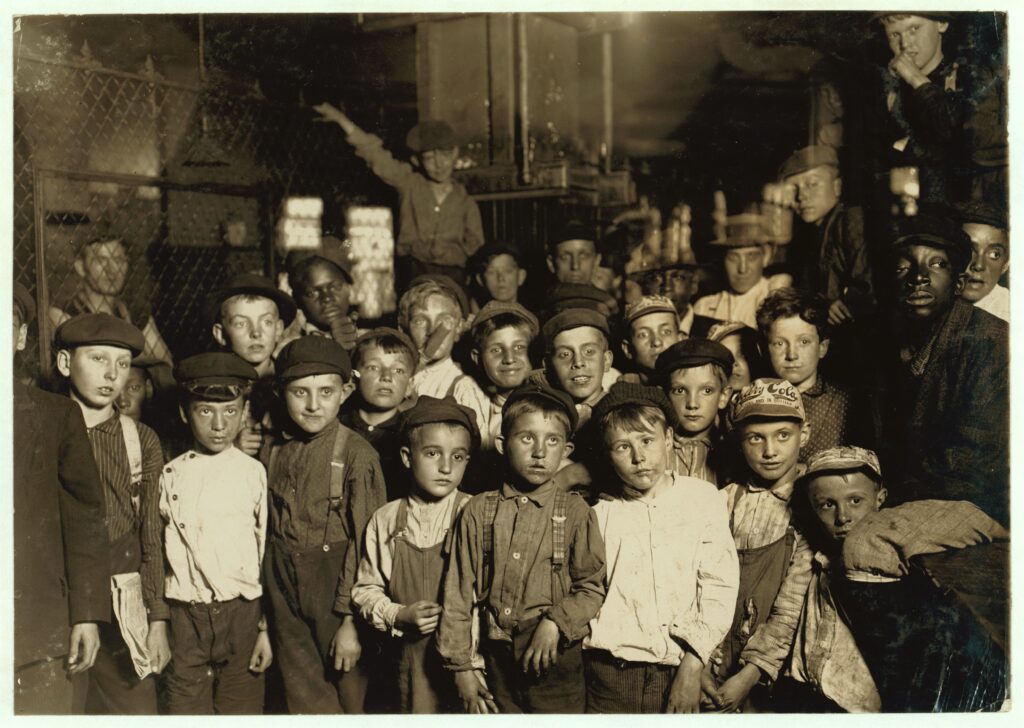
The real Newsboys Strike of 1899 achieved only partial success, yet its adaptation into a Disney musical mythologizes it as triumph. This transformation raises questions about how societies remember struggle. Popular culture often preserves stories that emphasize courage and clarity, even when history is messier.
By retelling the strike, Newsies reintroduces forgotten labor history to modern audiences. It reflects contemporary concerns — youth empowerment, media ethics, democratic participation — as much as nineteenth‑century politics.
Mythmaking can simplify reality, but it also sustains hope. In times of distrust, stories like Newsies remind us that ordinary people can challenge entrenched power. Its optimism is not naïve; it’s necessary.
The Politics of Hope
Modern politics is defined by skepticism. Citizens question governments, corporations, and media alike. Some of this distrust is justified; some is fueled by misinformation. Newsies offers a middle path — skepticism without nihilism. It encourages accountability, not cynicism.
The musical’s rebellion is ethically grounded. The newsies are exploited children demanding fairness, not conspiracists rejecting truth. Their movement seeks justice within democracy, not its destruction.
This distinction is crucial today, when “anti‑establishment” rhetoric can veer toward extremism. Newsies reminds us that rebellion must serve truth, not erode it.

Newsies Charm Bracelet
This Broadway-inspired bracelet is a subtle way to carry a little piece of the strike with you wherever you go. It captures that scrappy, determined energy of “Seize the Day” in a wearable form—clean, minimal, and easy to style without feeling like costume merch.
The stainless steel design keeps it durable and everyday-friendly, while still feeling meaningful enough for theater nights, cast meetups, or rewatch marathons of your favorite production. It’s the kind of accessory that quietly says you’re part of the newsie crew without needing to shout it.
Perfect as a gift for fellow Newsies lovers or as a personal reminder of grit, hope, and found-family energy from the show.
Headlines Don’t Sell Papers Newsies Sell Papers T-Shirt
While there are plenty of Newsies shirts out there, what makes this one stand out is the bold color scheme that absolutely pops against the black fabric. The design doesn’t get lost or fade into the background—it hits your eye immediately, which fits perfectly with the loud, energetic spirit of the show.
Featuring the iconic “Headlines don’t sell papes, Newsies sell papes” line, it’s a direct nod to one of the most recognizable moments in the musical. It’s the kind of shirt that reads instantly to fellow fans, making it both a statement piece and a conversation starter.
Perfect for theatre kids, Broadway fans, or anyone building a Newsies-centric wardrobe that actually feels intentional rather than generic merch.
Newsies Poster Broadway Musical Promo 11 x 17 inches
If there’s one image that captures Newsies, it’s this: fists in the air, backs straight, united against the odds. This Broadway musical poster is pure strike-era energy—bold, defiant, and instantly recognizable to any fan of the show.
It’s the kind of wall art that doesn’t just decorate a space, it sets a tone. Perfect for dorm rooms, theatre kid bedrooms, rehearsal spaces, or anywhere you want a constant reminder of grit, teamwork, and standing up for what’s right.
Simple, iconic, and unmistakably Newsies—this is the poster that says you know exactly what story you’re living in.