There is a particular expression people make when you tell them you play tabletop role‑playing games, or TTRPGs as they are called by most gamers. It’s a blend of polite confusion and the faint suspicion that you spend your weekends wearing a wizard hat in a basement. Even in 2026, even with Critical Role, Dimension 20, and an entire industry of actual‑play shows, there is still this lingering idea that TTRPGs are niche, frivolous, or somehow less legitimate than other hobbies. People will nod kindly, the way they do when someone mentions stamp collecting or competitive yodeling, and then change the subject.
But here’s the secret. Tabletop role‑playing games are not just a hobby. They are a stealth training program for real life. They are a gym for your brain, a social dojo, a creativity greenhouse, and occasionally a math class disguised as a dragon fight. They are one of the few activities where you can practice problem solving, diplomacy, teamwork, emotional resilience, and basic arithmetic while pretending to be a cyberpunk elf with a questionable moral compass.
This is not an exaggeration. It is lived experience. And it is absolutely worth talking about.
The Myth of the Basement Wizard
The stereotype of TTRPGs as a fringe pastime is surprisingly persistent. People imagine a group of socially awkward players huddled around a table, rolling dice and arguing about rules while eating chips straight from the bag. They picture Dungeons and Dragons as the only game in existence, and assume every session involves a dungeon, a dragon, and at least one person named Throg.
In reality, the TTRPG world is enormous. It contains neon‑soaked cyberpunk heists in Shadowrun, gothic political intrigue in Vampire: The Masquerade, cosmic horror investigations in Call of Cthulhu, and magical girl adventures in the Sailor Moon RPG. It includes the universal toolkit of GURPS, the spacefaring chaos of Starfinder, the heroic fantasy of Pathfinder, the mythic simplicity of Dragonbane, the pulpy grit of Savage Worlds, the weird west of Deadlands, the narrative flexibility of Genesys, and even the tower‑toppling tension of Dread.
These games are not fringe. They are vibrant, varied, and wildly creative. And they quietly teach you more than you expect.
The Math You Don’t Realize You’re Doing In TTRPGs
Let’s start with the most surprising skill. TTRPGs make you better at math. Not the kind of math that requires a graphing calculator or a traumatic flashback to high school algebra. This is the math of quick addition, probability, resource management, and the occasional desperate calculation of whether you can survive one more round of combat.
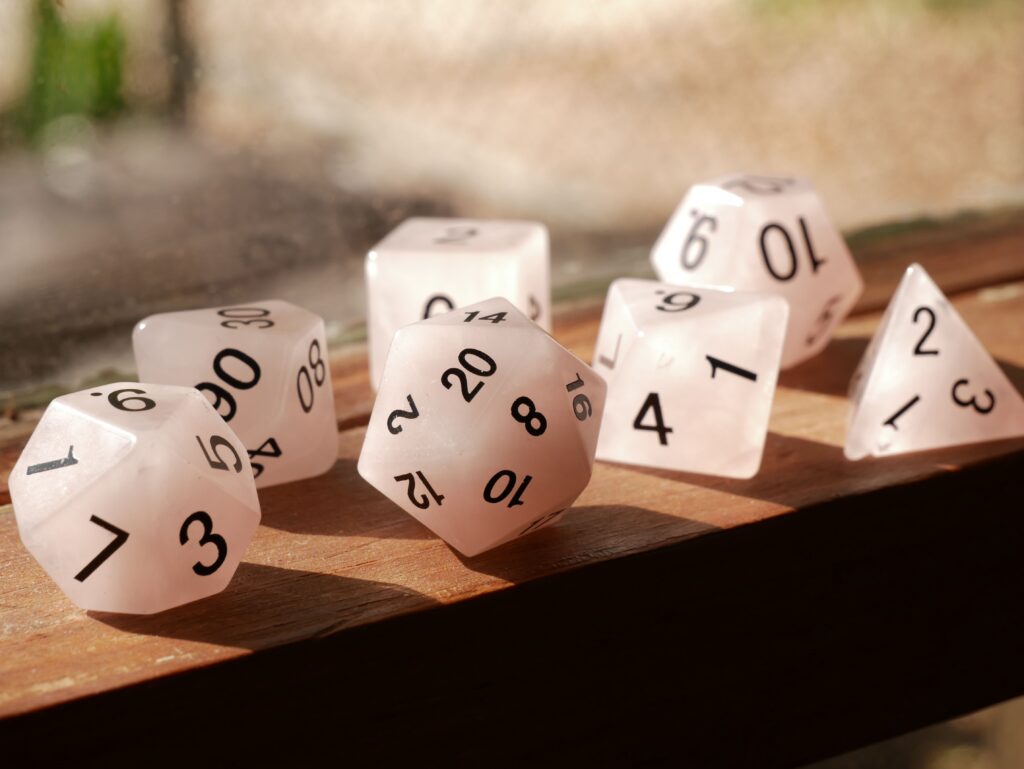
You learn to add modifiers, track hit points, calculate damage, and estimate odds. You learn to budget spell slots, ammunition, stamina, and sanity points depending on the system. You learn to weigh risk against reward, which is basically the same skill you need when deciding whether to buy groceries or order takeout again.
The best part is that you never notice you’re doing it. You’re too busy trying to convince a suspicious guard that you are absolutely not smuggling cursed artifacts in your backpack.
TTRPGs Encourage Teamwork Without the Corporate Icebreaker
TTRPGs are one of the few activities where teamwork feels natural instead of forced. There are no awkward trust falls, no mandatory group projects, no corporate workshops where someone says synergy with a straight face. Instead, you and your friends are thrown into a fictional situation where cooperation is the only path to survival.
You learn to listen, to compromise, to share spotlight, and to support each other’s ideas. You learn to coordinate strategies, negotiate plans, and adapt when everything goes sideways. You learn that the rogue’s impulsive decisions will cause chaos, the cleric’s healing is a blessing, and the bard’s questionable flirting may or may not save the day.
This is teamwork in its purest form. It is collaborative problem solving wrapped in storytelling. And it is far more effective than any corporate retreat.
Communication That Doesn’t Feel Like Homework
Communication is one of those skills everyone claims to value, but few people enjoy practicing. TTRPGs sneak it in through the back door. You communicate constantly, but it never feels like a chore. You describe actions, negotiate plans, express emotions, and advocate for your character’s goals. You learn to read the room, interpret tone, and respond thoughtfully.
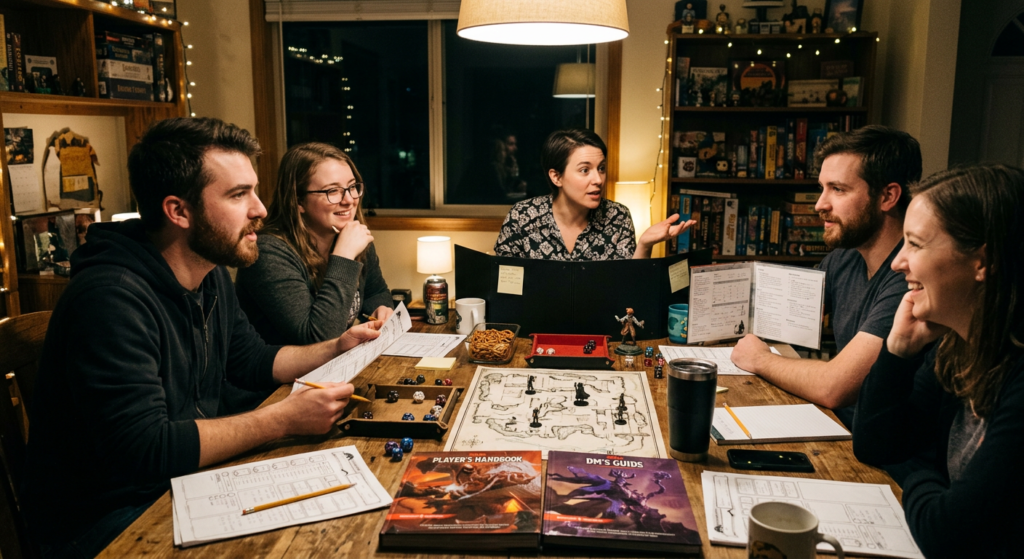
Games like Vampire: The Masquerade and Deadlands thrive on social maneuvering. Call of Cthulhu demands careful questioning and investigative dialogue. Genesys encourages narrative expression. Even the Sailor Moon RPG teaches emotional clarity and supportive communication, because magical girl teams run on friendship as much as combat.
You become better at expressing yourself because the story depends on it. And you get to do it while pretending to be a supernatural creature with impeccable fashion sense.
Diplomacy, Negotiation, and the Art of Not Starting a Fight
One of the most underrated aspects of TTRPGs is diplomacy. Not every problem can be solved with violence, especially in systems where combat is dangerous, costly, or morally complicated. Shadowrun punishes reckless decisions. Call of Cthulhu punishes everything. Vampire: The Masquerade practically requires political finesse to avoid being devoured by someone with better connections.
You learn to negotiate, persuade, bargain, and compromise. You learn to de‑escalate conflict, propose alternatives, and think creatively about solutions. You learn that sometimes the best move is not a sword swing, but a well‑timed conversation.
These are skills you use constantly in real life. Whether you’re navigating workplace tension, resolving a misunderstanding, or convincing your landlord that yes, the plumbing really is broken again, diplomacy matters.
TTRPGs Teach Strategic Thinking Without the Stress of Real Consequences
TTRPGs are strategy playgrounds. You plan heists in Shadowrun, coordinate battles in Pathfinder, investigate mysteries in Call of Cthulhu, and improvise survival tactics in Dragonbane. You learn to anticipate outcomes, evaluate risks, and adapt when your plan inevitably collapses because someone rolled a natural one.
This kind of strategic thinking is invaluable. It teaches you to approach problems from multiple angles, consider long‑term consequences, and stay flexible when the unexpected happens. It also teaches you that even the best plan can be undone by a single unlucky dice roll, which is a surprisingly accurate metaphor for adulthood.
Emotional Resilience and the Power of Failing Safely
Failure is a core part of TTRPGs. You will miss attacks, botch skill checks, misjudge situations, and occasionally make decisions so catastrophically bad that the entire table stares at you in stunned silence before pelting you with dice or rule books. But failure in a game is safe. It is temporary. It is often hilarious. And it teaches you how to handle setbacks without spiraling.
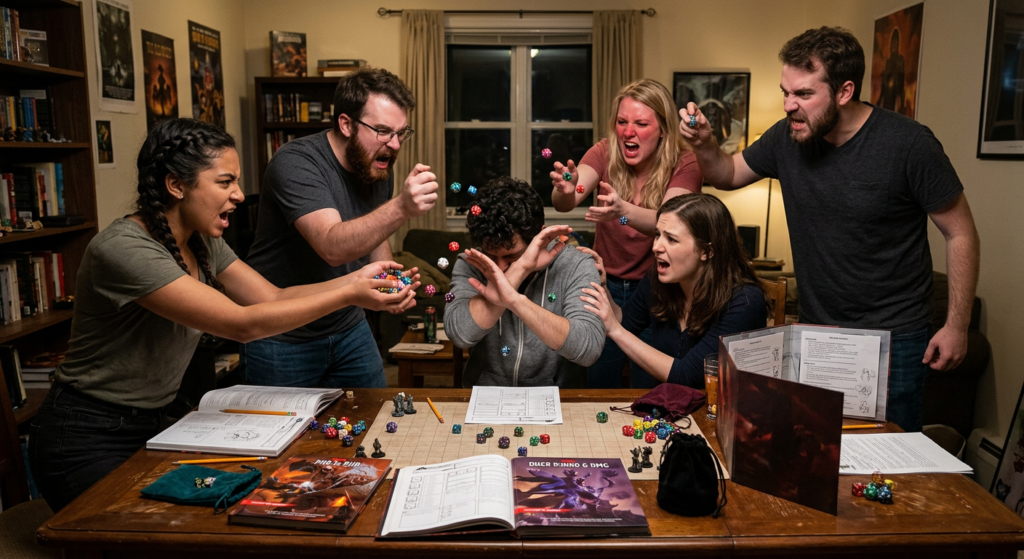
You learn to laugh at mistakes, recover quickly, and try again. You learn that failure is not the end of the story, but a plot twist. You learn that resilience is built through practice, not perfection.
This is one of the most valuable skills TTRPGs offer. Life is full of unexpected failures. Games teach you how to face them with humor, creativity, and grace.
Stress Relief and Self Care Using TTRPGs
There is something profoundly soothing about sitting around a table with friends, rolling dice, and pretending to be someone else for a few hours. TTRPGs offer escapism, but not the passive kind. You are actively shaping the story, making choices, and engaging your imagination. It is a mental reset button disguised as entertainment.
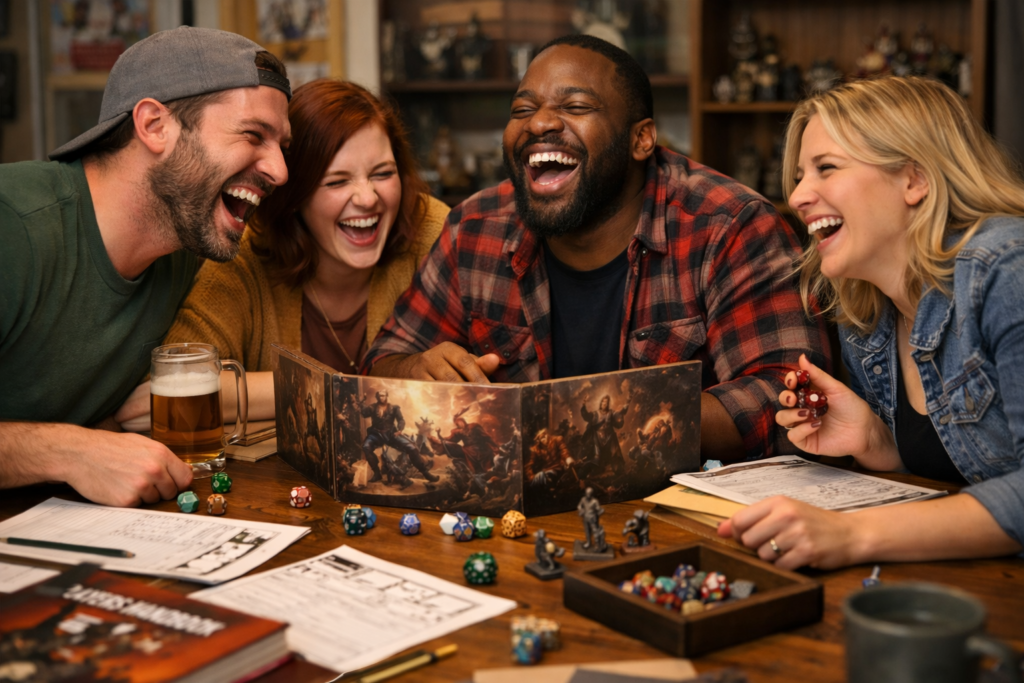
The collaborative nature of TTRPGs also creates a sense of community. You laugh together, solve problems together, and share emotional moments together. It is social bonding wrapped in fantasy, and it is remarkably effective at reducing stress.
Even horror games like Dread or Call of Cthulhu provide catharsis. You face fictional fear in a controlled environment, which can make real‑world stress feel more manageable.
Creative Collaboration That Feels Like Play
TTRPGs are one of the few hobbies where creativity is shared. You are not creating alone. You are building a story with others, weaving ideas together, and discovering unexpected moments that none of you could have planned individually.
Games like Genesys and Savage Worlds thrive on collaborative storytelling. GURPS encourages worldbuilding. Deadlands mixes genres in ways that spark imagination. Even traditional fantasy systems like Pathfinder and Dragonbane offer endless opportunities for creative expression.
This kind of collaboration teaches flexibility, openness, and trust and adaptation. It teaches you to support others’ ideas, contribute meaningfully, and embrace the unpredictable nature of shared creativity.
These are skills used in writing, art, theater, design, leadership, and any job that requires working with other humans. And they are learned through play.
Why TTRPGs Are Not Just a Hobby
When you look at all these skills together, the stereotype of TTRPGs as frivolous falls apart. These games teach problem solving, math, teamwork, communication, diplomacy, strategy, resilience, stress management, and creative collaboration. They teach social skills, emotional intelligence, and adaptability. They teach you how to think, how to listen, how to imagine, and how to connect.
They are not niche. They are not trivial. They are one of the most accessible, flexible, and rewarding forms of interactive storytelling available today.
You do not need to be a fantasy expert, a rules lawyer, or a dice goblin to enjoy them. You do not need to know the difference between a d8 and a d12. You do not need to memorize lore or master strategy. You only need curiosity, a willingness to play, and maybe a snack to share with the table.
TTRPGs are for everyone. They are for the shy, the bold, the anxious, the creative, the analytical, the chaotic, and the curious. They are for people who want to explore new worlds, try new ideas, and build stories with friends. They are for anyone who wants to grow, learn, laugh, and occasionally fight a gelatinous cube.
Rolling for Wisdom in Real Life
The beauty of TTRPGs is that the skills you develop at the table follow you into the real world. You become better at solving problems, communicating clearly, working with others, and navigating complex situations. You become more resilient, more strategic, and more creative. You learn to approach life with curiosity, humor, and flexibility.
And you get to do all of this while pretending to be a vampire detective, a spacefaring engineer, a magical girl, a cowboy necromancer, or a dragon‑blessed warrior.
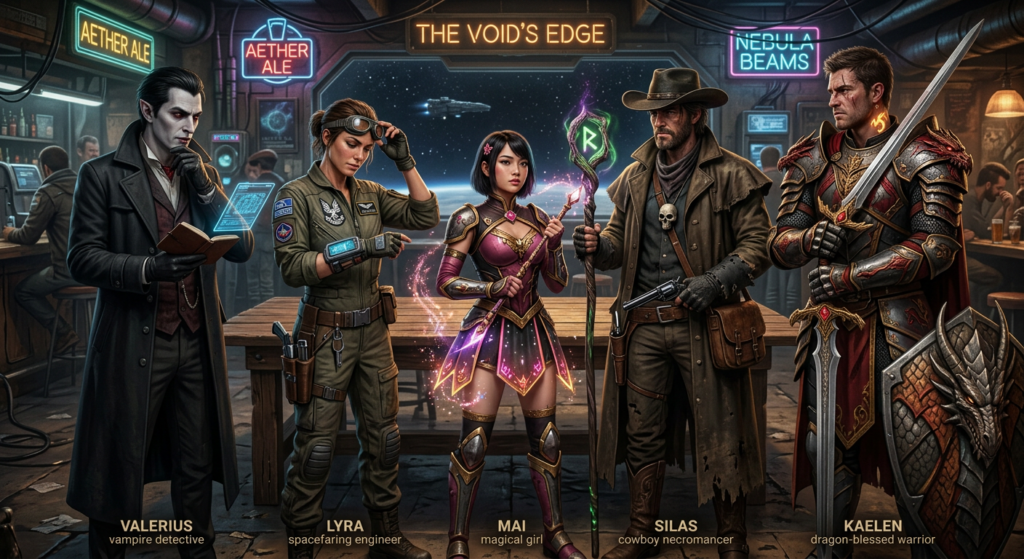
If that isn’t the best self‑improvement program ever invented, I don’t know what is.
So the next time someone raises an eyebrow when you mention your weekly game night, feel free to smile knowingly. You’re not just playing. You’re leveling up in real life.
*****
Supporting Autumnelf on Ko‑Fi helps fuel new essays, book projects, ocean‑life explorations, theatrical deep dives, and the creative quests that make Phantom Orca Quest a vibrant, multimedia experience.
Get Me a Spark of Magic

Great content! Keep up the good work!
Thank you so much!