(Some of the links in this seashell post are affiliate links, which means I may earn a small commission—at no extra cost to you—if you choose to make a purchase. As an Amazon Associate, I earn from qualifying purchases. I only share items I genuinely believe support reflection, healing, or creative engagement. Your support helps sustain this blog and the advocacy work behind it. Thank you for being here.)
The Secret Life of a Seashell: Not Just a Pretty Face
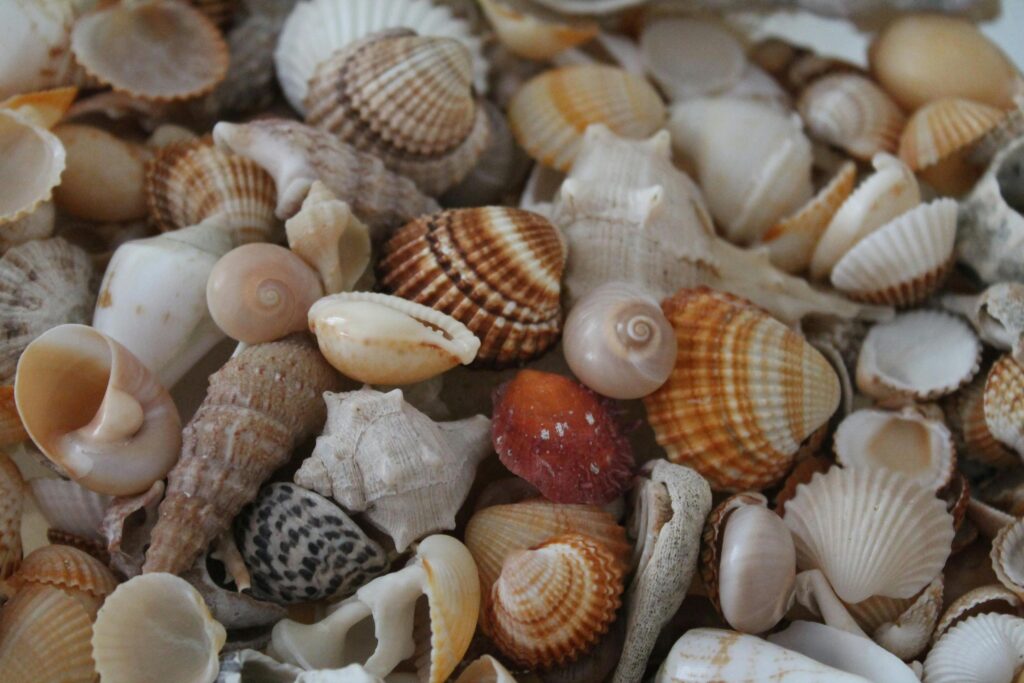
Take a stroll along any beach, and chances are your eyes will be drawn to the glint of sunlight bouncing off the intricate spirals, elegant fans, and mesmerizing colors of seashells in the sand. It’s easy to forget that these captivating objects were not manufactured by the sea for our collecting pleasure, but were carefully crafted homes―and sometimes armor or works of art―grown by the humble mollusks that once called them home. Each shell tells the story of the living creature within: its biology, evolution, survival, and parting gift to beachcombers and the ecosystems it leaves behind.
But the story of seashells is bigger, and quirkier, than most imagine. These “mobile homes” once crawled, burrowed, jetted, or grazed their way through ocean and land as part of a highly diverse animal lineage. They’ve shaped economies, inspired artists, launched scientific obsessions, and even featured in secret spy plots. In this cranial beachcombing tour, we’ll dig deep (sometimes literally) into mollusk biology, the magic of shell-building, the riotous variety of shell forms, and the rollicking journey shells take from living creature to sandy relic. Along the way, expect tales of centuries-old shell money, underwater fashion statements, the drama of shell collecting, and how seashells help entire ecosystems flourish.
Meet the Mollusks: The Original Seashell Architects
To appreciate seashells, we must first meet the mollusks, those genius shell-builders of the animal kingdom. Mollusks (from the Latin “mollis,” meaning “soft”) are an enormous group of invertebrates that include creatures as varied as garden snails, shimmering clams, and the brainy octopus. Uniting over 85,000 recognized species (and likely many more waiting for discovery), they are the second most diverse animal phylum after arthropods, dominating marine environments but making surprising appearances in freshwater and even terrestrial habitats.
Mollusk Body Plan: An Expert in Soft Living
Despite their incredible diversity, mollusks share a basic body plan—a masterclass in evolutionary problem solving:
- Head-Foot Region: The “moving and sensing” department. It can be shaped into tentacles (in cephalopods), a burrowing foot (in clams), or a crawling organ (in snails).
- Visceral Mass: The “central office” for digestion, reproduction, and circulation.
- Mantle: This soft tissue “cloak” is the superstar of the show, as it secretes the shell and forms the mantle cavity that manages breathing, excreting, and reproduction.
Mollusks may appear as nothing more than slow-moving blobs to the uninitiated, yet their ingenuity is evident in everything from the engineering of their shells to their ecological and evolutionary success.
The Marvelous Mantle
If shells are the architectural wonders of the coastline, the mantle is the ceaseless architect. Nestled under the shell (when present) and enveloping the mollusk body, the mantle is responsible for secreting calcium carbonate—and lays down the intricate layers, patterns, and pigments that transform this mineral into a work of natural art.
But the mantle isn’t just a shell factory. It forms a cavity (the mantle cavity) used for drawing in water (for respiration, feeding, and reproduction) and, in some species, powers jet propulsion (hello, speedy squids). This versatility is critical to the mollusk way of life.
The Radula: Nature’s Sandpaper
Most mollusks are equipped with another curious organ: the radula. This “conveyor belt of teeth” is used for scraping up algae (in snails), drilling holes (in some predatory mollusks), and occasionally acts as a miniature circular saw. Only bivalves, like oysters and clams, lack this—it would seem rude for a filter feeder to show its teeth while dining.
Building a Seashell: The Alchemy of Biomineralization
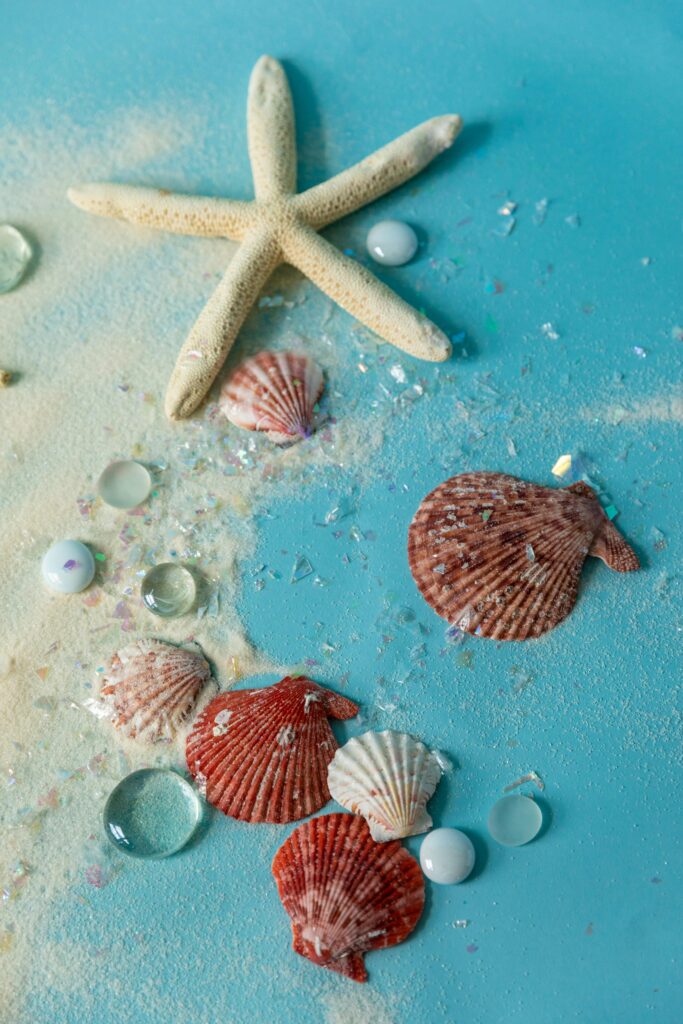
Shells aren’t just “grown” in the carefree manner of fingernails. In marine biology, the process of constructing a shell is known as biomineralization—the exquisite, regulated conversion of seawater ions into durable homes and tools.
Raw Materials and Precise Craftsmanship of Seashells
Calcium carbonate is the dominant ingredient in seashells, typically accounting for >95% of shell mass, assembled in either the aragonite or calcite crystalline forms. The exact mixture and microstructure is tailored by genetic blueprints and environmental cues.
But the recipe is more nuanced:
- Organic Matrix (~1–5%): Polysaccharides, proteins, and chitin lay the scaffolding for mineral deposition, guiding both form and function.
- Proteins: Special shell proteins (known as SMPs, or shell matrix proteins) determine where and how crystals grow, sometimes promoting, sometimes inhibiting, and sometimes gluing the whole thing together.
The process is a marvel of biochemistry; the mantle’s edge contains specialized folds dedicated to muscle movement, sensory detection, and—the all-important—shell secretion.
From Seawater to Seashell: Chemical Wizardry
Here’s a bite-sized recipe for seashell construction:
- Calcium Ions (Ca²⁺): Extracted from seawater and actively transported into the extrapallial space (the narrow gap between mantle and shell).
- Bicarbonate Ions (HCO₃⁻): Similarly sourced from the environment.
- Precipitation: Under the orchestration of proteins, these ions react to form calcium carbonate crystals, which are arranged into shell layers (prismatic, nacreous, and so on) with a touch of organic “glue” and control.
Why is this such a big deal? Because they’re essentially “hacking” their environment, using genes and microscopic teamwork to build ornate shelters in a watery world where minerals ought to stay dissolved.
The Layer Cake: Seashell Microstructure and Nacre
Most molluscan shells are layer cakes of mineral and matrix:
- Periostracum: The tough, unmineralized organic “skin” on the outside.
- Prismatic Layer: Often made up of columns of calcite or aragonite.
- Nacre (Mother of Pearl): The dazzling, iridescent layer, built from microscopic bricks of aragonite and a silk-protein matrix.
Nacre is particularly famed (and envied) for its combined strength, beauty, and ability to inspire materials scientists the world over. Its secret? Layers of mineral tablets separated by gluey organics, much like shatterproof glass.
Did you know?: Humans haven’t yet managed to synthesize nacre as tough or as beautiful as the real thing, despite spending decades trying!
The Amazing Array: Classes and Types of Seashells
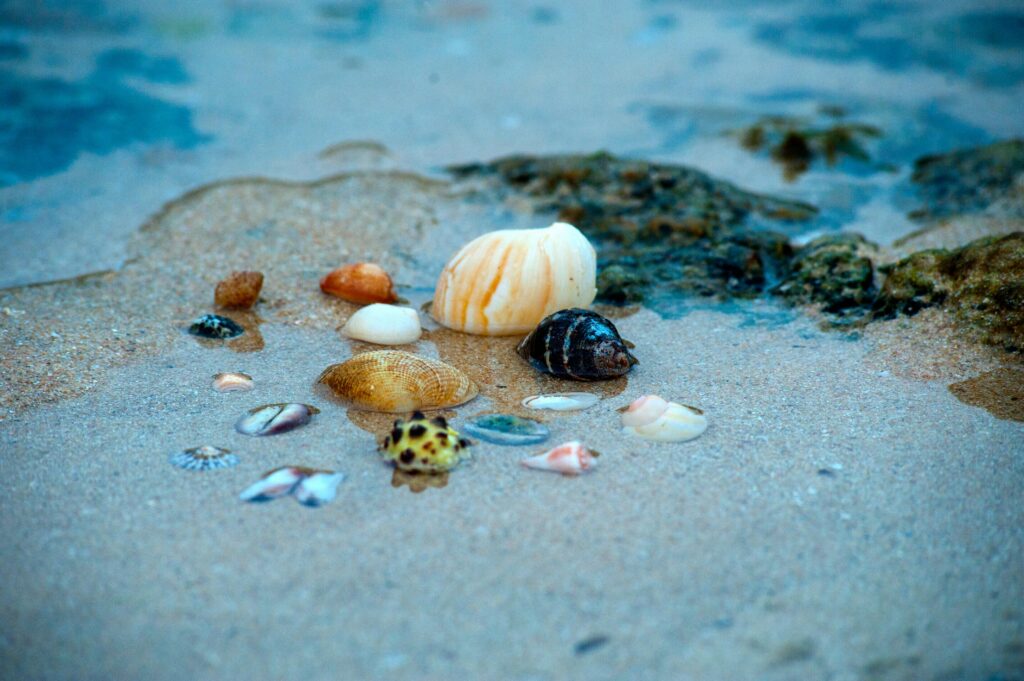
The phylum Mollusca is divided into several classes, each representing a different “architectural” style of shell construction and use. (And, for fans of quirky trivia, some are spikier, shinier, or sneakier than others.)
Table: Main Molluscan Classes & Their Signature Shells
| Class | Common Examples | Shell Form | Notable Features |
|---|---|---|---|
| Gastropoda | Snails, whelks, conch | Single, often spiraled | Mobile, beautiful, or cryptic |
| Bivalvia | Clams, oysters, scallops | Two hinged shells (“valves”) | Powerful closers, filter feeders |
| Cephalopoda | Octopus, squid, nautilus | Internal or external, chambered | Jet propulsion, camo, brains |
| Polyplacophora | Chitons | 8 plate-like shells (“armor”) | Rock-clingers, tough as nails |
| Scaphopoda | Tusk shells | Long, tubular, open at both ends | Burying specialists |
| Monoplacophora | Neopilina (rare) | Cap-like, univalve | Once thought extinct |
| Aplacophora | Worm-like forms | No shell, or small spicules | Ghostly dwellers of ocean floor |
Gastropoda (snails and kin) is by far the largest group, with shells that have spiraled in an evolutionary dance of stunning complexity. Gastropod shells start as symmetrical cones, but during development, the process of “torsion” sets in, resulting in spiraled forms that can be right-handed (dextral, the norm) or, much more rarely, left-handed (sinistral)—the latter a sought-after rarity for collectors.
Bivalvia are masters of matched-pair engineering: two roughly mirror-image shells joined by a hinge, often with powerful adductor muscles inside. Filter-feeders extraordinaire, they have contributed pearls, beaches, and legends alike.
Cephalopoda: While most cephalopods (octopus and squid) have lost their external shells, the nautilus still carries a stunning multi-chambered shell that’s both a fortress and a buoyancy device—nature’s submarine. Cuttlefish have an internal “cuttlebone”; octopus shells are almost absent, except for the quirky argonaut.
Polyplacophorans (chitons): Think of armored tanks flattened to grip rocks, constructed of eight overlapping plates. Their rugged design has stood the test of half a billion years.
Some Seashells Just Can’t Sit Still: Hermit Crabs, Argonauts, and Exchange Programs
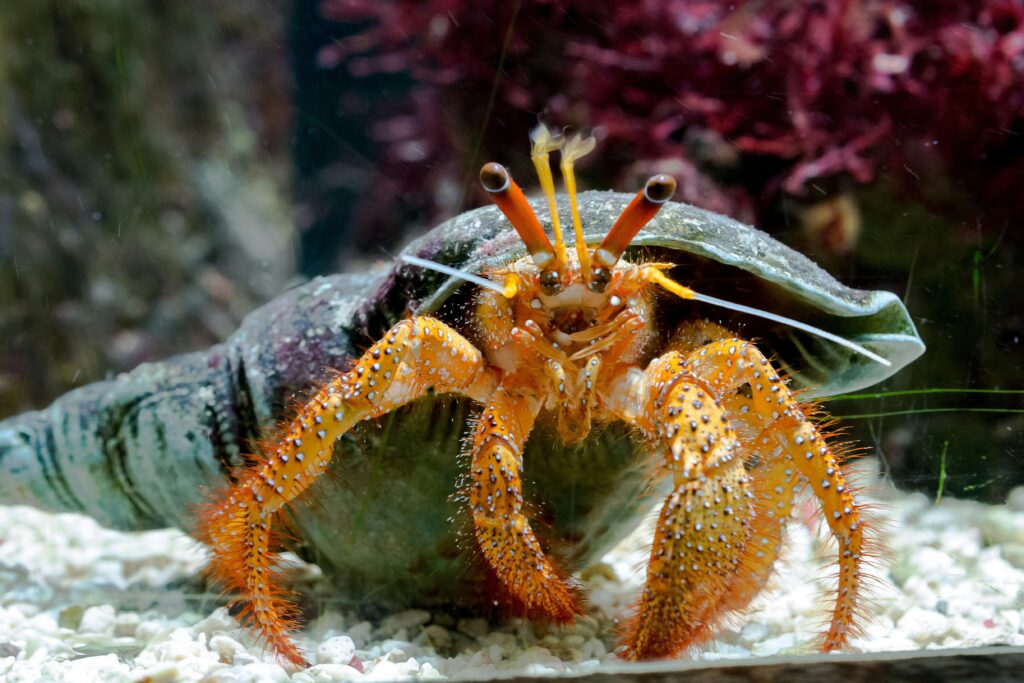
While mollusks only ever build a single shell in their lifetime—a home that grows with them—other animals, like hermit crabs, are happy squatters, inhabiting discarded shells and swapping them as they outgrow each home. Fossil records show this shell-hopping began at least 130 million years ago, with ancient hermit crabs moving into empty ammonite shells.
The argonaut octopus, a notable exception among cephalopods, secretes a paper-thin, portable “shell” (really an egg case) as a nursery—which females can vacate, though never for long without fatal consequences.
How Seashells End Up on Beaches: From Living Home to Sandy Treasure
From the moment its mollusk occupant perishes, the journey from living shell to beach-shining trophy begins. But not all shells make the trip—far from it!
A Seashells’ Epic Voyage to the Shore
- Abandonment: When a mollusk dies (via predation, old age, or accident), its soft body may be devoured or decomposed, leaving the skeletal shell behind.
- Transport: Currents, tides, waves, and storms whisk the empty shell away. Only the sturdiest, luckiest, or most scientifically designed shells survive abrasion, dissolution, and scavengers to join the sandy crowd.
- Beach Arrival: The final resting place is determined by complex patterns of ocean currents, coastal geography, and seasonal changes. Summer’s gentle waves may deposit more sand (and shells) on the beach, while winter’s stormier surf can drag them offshore.
- Deposition (or Not): Only a fraction of shells last more than a few seasons in the surf before being pulverized to sand, ground down by other shells, or dissolved (especially in acidified waters).
Did you know? Some beaches, like Australia’s Shell Beach, are made almost entirely of tiny cockle shells—meters deep for kilometers!
The Science of Beach Sediment
Seashells, together with coral fragments and other biogenic minerals, are a main source of “carbonate sand” in the tropics. In temperate zones, you’re often treading on minerals weathered from rocks, but in the Bahamas and other tropical paradises, you’re mostly walking on the remains of once-living animals.
Seashells That Shape Ecosystems: Function Beyond Beauty
Empty shells are far from useless. In fact, they’re ecological building blocks.
Table: Ecological Services of Discarded Shells
| Role | Impact | Examples |
|---|---|---|
| Habitat/Shelter | New homes for hermit crabs, small fish, worms | Hermit crabs, blennies sheltering in shells |
| Substrate for Attachment | Anchor points for seaweed, corals, barnacles | Seagrass beds, coral nurseries, anemones |
| Nesting Material | Shorebirds use shell fragments for nests | Piping plovers line nests with shells |
| Food Resource | Crabs, birds, worms feed on leftover organic | Molluscan predators, scavenger birds |
| Sediment Dynamics | Stabilizes sand, reduces beach erosion | Shell beds buffer wave energy, help retain sediment |
| Carbonate Cycling | Shells dissolve, recycling calcium and carbonate | Essential for ocean chemistry, pH balance |
When we pick up shells for keepsakes (or when machines rake them up for beach cleaning), we can unwittingly cause ripple effects—leaving hermit crabs homeless, destabilizing sand, or even making beaches more susceptible to erosion.
Fun Fact: In the absence of enough shells, hermit crabs have been spotted turning to plastic bottle caps or other trash for housing—a tragic form of adaptation! While one man’s trash may be another crab’s treasure, please refrain from littering on the beaches.
Colors, Patterns, and Seashell Camouflage: Not Just for Show
One of nature’s finest artists, the mollusk’s palette is diverse and purposeful. But what dictates the blues, browns, spots, and zigzags curling across shell surfaces?
The Science of Decoration
- Pigments Built-In: As the shell grows, pigment is incorporated by specialized cells in the mantle. Different species can make melanins, tetrapyrroles, and other organic dyes, although the spectrum remains a bit of a mystery.
- Mathematical Mastery: Many shell patterns (from stripes to chevrons to intricate tessellations) result from reaction-diffusion models, a la Alan Turing, with “on” (activator) and “off” (inhibitor) chemical signals generating motifs as the mantle deposits new shell layer by layer.
- Purpose in the Pattern:
- Camouflage: Blending with sand, rocks, or coral keeps prey hidden from predators.
- Warning/Aposematism: Bright colors may signal toxin or distastefulness (e.g., the venomous cone snail).
- Mating “Registration Marks”: Some researchers believe patterns help the animal reconstruct or repair its shell correctly after damage, using previous pigment as a “bookmark” for shell restoration.
Surprising Fact: Most spiral shells (about 90%) open to the right (dextral). Lefty (sinistral) shells are the marine world’s “unicorns” and fetch sky-high prices among collectors—but being left-sided can make finding a mate nearly impossible!
Curious about your finds? Grab a pocket-sized shell identification book to help you learn more about the treasures you discover on the beach.
The Fortitude of Seashell Design: Strength, Versatility, and Biomaterials
Shells don’t just look pretty—they’re serious feats of engineering.
Seashells Are Tougher Than You’d Guess
- Multiple Layers: Nacre and other composite shell structures combine mineral strength with flexible protein “glue,” making them resilient to cracks and predatory attacks.
- Ribs, Spikes, and Sculptures: Tropics dwellers often sport elaborate ornamentation (cost-saving strength, better predator defense, and sometimes species recognition), while streamlined shapes favor stealth in the sand or silt.
- Lightweight Bulk: The nautilus’ shell is divided into gas-filled chambers, making it a buoyancy champion par excellence.
Nature’s designs have inspired human engineers for applications in lighter, tougher, and greener materials—biomimetic nacre and “shellcrete” are research frontiers in sustainable construction and manufacturing.
Have little ones that want to learn more about the exciting world of shells? Check out this
educational sticker book to learn while having fun. My favorite thing is to turn it into a scavenger hunt and let them put the stickers in once they find the matching shells.
A Brief History of Conchology: Science, Scandal, and Seashell Mania
“Conchology,” the study of mollusk shells, became a scientific and social craze in the Renaissance and beyond. Collecting, classifying, and displaying shells was as fashionable for Victorian gentlefolk as climbing the career ladder is for modern professionals.
Notable Names, Eccentric Episodes
- Filippo Bonanni: The “father of conchology,” published the first shell treatise in 1681.
- Martin Lister: British trailblazer, author of one of the earliest conchological tomes.
- Conchylomania: The 18th-century “shell fever” saw rare shells fetch prices rivaling Old Masters paintings (the precious wentletrap and the “glory of the sea” cone caused particularly wild speculation).
- Women in Early Science: Shells attracted women to science before they could officially practice it—Lucy Say, for instance, illustrated the classics for American conchology.
- Edgar Allan Poe: Penned a best-selling seashell guide, the only book of his that sold well in his lifetime!
- The Bailey-Matthews National Shell Museum (Sanibel, Florida): Still the world’s only museum devoted entirely to shells and malacology.
World-class collectors included royalty (Japan’s Emperor Hirohito was an avid amateur conchologist) and botanist Joseph Banks (of HMS Endeavour fame), who could not resist stuffing pocket-sized shells into his collections.
Shells on the World Stage: Currency, Culture, and Wild Anecdotes
Shells have served more than scientific or decorative purposes—they’ve been money, ornament, instruments, superstitions, and even tools of espionage.
Shell Money: Worth its Weight in Calcium Carbonate
- Cowrie Shells: Used as currency in Africa, South Asia, China (the money cowrie is even the root of the Chinese character for “currency”), and the Pacific for millennia, with some slave trades valued in shell strings.
- North American wampum: Beads made from quahog clam shells served as money and messages among indigenous peoples of the East Coast.
- In parts of California and Papua New Guinea, shell money could still be exchanged into the 20th century.
Historical Oddities and Quirky Tales
- Jewelry’s Deep Roots: The oldest shell jewelry workshop dates back 42,000 years, with Neanderthals or early humans punching holes in sea snail shells, carrying them far inland, and dying them with pigments (fashion was primordial).
- Art and Architecture: Shells sparkle from ancient Egyptian necklaces and Roman mosaics to Rococo furniture, Victorian “sailor’s valentines,” and modern shell-adorned bathrooms.
- Seashells in the Spy Game: CIA agents in the 1960s once plotted to plant an exploding conch on a coral reef to assassinate Fidel Castro (thankfully, the idea never got past the planning stage).
- Poetic Inspiration: Poet Edna St. Vincent Millay was so absorbed by her search for the rare Junonia shell that she missed a hotel fire that destroyed her manuscript.
And let’s not forget the humble toothbrush: the ancient Greeks crushed oyster shells to make toothpaste, prefiguring today’s “calcium carbonate” in commercial dental products.
Seashell Collecting: Joys, Mania, and the Ethics of Beachcombing

The love of shells sparked entire “collecting manias,” museum collections, and global trade. But recent studies—and a new environmental consciousness—have revealed how mass collecting can impact fragile ecosystems.
The Joy of Seashell Collecting
Shell collecting is a centuries-old pastime, offering beauty, challenge, and a sense of treasure hunting. Field guides, museums, and even dedicated apps and websites help modern beachcombers identify and appreciate their finds.
Table: Responsible Seashell Collecting Do’s and Don’ts
| Do | Don’t |
|---|---|
| Only collect empty, uninhabited shells | Never collect shells with living creatures |
| Take only a few, leave most for wildlife | Don’t fill buckets or disturb entire areas |
| Leave rare or complex shells behind | Don’t take shells needed for hermit crabs |
| Photograph shells as a memento | Don’t purchase shells from dubious sources |
| Check local regulations about collecting | Don’t collect in protected areas or reserves |
Why So Strict? Studies show that on heavily touristed beaches, shell abundance has dropped by 60-70% compared to levels just a few decades ago, making it harder for hermit crabs and other creatures to find shelter. Removing seashells also destabilizes sand, harming the beach’s natural defense against erosion.
Curious Fact: Many pristine shells sold in tourist shops were harvested by killing living animals—unlike battered beach finds. Before buying, consider the seashell’s journey: some were taken from living creatures, and purchasing them may unintentionally support harmful practices. A little caution goes a long way toward protecting the shore’s quiet architects.
Conservation and Climate: Sand Dollars, Seashell Crisis, and the Call for Seashell-heroes
Besides over-collection, shells and their makers are threatened by climate change, ocean acidification, and habitat degradation.
Blue Blood and Sensitive Chemistry
Mollusks (especially bivalves) are canaries in the coal mine of ocean health. Their shells buffer acidity, but rising carbon dioxide and warmer waters mean it’s harder for young mollusks to form strong shells. Populations and genetic diversity are at risk.
Active Seashell Conservation
- “Take only pictures, leave only footprints” is the rallying cry of the new generation of shell enthusiasts and conservationists.
- Many countries ban or regulate collection, especially of live animals and endangered species.
- Educational programs (along with museums like the Bailey-Matthews National Shell Museum) now emphasize the ecological role of shells and the value of observing rather than removing.
- Innovative projects recycle shell byproducts from aquaculture to reduce waste and even create new building materials (like “Sea Stone”—a sustainable concrete-alternative from crushed shells).
For seashell fun without depleting the environment, try Kaiyuan Dynasty glow-in-the-dark seashell-shaped aquarium rocks. These luminous accents offer oceanic charm without harming marine life—perfect for shell lovers who want to decorate responsibly.
Seashells in Art, Design, and the Human Imagination
From the Venus rising on her shell in Botticelli’s Renaissance masterpiece to the mosaics of Roman bathhouses, seashells have symbolized beauty, fertility, and the transcendent connection between sea and creativity.
Shell Motifs in Fashion and Design: Throughout history, shells have adorned jewelry, clothing, and interiors, peaking in the decorative explosions of the Rococo and Victorian eras—and continuing today as eco-friendly jewels and fashion statements.
Science, Symbolism, and Spiritual Resonance: Shells symbolize everything from protection, prosperity, and fertility (cowrie shells in African and Asian tradition), to spiritual journeys (the pilgrim’s scallop shell), and personal transformation.
Quirky, Wonderful, Mind-Blowing Seashell Facts
- The giant clam (Tridacna gigas) grows up to 1.5 meters, can weigh 500 lbs, and hosts symbiotic algae so efficiently that scientists want to mimic their “solar-powered” tricks for energy systems.
- The oldest living animal ever recorded was a clam nicknamed “Ming,” aged 507 when discovered (and, accidentally, killed by researchers).
- The blue-rayed limpet grows transparent shells with striking, iridescent blue lines that function like tiny fiber optics—outsmarting predators at a nano-engineering level.
- Some shells act as musical instruments, from conch trumpets in the Pacific to wind chimes and even ocarinas in ancient Central America.
- Scientific expeditions have unearthed shell art made by Homo erectus hundreds of thousands of years before modern Homo sapiens decorated anything.
A Message in Every Seashell
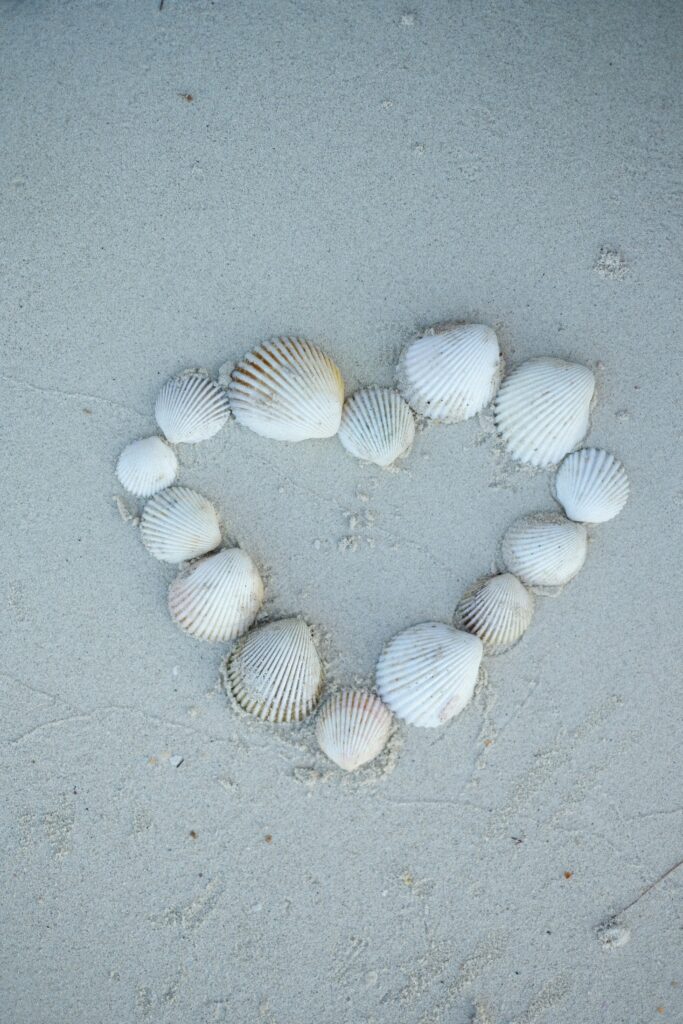
Seashells are more than a collector’s delight or a souvenir for sunny days at the shore; they are portals into the mysterious, beautiful, and essential world of their makers—the mollusks. Each shell records an animal’s lifetime of triumphs and challenges, an evolutionary history, and a deep web of ecological connections.
Their diversity tells the story of over a half a billion years of evolutionary trial-and-error. Their colors, patterns, and shapes are born from both survival needs and accidental artistry. Their afterlives—ferrying to the beach, supporting countless living things, inspiring human culture—remind us that nothing in nature is wasted.
So next time you crisscross a beach with your head down and your pockets jingling with shell treasure, pause and admire the hidden engineering, the dazzling chemicals, and the long journey from living creature to tidal gem. Snap a picture, perhaps, and leave the shell for the next hermit crab or hopeful chick. Every shell is a quiet reminder that science and wonder are one and the same.
Shells are not just the sea’s leftover ornaments—they’re blueprints, currencies, canvases, and the life-support system of the shore. To hold one is to cradle a little piece of Earth’s history, crafted with patience, chemistry, and a generosity that outlasts the tides.