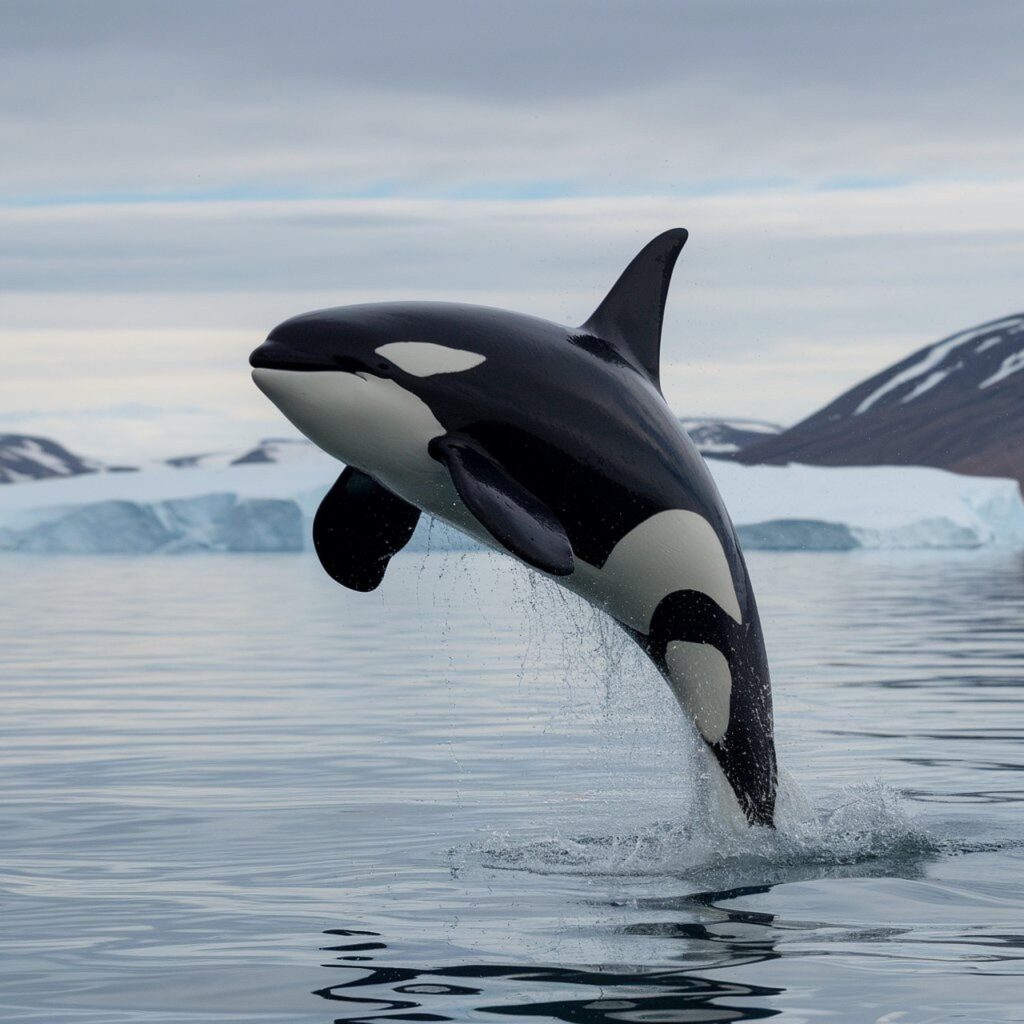
Orcas, or killer whales (Orcinus orca), hold a unique place in the public imagination—a blend of awe, respect, and, increasingly, curiosity about their minds and societies. Recent headlines about orcas sinking boats off Europe’s coasts have captured global attention, but this phenomenon is just one facet of a much deeper story. Modern research has shown that orcas are not only the ocean’s apex predators, but also complex social mammals whose behaviors frequently mirror some of the most defining aspects of human societies: sharing food, maintaining elaborate social networks, participating in rituals, transmitting culture, displaying empathy, and even collectively learning and teaching new practices—including, it appears, boat ramming. In this comprehensive exploration, we delve into the remarkable parallels between orca and human behavior, focusing on key domains: food sharing, social rituals, group dynamics, cultural transmission, empathy, and the ongoing mystery of boat attacks. Throughout, we draw upon the latest peer-reviewed research and authoritative analyses to paint a multi-layered portrait of orca society—a society that stands as a profound reflection of, and sometimes a challenge to, how we understand ourselves.
Orca Food Sharing: An Oceanic Reflection of Human Generosity
Prosocial Food Sharing in Orcas
Orca societies, across distinct ecotypes and globally, exhibit food sharing that is strikingly nuanced. Researchers have documented that wild orcas routinely share prey items with pod members, kin, and even with unrelated orcas. Food sharing is so ingrained that it fulfills multiple adaptive and social functions: reinforcing bonds, nurturing young, and demonstrating skill or status within the group. Recent research by Towers et al. analyzed 34 instances over two decades in which orcas offered food to humans—sometimes fish, sometimes rays, squid, or even mammals. The criteria were strict: the orcas must have approached humans of their own accord, released the item within close range, and, in nearly every instance, waited to observe the human response, sometimes repeating the offering if initially rebuffed.
The significance of these acts lies in their intentional, non-random nature. As Towers and colleagues note, such behavior suggests a capacity for what may be termed “interspecific generalized altruism,” a motivated and curiosity-driven probing of interspecies boundaries—otherwise seen only in rare pinniped or dolphin encounters. Importantly, within orca society itself, food sharing is not limited to mother-offspring exchanges but extends to all age classes and sexes within the social group, suggesting strong selection for prosocial behavior.
Mechanisms and Theories: Why Orcas Share
The driving forces behind orca food sharing are multifaceted:
- Kin Selection: From an evolutionary standpoint, sharing with relatives increases inclusive fitness.
- Reciprocal Altruism: Sharing with non-kin creates expectations for future reciprocation, building trust and long-term alliances within pods.
- Costly Signaling and Play: Sometimes, food sharing may be a way for orcas to demonstrate prowess, skill, or social standing to group members (and, perhaps, in the strange new context, to humans).
- Cultural Norms: In pods with high cultural distinctiveness, sharing may be one way to reinforce group identity or maintain learned practices.
The intentionality and attention to response—such as waiting to see what a human will do or attempting to offer food multiple times—emphasize both social intelligence and a mirror of human prosocial conventions.
Parallels in Human Society
Among humans, food sharing is a bedrock of social life, manifesting from ancient hunter-gatherer bands to contemporary societies. Anthropologists note that human food sharing is not merely an adaptive mechanism for survival, but a practice intricately tied to reciprocity, cultural transmission, and status display, with ritualized feasts, meal sharing among kin, and even institutionalized food banks as modern expressions. Extensive research indicates that such sharing is foundational in shaping social norms, reinforcing bonds, and solidifying group identities.
Crucially, food sharing in both orca and human societies is loaded with symbolic meaning: to offer food is to recognize and reinforce relationship, trust, and sometimes to elevate play and exploration into realms of social learning. The rare but persistent offering of food by wild orcas to humans offers a unique lens into this intersection—one that aligns with select instances of domesticated dogs and cats, but is virtually unknown in other wild apex predators.
Analysis and Synthesis
In both orcas and humans, food sharing operates as a central organizing principle, shaping not just survival but the texture of social life. As prosocial behavior, it forms the substrate upon which complex relationships—both within and, more rarely, between species—are forged. The study of these acts not only challenges simplistic notions of animal motivations but compels us to reevaluate the evolutionary, cognitive, and cultural dimensions of generosity.
Social Rituals: Performing Group Identity in Orcas and Humans
Rituals Among Orcas
Distinct from food sharing, orcas display a repertoire of ritualized behaviors that serve as social glue, marking transitions, strengthening bonds, or mediating conflict. These include coordinated displays after successful hunts, mourning behaviors for lost calves, and even cultural fads (such as “salmon-hatting,” where orcas wear dead salmon on their heads) that can sweep through populations. Social rituals in orcas often manifest in synchronous swimming, tactile contact, vocal exchanges, and coordinated play, all serving functions analogous to communal ceremonies in human cultures.
A particularly poignant case is documented in the widely publicized episode of the Southern Resident female J35, who carried her dead calf for 17 days, an act scientists term “epimeletic behavior”—potentially mourning, possibly social signaling, and certainly emotionally resonant. Such ritualized behavior may reinforce group cohesion, transmit values around caregiving, and provide communal responses to loss.
Human Ritual: Theory and Function
Sociological theory, especially that of Émile Durkheim, construes ritual as fundamental to the maintenance of collective consciousness. Rituals, in Durkheim’s view, create “collective effervescence”—the experience of unity, belonging, and shared purpose that is at the core of religion and society. In both sacred and secular contexts, rituals serve to renew social bonds, demarcate sacred from profane, and mediate social tensions. Recent neuroscience and anthropological work affirm that rituals synchronize physiology and emotion among participants, cementing group identity.
Orca Rituals as Cultural Performance
Analogous to human group rituals, orca social ceremonies are not only responses to external stimuli (like the successful killing of prey or the death of a calf) but can also be vehicles for the reinforcement of cultural norms, teaching of young, or the elaboration of group-specific traditions—such as vocal dialects, play customs, and problem-solving strategies. Some social acts, like communal play or coordinated “wave washing” hunts, simultaneously transmit skills and reinforce group roles, constituting a kind of performative culture.
Detailed Comparison
| Feature | Orcas | Humans |
|---|---|---|
| Mourning Rituals | Carrying dead calves, group attention to sick or dead | Funerals, wakes, communal grieving |
| Victory Celebrations | Communal play, physical contact after successful hunts | Feasts, dances, games after hunts or competitions |
| Social Bonding Ceremonies | Synchronous swimming, grooming, synchronized calls | Handshakes, group singing, religious ceremonies |
| Cultural Fads | Salmon-hatting, kelp-play, object-oriented rituals | Fashion trends, children’s games, artistic movements |
Despite profound differences in symbolism and complexity, both species’ rituals serve to mark off the sacred from the everyday, rehearse (and sometimes recreate) social order, and pass on critical skills and values across generations.
Group Dynamics and Social Structures: Matriarchy, Hierarchies, and Networks
Orca Society: Pods, Matrilines, and Cooperation
Orca societies are defined by remarkably stable and complex group dynamics. Most ecotypes are organized around matrilines—a lineage traced through the female, usually led by an experienced matriarch. Sons and daughters often remain with their mothers for life, and multiple generations may travel together. The matriline may combine with others into broader pods, clans, and communities, forming tiers of relatedness and social interaction.
Within these groupings, orcas display fission-fusion dynamics, with pods splitting or merging temporarily based on ecological conditions, prey availability, or social politics. Social associations in orca pods are based not only on kinship, but also on long-term preferred partnerships, alliances, and cooperative endeavors. These flexible structures serve as scaffolds for complex social relationships and collective action—including intricate cooperative hunting strategies.
Matriarchal Leadership
The matriarch’s role is central: not only as a repository of ecological and social knowledge (such as hunting grounds, migration routes, and social etiquette), but as the decision-maker during crises or opportunities. Notably, studies have associated post-reproductive lifespan in orca females with enhanced survival and reproductive success of their descendants, paralleling the evolutionary theories around human grandmothers and the “grandmother hypothesis”.
Human Group Structure: From Family to Nation
Human societies, too, are fundamentally organized around kinship lines, but have added layers of complexity—economic, political, and cultural. Early forager societies mirrored orca groupings in their flexible fission-fusion arrangements and their reliance on cooperation often based on matrilocal residence or extended family networks. Over time, human social life gave rise to tribes, chiefdoms, and states—each with its own rules for leadership, membership, and collective action.
Social Cohesion, Competition, and Group Dynamics
Both orca and human societies face the constant challenge of balancing cohesion with competition, inclusion with exclusion. Studies of orca group splitting (or “fission”) reveal that such splits may occur when groups get too large for optimal cooperation, evoking parallels to human bands that fragment over resource competition, leadership disputes, or demographic pressures.
Networks and Cultural Transmission
Social networks in both species are the highways for information flow, innovation, and cultural transmission: strong, stable social bonds facilitate cooperation, while looser connections (as in fission-fusion arrangements) allow for new ideas and behaviors to cross group boundaries.
Summary Table: Social Organization
| Species | Social Core | Basis of Hierarchy | Transmission Form | Example Role |
|---|---|---|---|---|
| Orcas | Matriline | Elder Female | Vocal, kin, play | Matriarch: knowledge |
| Small-scale Humans | Extended kin | Elders/gendered | Speech, ritual, kin | Grandmothers: support |
Cultural Transmission: How Orcas and Humans Build Traditions
Culture Among Orcas: Dialects, Customs, and Learning
Orcas are one of the non-human species for which the existence of “culture”—behaviors learned socially and transmitted between generations—is firmly established. Pods develop and maintain unique vocal dialects, specialized hunting techniques (from beaching to wave washing), prey preferences, play behaviors, and even idiosyncratic fads. These traditions are maintained and transmitted through both vertical (parent-to-offspring) and horizontal (peer-to-peer) learning, with evidence that both modes contribute to the maintenance and spread of vocal and behavioral repertoires.
Research reveals that young orcas acquire their pod’s dialect through years of imitation and practice, guided and corrected by their mothers and other adults, echoing the way children learn language in human societies. Cultural drift and innovation can lead to the evolution of new calls, hunting strategies, or social customs—sometimes becoming distinguishing marks of specific pods or communities.
The Spread of New Traditions
Studies of dialect change and call sharing reveal that orca cultures are not static: innovations can sweep through a population as a “fad,” sometimes persisting, sometimes fading. Horizontal transfer (between pods) occurs—orca dialects show both stable inheritance and some cross-group convergence, allowing for the possibility of “cultural mixing” reminiscent of human contact zones.
Human Cumulative Culture: Technology, Language, and Institutions
The explosion of cumulative culture—where each generation builds on the innovations of the last—is considered the central adaptive driver of Homo sapiens’ global success. Human societies accumulate and improve upon complex technologies, social institutions, and symbolic codes at a pace and scale unmatched by any other species, enabled by high-fidelity transmission via teaching, language, and imitation.
Deep Parallels and Evolutionary Insights
Recent research suggests that the underpinnings of cumulative culture—social learning, teaching, innovation, and division of cognitive labor—have evolutionary roots in the foraging lifestyles and multilevel sociality of early hominins. While the scale and complexity of human cumulative culture appears unique, the raw materials are observed in orcas: matrilineal networks, teaching of complex hunting skills, maintenance of group traditions, and occasional bursts of collective innovation.
Conservation Implications
The recognition of orca cultures—not just their genetic lineage—has profound implications for conservation: losing a pod means losing a unique set of behaviors, dialects, and skills that cannot be replaced simply by numbers. This “cultural heritage” is now a focus for efforts to protect endangered populations such as the Iberian orcas, whose bluefin tuna specialization and recent cultural innovations (including boat interactions) are part of what makes them unique.
Empathy, Prosocial Behavior, and Social Neuroscience in Orcas and Humans
Orca Empathy: Prosociality and Social Intelligence
Orca prosociality does not stop at food sharing. Empathy—the capacity to share or comprehend another’s emotional state—has been inferred from myriad observations: orcas helping injured pod members, epimeletic behaviors toward dead calves (e.g., carrying the body for days), and orchestrated support in navigation or defense. These behaviors, while difficult to parse for motivation, suggest a deep-rooted emotional and cognitive intelligence.
Research into cetacean neuroanatomy has uncovered adaptations in orca brains—enlarged limbic structures and neocortical complexity—linked to their capacity for social learning, emotional processing, and, plausibly, empathetic behavior. Their advanced mirror neuron systems may underpin both imitation and emotional contagion, paralleling mechanisms in primate and human social cognition.
Human Empathy: Mirror Neurons, Evolution, and Beyond
In humans, the mirror neuron system and related networks undergird a broad array of social abilities: from action understanding and imitation to empathy, theory of mind, and even moral reasoning. Neuroscientific studies tie the development of empathy to the maturation of neural circuits enabling individuals to “feel with” others, a process seen as critical to both early social cognition and adult moral life.
Deficits in this system are implicated in conditions like autism, highlighting its centrality. In evolutionary terms, empathy and prosociality are seen as adaptive responses for navigating the complexities and uncertainties of group living—fostering cooperation, trust, and social learning.
Empathy Across the Divide
While caution is warranted in drawing direct equivalence, the manifest social intelligence and emotional sophistication of orcas—along with empirical evidence of complex social bonds, caregiving, and communicative nuance—entitle us to speak of empathy as a significant trait in their societies, mirroring the foundations of human sociality.
Recent Orca Interactions with Boats: Scientific Perspectives and Theories
The Phenomenon: Coordinated Orca “Attacks” on Boats
Since 2020, a dramatic increase in orca interactions with boats, especially sailboats, has been recorded along the Iberian Peninsula, particularly near the Strait of Gibraltar. Documented incidents now number in the hundreds, ranging from ramming and spinning boats to the coordinated disabling and even sinking of vessels. These behaviors are performed predominantly by a subset of the critically endangered Iberian orca population, involve both juveniles and adults (especially females), and often focus on the vessel’s rudder.
Scientific Explanations and Behavioral Theories
A range of hypotheses has been advanced, drawing on ethology, behavioral ecology, and comparative cognition:
- Learned Aversive Behavior: A leading theory is that these interactions stem from negative experiences, such as prior injury or disturbance by boats or fishing gear, with behaviors rapidly spreading via social learning.
- Play or Exploration: Evidence suggests that the orcas, particularly juveniles, may engage with boats as a form of object play—a known avenue for practice and social learning in cetaceans. The hard, spinning rudders may offer rewarding or stimulating feedback, leading to repetition and possible obsession.
- Social Cultural Transmission: The rapid spread, focus on specific techniques, and recurring participation are consistent with a “fad” or culturally transmitted behavior—a play tradition, if you will, that has become self-sustaining through social reinforcement.
- Resource Competition or Displacement: Some have suggested that declining prey (notably bluefin tuna), increased competition with fisheries, or changing ocean conditions may contribute to stress, prompting unusual or even frustrated behaviors.
- Aggression or Revenge?: While tempting for the media to describe boat “attacks” as acts of vengeance, most experts dismiss this as anthropomorphism unsupported by evidence; the orcas typically do not seek to harm humans and focus on disabling components (rudders), not sinking vessels.
Social Learning and Cultural Innovation
One of the most striking aspects of the phenomenon is the speed and precision with which disabling strategies have spread. Observers note that behaviors are first performed by certain individuals, then adopted by kin and associates, including juveniles who appear to learn by watching. This mirrors the pattern of innovation dissemination seen in other orca foraging customs, as well as human cultural fads.
Management and Conservation Responses
The persistence and social transmission of these behaviors raise acute challenges for both human safety and orca conservation. Authorities now issue real-time warnings, create exclusion zones, and advise non-aggression (such as stopping the engine and avoiding stimuli). Efforts to deter the whales using loud noises or harmful methods are strongly discouraged, both for ethical and practical reasons, as they have proven ineffective and may escalate the behavior.
International workshops convened in 2024 and 2025 emphasized collaboration among scientists, sailors, governments, and NGOs. Key recommendations include: sharing real-time orca location data, focusing on avoidance, educating sailors, and enhancing research into the social and cognitive ecology of the affected population.
Conservation and Ethical Dimensions
The Iberian orcas involved are a unique, critically endangered subpopulation. The escalation of boat interactions is both a conservation crisis and a touchstone for ethics: how do we ensure the safety of humans while respecting the autonomy, cultural agency, and vulnerability of a whale society undergoing rapid change? Most advocates and scientists now call for managed coexistence, cross-disciplinary understanding, and ongoing inquiry into the roots and ramifications of this singular episode of animal innovation.
Conclusion: On the Edge of Understanding — Orcas and Human Parallels
The study of orcas is no longer just an exercise in marine biology but a window onto the deep structures of social life, mind, and culture—both in the ocean and on land. Food sharing, social ritual, matriarchal leadership, cultural transmission, and empathy are not uniquely human achievements, but qualities that tie us in a living continuum with one of the sea’s most mysterious and charismatic inhabitants.
The recent boat “attacks” make clear that orcas and humans do not merely share space but increasingly share dilemmas, challenges, and perhaps fates. Relationship-building—whether through the offering of food, the sharing of knowledge, or the negotiation of conflict—remains at the heart of both societies. Our interactions, for better or worse, have become part of orca culture, just as their reverberations echo across human discourse.
To understand orcas is, in a sense, to confront ourselves. Their societies are mirrors: sometimes dark, sometimes uncanny, often illuminating. In seeking to protect, learn from, and live with these oceanic peers, we are reminded that intelligence, empathy, and culture are—not the exclusive province of our own species, but the shared heritage of a living world.

-
Wild Republic Orca Plush, Stuffed Animal, Plush Toy, Gifts for Kids, Cuddlekins, 20 inches
Celebrate the orca’s role as a nurturing, social creature—this plush is perfect for sparking empathy and storytelling in young minds.
Buy on Amazon -
Of Orcas and Men: What Killer Whales Can Teach Us
Explore the deep parallels between orca and human societies—ritual, culture, empathy, and the mystery of shared intelligence.
Buy on Amazon -
Orca: The Whale Called Killer
Trace the evolution of our relationship with orcas—from fear to fascination—and reflect on what it reveals about us.
Buy on Amazon -
MAGNET Galaxy Orca Magnetic Vinyl Sticker Decal Magnet 5″
Bring a cosmic twist to your space—this orca decal honors their cultural brilliance and the mystery of their oceanic world.
Buy on Amazon -
Orca Suite NatureQuest CD
Immerse yourself in the soundscape of orca life—perfect for reflecting on their rituals, matriarchal wisdom, and emotional depth.
Buy on Amazon
Disclaimer: As an Amazon Associate, I earn from qualifying purchases.