Stepping Into the Tranquil World of Hokko Life
In an era where life simulation games have captivated millions—each offering their own blend of daily agriculture, social tasks, and digital escapism—Hokko Life arrives as a fresh, charming invitation to create, customize, and relax. Developed by Wonderscope (now Gizmo Garden Ltd) and published by Team17, Hokko Life is a community simulation and sandbox game that captivates players not just with an opportunity to build a home, but to truly shape a world. At its core, what sets Hokko Life apart is its exceptional embrace of creative freedom and player-driven design, offering a meditative and liberating experience where stress and fear of missing out (FOMO) are left at the door.
Let’s talk about what makes Hokko Life such a cozy standout in the world of life sims. At its heart, it’s built on three gentle pillars—creativity, customization, and music—that invite you to shape your world at your own pace. There’s no ticking clock, no pressure to keep up, and absolutely no FOMO. Just sandbox serenity. Along the way, I’ll be drawing some loving comparisons to giants like Animal Crossing and Stardew Valley, not to compete, but to celebrate how Hokko Life carves out its own quiet, creative niche.
Game Overview and Basics
Hokko Life invites players to step off a gently rumbling train and into the sleepy village of Hokko. The storyline is refreshingly simple: there is no urgent drama, no great evil to combat, and no world to save under a ticking clock. Instead, players are gently nudged into taking charge of a dilapidated town, making friends with adorable anthropomorphic animals, and gradually transforming the environment into a place filled with personality and warmth.
Gameplay is centered around:
- Gathering resources like wood, stone, and flowers.
- Crafting materials and using them to build, decorate, and personalize almost every item in the world.
- Completing small and relaxing tasks for villagers, such as furnishing homes, planting crops, or catching bugs and fish.
- Designing furniture, clothing, and house features—not only decorating but inventing wholly new objects.
The interface and core controls are designed to be accessible, whether you play via mouse and keyboard on PC or with a controller on consoles, making the transition from other life sims feel intuitive yet full of new possibilities. Most importantly, Hokko Life dismantles the pace limitations or pressure commonly found in other genre favorites; you truly set your own pace, day by day.
An Unmatched Platform for Creativity
The Design Bench: Heart of Creation
The star attribute of Hokko Life is undoubtedly its unparalleled approach to creativity. Unlike many life sims that limit player expression to choosing from a set catalog of predetermined furniture, clothes, or decor, Hokko Life’s workshop empowers players to construct entirely custom furniture and decorations, from minimalist modernist sofas to intricate, whimsical bridges or beds shaped like anime characters.
Utilizing a “piece” system reminiscent of simplified 3D modeling:
- Players can combine geometric shapes—cubes, cylinders, cones, and more.
- Each shape can be resized, rotated, recolored, and stacked or arranged in infinite combinations.
- Once constructed, these objects aren’t just for your own use: they can be painted, shared with villagers, or uploaded to the Creator Catalogue for other players to download and enjoy—fostering a genuine sense of community-driven artistry.
The creative freedom here is spectacular. Where Animal Crossing restricts most object customization to color variants or pre-set items, in Hokko Life, if you dream up a grand piano bridge, a tavern filled with custom steins, a Harry Potter quidditch field, or a serene Zen garden pavilion, you can build it from scratch—and often, share the blueprint with others.
Community-made designs show off the system’s potential—players have recreated iconic pop culture items, fantastical furniture sets, and breathtaking walkways, all of which other players can download and modify to fit their own villages. For those less confident in their design abilities or eager for inspiration, the game’s online catalog functions both as a source of excitement and a classroom for learning new creative techniques.
Creativity Beyond Furniture: Painting, Clothing, and Pattern Design
The design tools extend to painting:
- Wallpaper and flooring patterns, from abstract cubism to floral motifs, can be designed and used immediately or shared with the community.
- Clothing—at first T-shirts, but later more complex garments—can be adorned with custom colors, images, or patterns, allowing entire village residents to don unique attire, often coordinated by the player to match an overarching aesthetic or festive theme.
These systems bring a remarkable depth to self-expression. The opportunity to see your own hand-crafted furniture, walls, and apparel in use throughout the community fosters immersion and pride, pushing Hokko Life even further towards an empowering creative sandbox.
The Richness of Customization Options
Building and Personalizing the Village
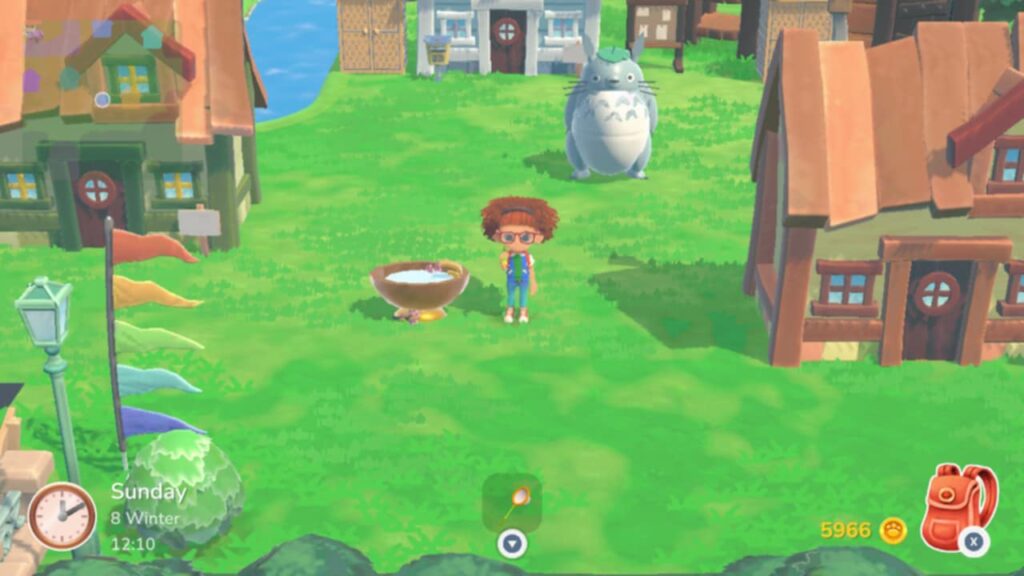
Customization in Hokko Life is not just about creation, but about complete environmental agency.
Players can:
- Build and place structures anywhere: Unlike Animal Crossing, where major buildings have rigid location requirements, Hokko Life lets you move houses, shops, and even entire neighborhoods with remarkable flexibility.
- Decorate interior and exterior spaces without boundaries: Place items precisely, rotate them in any direction, and alter their size. Villager homes become blank canvases for interior designers.
- Edit, move, or demolish houses freely, avoiding the frustration present in other games where changing a poor location choice can be a hassle or impossible.
- Customize villager houses from the outside in, including changing walls, roofs, and yards—no expansion pass or premium DLC required.
This freedom is often lauded by fans as a “dream come true” for sandbox sim enthusiasts, especially those who found Animal Crossing’s restrictions on relocating buildings or customizing exteriors limiting.
Character and Avatar Customization
Hokko Life delivers a surprisingly inclusive character customization system:
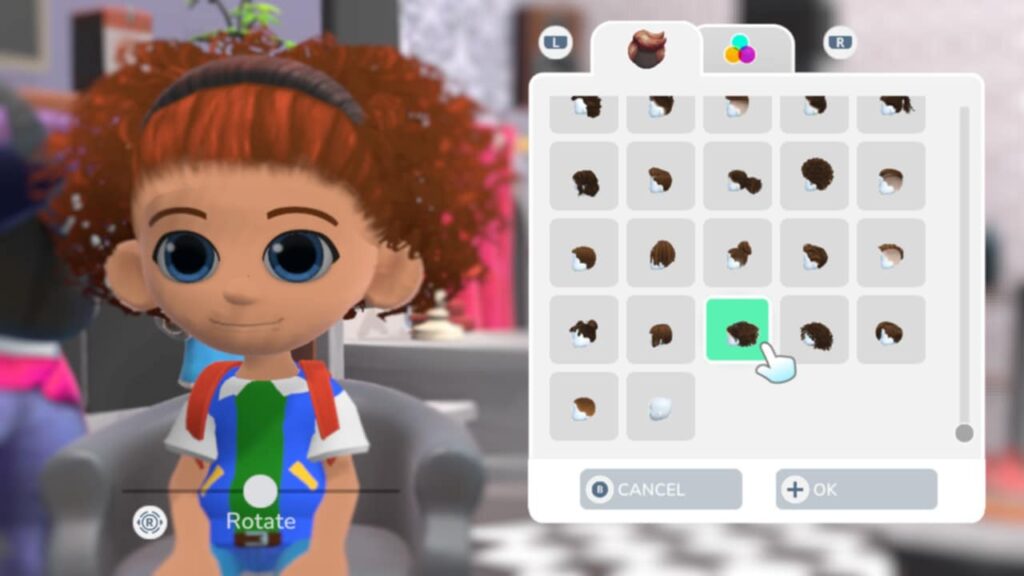
- Players can choose from a wide array of skin tones, hair styles, and eye colors, adapting their character’s appearance to match their real-world selves or any desired look.
- The choice is not gendered—clothing and styles are entirely non-binary, echoing contemporary expectations of inclusivity and self-representation. The game does not even ask you what gender your avatar is, allowing you to present yourself in whatever way is most comfortable and authentic to you.
- Clothing is further customized with the aforementioned painting tools, ensuring every player avatar feels truly unique and reflective of the player’s creativity.
Though some players might wish for non-human avatars to better fit in with their animal neighbors—a difference from the Animal Crossing series—many appreciate the simple, inviting, and universal charm of the player character design.
The Creator Catalogue: Community and Shared Imagination
A major highlight is the game’s Creator Catalogue, located in Moss’s general store and expanded in the City Center. This allows:
- Downloading of community blueprints and furniture designs, made possible with a Creator Code system.
- Editing and modifying any downloaded item to better fit one’s own world—colors, sizes, and arrangement are all fair game.
- Uploading your own designs to share with the entire player base, with recognition and encouragement for creativity.
This converts Hokko Life into a true community sandbox: everyone, not just expert designers, can use and iterate upon the work of others, resulting in worlds filled with unique collaborations and aesthetic marvels.
A Symphony of Calming Music and Gentle Sounds
Hokko Life’s music and sound design deserve special praise, setting it apart as a deeply meditative and comforting experience. The soundtrack, composed by Chris Koebke, is characterized by:
- Gentle, looping guitar and piano melodies that play unobtrusively in the background, never overwhelming or repetitive, but shifting in subtle ways with the time of day and activities.
- Ambient sounds—waves lapping on sandy beaches, wind through trees, the soft crunch of footsteps on grass—that contribute to an immersive, tranquil environment.
- Distinct sound cues for actions: a swish from a bug net, the thump of chopped logs, or the gentle splash of the fishing line.
Reviewers from multiple platforms—Nintendo Life, LifeisXbox, and countless player testimonials—frequently cite the music and sound as a source of comfort, perfect for unwinding after a stressful day or finding solace in times of anxiety or busyness.
Unlike more energetic or even intrusive soundtracks often used in farming sims, Hokko Life’s auditory palette is consistently soothing. This makes the game a standout in the “cozy game” genre—a space that is welcoming and pleasant even during long play sessions.
The Absence of Real-Time Mechanics: Liberation from FOMO
No Real-World Clock, No FOMO
One of Hokko Life’s most distinctive and liberating design choices is the total abandonment of real-time constraints prevalent in games like Animal Crossing. Animal Crossing famously links its game clock to the real world. If you log in at night, it’s always night, you must wait days or even months for certain events, and some content can only be accessed for short real-world windows.
Hokko Life, in contrast:
- Has a dedicated in-game time and day cycle, independent of real-world time. A single in-game day lasts roughly 90 minutes, but the player can sleep or skip ahead at will.
- Building construction and crop growth are not restricted to real-time; bridges, inclines, and houses are finished instantly or after only a short in-game wait.
- No timed events are permanently missable, and there is no pressure to log in every day for fear of missing unique content.
This design eradicates the “fear of missing out” and the anxiety sometimes associated with real-time games, making Hokko Life a genuinely relaxing, pressure-free experience.
The Joy of Playing at Your Own Pace
- Play for five minutes or five hours—there is no penalty or missed opportunity. Tasks wait for you rather than expiring, and villagers’ requests are gentle suggestions, never urgent demands.
- Special events, such as bug-catching contests or fishing festivals, happen within the in-game calendar and can be approached when you feel ready, never punishing you for living outside the game.
The result is an environment where every player—whether busy professional, parent, or student—can return to their town when able, pick up precisely where they left off, and never feel like they are lagging behind or “late” to the content. This makes Hokko Life ideal for those leading busy lives or anyone weary of time-gated mechanics.
Emphasizing the True Sandbox Experience
While many life simulation games market themselves as “sandbox,” few deliver as thoroughly on the promise as Hokko Life.
- In single-player mode, there is no competition or persistent multiplayer economy dictating trends or limiting options, removing another piece of potential pressure.
- Every aspect of the world is open to change: not just furniture placement, but bridges, paths, foliage, building locations, and population can all be altered again and again. For example, take a look at this bridge I built across the river:
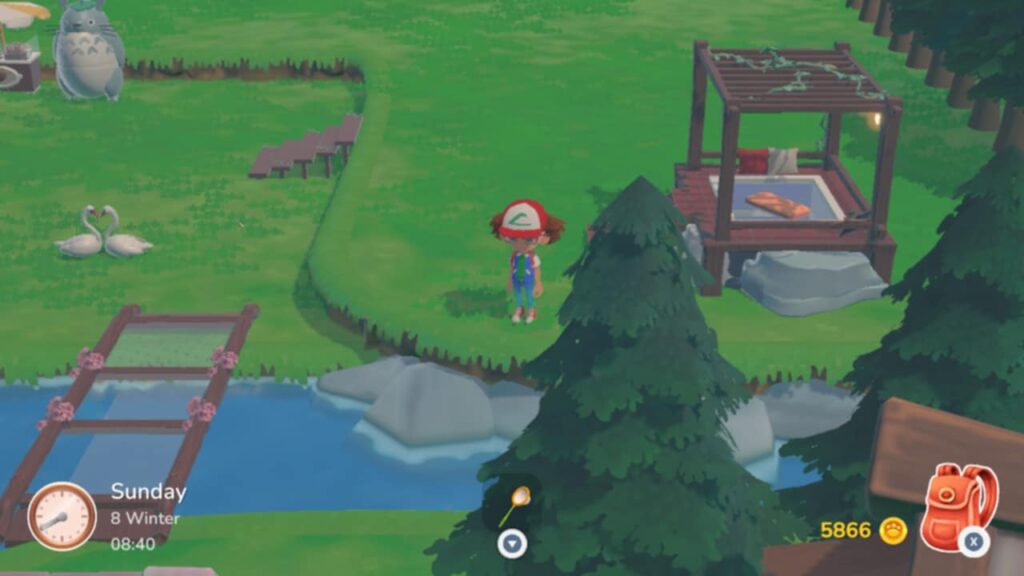
After finishing the robust, well-paced tutorial, the world truly opens up, inviting players to pursue whatever activities suit them—farming, designing, fishing, collecting, or simply relaxing by the water’s edge.
Unlike games that gently funnel the player into ever more “productive” tasks for progression, Hokko Life lets you decide what progress means, ensuring the experience never devolves into a grind for those not seeking it.
Comparing With Animal Crossing and Stardew Valley
Hokko Life vs. Animal Crossing: Deep Creative Freedom
Animal Crossing has long set the standard for cozy, animal-filled social sims, but its restrictions are legendary: limited furniture placement outdoors (except in New Horizons), rigid building locations, time-gated progression, and DLC-required features for high-level customization.
Hokko Life directly addresses and surpasses these limitations:
- Deep furniture, exterior, and clothing design tools—no need to buy or wait for preset “themes” or styles, as in Animal Crossing.
- No “moving penalty”: houses, bridges, and key town features can be relocated instantly and without cost, a major frustration in Animal Crossing.
- Customization freedom is further enhanced by the open upload/download system, which bypasses the limitations of Nintendo’s controlled infrastructure.
Animal Crossing’s NPCs are famously personable and charming, whereas Hokko Life’s villagers are simpler in scripting and range of personality. Yet, for those players seeking a canvas for creativity rather than a lively NPC-driven narrative, Hokko Life’s openness is a convincing winner.
Hokko Life vs. Stardew Valley: The True Sandbox, Not the Grind
Stardew Valley is beloved for its farming, relationships, story events, and sense of life progression. However, players often observe:
- A sometimes stressful energy and time system: days are short, and tasks compete for priority.
- A complex relationship web and “optimal” ways to maximize progress or unlock content.
- Content that can be permanently missable if the wrong choices are made or time is not managed wisely.
Hokko Life turns away from these systems. There are no failing crops, no exhausted characters, and no scripted relationships to “lose”—a more open, creative alternative. Players who found Stardew Valley’s grind or pressure overwhelming have often found Hokko Life a relaxing, less structured alternative that rewards planning but never penalizes slowness or indirect play.
Summary Table: Core Differences
| Feature | Hokko Life | Animal Crossing | Stardew Valley |
|---|---|---|---|
| Real-Time Mechanics | No – player controls time, no real-life alignment | Yes, events/time synced to reality | No, but efficient time management is critical |
| Custom Furniture Creation | Yes, powerful design bench, deep 3D manipulation | Limited; color edits, patterns, presets only | No, except for limited mods (PC) |
| Building Placement & Movement | Unlimited, buildings can be repositioned anytime | Major structures fixed or costly to move | Farm and buildings fixed, with limited structure placement |
| FOMO (Fear of Missing Out) | None—no permanently missable content | Significant—timed events, rare visitors, daily tasks | Some—events can be missed, relationships can sour or be locked |
| Online Sharing | Yes, share and download community designs globally | Very limited; item trading, dream codes in NH | Indirect via mods (PC) only |
| NPC Personality Depth | Simple, friendly and assistive | High—wide range of villager personalities | Moderate—detailed relationships, events |
| Multiplayer | No (single-player experience) | Yes—in New Horizons, online and local co-op | Yes, co-op available |
This table underscores that Hokko Life’s main unique proposition is its openness, creative power, and “play at your own speed” attitude, setting it apart even from genre-defining competitors.
No Fear of Missing Out: Game Design for Wellness
The psychological impact of FOMO, especially in video games, has been well-documented. Games that enforce real-time mechanics, missable events, or time-limited content can create unhealthy patterns of play or anxiety about missing special rewards—sometimes even causing burnout.
Hokko Life’s deliberate and conscious break from these ideas is a welcome breath of fresh air:
- Events, quests, and features are always available until you decide to engage.
- Villager requests do not expire or penalize you for not completing them—if you do not engage, you simply miss an optional cash or item reward, not story or core gameplay.
- Progression is entirely at your own pace: even if you take a break for months or years, your town waits for you patiently and lovingly.
Many players share stories of returning to Hokko Life after long breaks and finding the engine of creativity and calm not only preserved but rejuvenated, with no guilt, no catch-up, and no “repayment” of lapsed time. For those seeking anxiety-free digital comfort, this alone makes Hokko Life invaluable.
Community Reception and Reviews
Hokko Life enjoys a mixed-to-positive reception on platforms such as Steam, Reddit, specialist review sites, and cozy gamer communities. Consistently, however, even those offering criticisms praise the game’s creativity and FOMO-free design:
- The game’s creative engine is cited as “a dream for customization lovers and aspiring designers”.
- Many reviewers find “no other game lets you truly shape your town, your furniture, your clothing, down to the smallest detail.”
- The pace of life is universally described as “soothing,” “cathartic,” or “perfect for winding down.”
- Minor criticisms mostly acknowledge the simple villager personality scripting and sometimes “basic” graphics, especially when compared to Nintendo’s slick polish or the narrative complexity of Stardew Valley.
Yet countless reviews, especially user testimonials, stress that Hokko Life’s value lies in its creative empowerment and the permission it gives to “play how you like, with no pressure, no FOMO, and endless self-expression”.
Developer Insights and Intent
Developer interviews and post-launch statements have repeatedly emphasized that Hokko Life was designed to be an open, creative, and pressure-free space:
- Robert Tatnell, the lead developer, described a desire to “make a game that was relaxing, something with no real pressure or strict goals, a game that had a powerful feeling of building something from nothing”.
- The evolution of the design tool as a “3D editor built into the game” reflects the studio’s deep-seated interest in player expression and artistic experimentation.
- Future content, even after its full launch in 2022, was developed with community feedback in mind, focusing on more creative features, expanded storage capacities, and new customization options—rather than events or content that would force a specific pacing.
The result is a game that feels not just lovingly hand-crafted, but passionately maintained, shaped continuously by both its developer and its creative, supportive community.
Post-Launch Updates and Support
Since launch, Hokko Life has seen continuous improvement and expansion:
- Numerous patches addressed console storage restrictions for complex designs, improved loading, and polished the design tools.
- Major content updates have included:
- New areas like desert islands and expanded farming.
- Community events, competitions for design, and bug festivals.
- Deeper online sharing and creator features.
- Expanded blueprint and storage capacities for console players.
- Patches have greatly improved performance on the Nintendo Switch, PlayStation, and Xbox platforms, and feedback from players continues to drive development priorities.
While the developer has not announced paid DLC expansions, the game’s iterative update model and community-driven roadmap promise ongoing growth for years to come.
Platform Availability and Pricing
Hokko Life is widely accessible:
- Available on PC (Steam), Nintendo Switch, PlayStation 4, and Xbox One.
- Priced affordably, especially when compared to blockbuster AAA titles or games with expensive DLC requirements—typically ranging from $14.99 to $24.99 USD, with frequent sales dropping the price even further.
- The game is fully playable in single player and is suitable for all ages, with English and multiple localization options.
For those seeking quiet joy and cozy creation, Hokko Life offers a welcoming space—accessible, affordable, and gently paced.
Similar Relaxing Sandbox Games
Hokko Life joins a cohort of relaxing sandbox games—such as Cozy Grove, Sun Haven, My Time at Portia, and Palia—that aim to combine open play, customization, and cozy charm. Yet, among these, Hokko Life stands as the premier title for pure creative freedom and stress-free play, thanks to its unique design tools and FOMO-free mechanics.
Review Structure and Tone: Celebrating Calm, Not Just Critiquing Content
In writing about games like Hokko Life, the most effective reviews focus not only on mechanics and graphics, but also on the emotional and experiential impact: the joy of shaping beautiful spaces, the satisfaction of seeing tangible results, and the comfort of playing without pressure or regret.
This review aims to celebrate the depths of creativity and self-paced exploration, rather than focusing solely on feature comparisons or scoring systems, because in Hokko Life, the most important “progress” is measured by player happiness, pride, and peace of mind.
My Experience With Hokko Life
I discovered Hokko Life during the COVID pandemic. Honestly, I discovered a lot of things during that time! There was a new Disney game on the horizon—eventually meant to be free-to-play—but it was taking forever to arrive, and I was craving something new. I’ve always loved games like Stardew Valley, Animal Crossing, Harvest Moon, and Palia, so I had a feeling Hokko Life might be my kind of cozy. I downloaded it from the Nintendo store and dove in on my Switch Lite.
The first surprise? Character creation. I’ve played plenty of avatar customization games, but what caught me off guard—in the best way—was that Hokko Life didn’t ask me to choose a gender. As someone who’s non-binary, I always dread that moment of having to pick “male” or “female.” Hokko Life let me skip that binary entirely. I crafted a character that felt fluid and neutral, and just like that, the game began.
There’s a learning curve—especially when it comes to the workshop and designing furniture. It takes time and practice to get the hang of it. Some players are wildly talented, while others (like me, at first) end up with creations that look like they wandered out of a deconstructed Picasso painting. And that’s okay! My first build was a chair for a resident, and it looked like a failed art project. There was no way it would be functional in real life. But the beauty of Hokko Life is that the residents don’t care. They’re just happy you made something for them. They’ll even ask you to display it in their home, proud as can be. So yes—one of my villagers still has a gloriously dysfunctional chair in their living room, and I love that.
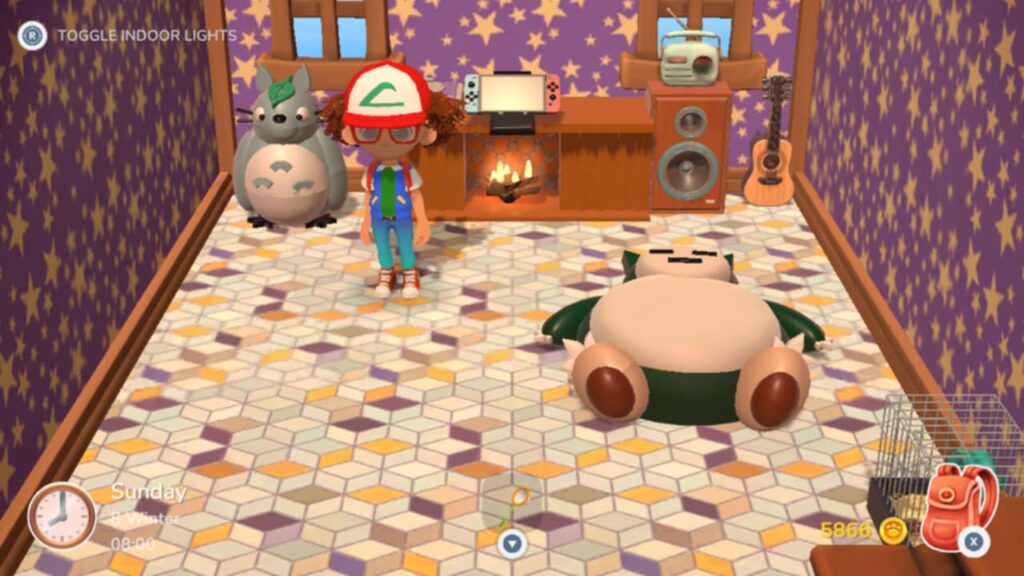
If you stick with it and take your time, the magic starts to unfold. That’s when things like Totoro statues happen. Or hot tubs beside rivers. Or glass bridges and hamster cages tucked into the back of town. Inside my house? A Snorlax bed. Because the magnificent thing about Hokko Life is that you can build whatever you want—so long as you have the patience and materials. And if you’re still learning or just want cool stuff without the grind, you can hop on the train (with Nintendo Switch Online) and visit a shop full of player-made creations. You can copy anything you like and have it sent straight to your mailbox.
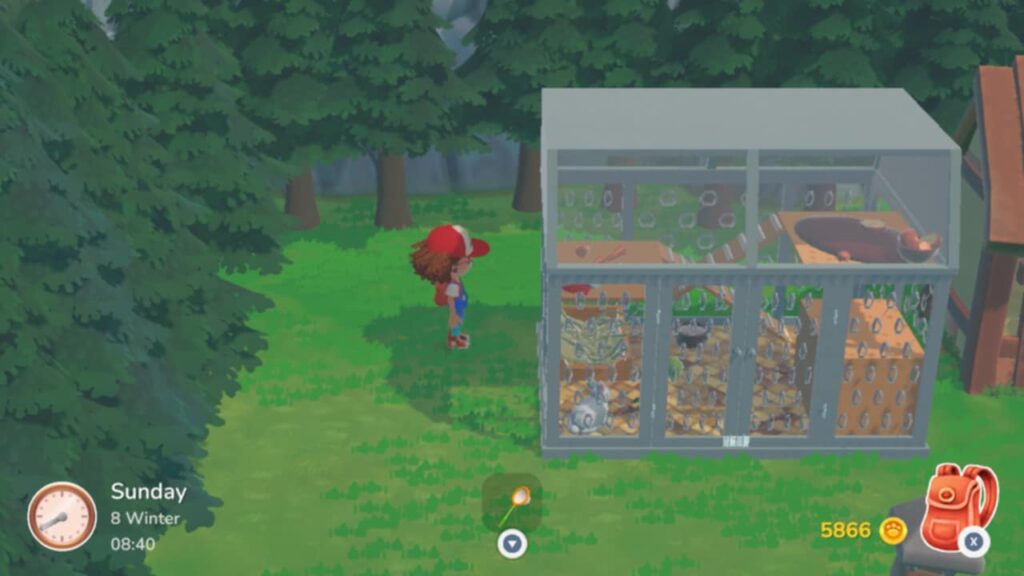
I’ve spent hours playing, creating, and simply existing in Hokko Life. One of my favorite things is that it doesn’t run in real time. With my AuDHD, I forget things constantly. I either get hyperfocused on designing or randomly decide that now is the perfect moment to plant blue flowers everywhere—including on the beach. And that’s fine! In every area (except the caves), there are neighbors wandering around. It doesn’t matter if I play at 2 a.m., noon, or 8 p.m.—someone is always there to chat. That was especially comforting during the pandemic. My neighbors became small supports: encouraging me, offering to help gather materials, or just saying hi.
It’s a unique concept. Sure, Animal Crossing might have one or two neighbors out at 2 a.m., but Stardew Valley and Palia typically don’t. If that’s when you’re able to play, it can feel isolating. Hokko Life reminded me I wasn’t weird for playing at “off” hours. Its residents played back with me, greeting me like an old friend. While I may not be an animal in the game—human is the only option—it always felt like I belonged.
Whether I was creating, planting, chopping trees, bug catching, fishing, or running errands, I was always met with kindness. Never judgment. That’s a far cry from neighborhoods in real life. Some games have residents who get mad at you—and wow, can they hold a grudge. Not in Hokko Life. Here, kindness is the default.
Conclusion: Hokko Life as a Sanctuary for Creators and Dreamers
In a gaming landscape often dominated by time-limited events, fraught progression systems, and the anxiety of real-time schedules, Hokko Life stands apart as a celebration of creativity, customization, and restorative calm. It offers players not simply a simulation, but a sanctuary—a digital landscape where the only limitation is your imagination, and the only deadline is your willingness to dream.
The game’s robust creative tools, gentle progression, welcoming music, and relentless encouragement of individual expression make it a must-play for anyone who has yearned to shape a world on their own terms. Whether crafting elaborate furniture, designing bridge after whimsical bridge, or simply listening to a tranquil song by a pond as the sun sets, Hokko Life is both an artistic playground and a wellspring of relaxation and joy.
For all its indie limitations and simplicity in some areas, Hokko Life’s heart shines brightest in its open invitation: Come, relax, create, and thrive—at your own pace, in your own time, on your own terms.