
In the radiant constellation of musical theatre, no star glimmers quite like Bernadette Peters. Across more than six decades, Peters has embodied the very soul of Broadway, dazzling audiences with her crystal-clear vocals, masterful acting, intimate emotional connection, and an unwavering dedication to the stage. Lauded as “the Queen of Broadway,” her contributions have not only defined roles but also transformed the very art of musical theatre performance.
From her pioneering interpretations of Stephen Sondheim’s works to her unforgettable turn as Annie Oakley—especially that legendary long-held note in “Anything You Can Do”—Peters’ career is a tapestry woven with innovation, resilience, charisma, and a reverence for the craft. This celebratory and insightful blog post explores Bernadette Peters’ early life, career milestones, signature roles, artistic influence, vocal technique, philanthropic passions, and continuing impact on the ever-evolving world of musical theatre.
Early Life and Education
Bernadette Peters, born Bernadette Lazzara on February 28, 1948, grew up in the Ozone Park neighborhood of Queens, New York City. The youngest of three siblings in an Italian-American family—her father was Peter Lazzara, a bread delivery driver, and her mother Marguerite, a homemaker—the stage seemed to beckon to her from an early age. The Peters surname emerged at her mother’s suggestion, both to avoid ethnic typecasting prevalent in the mid-20th century theatre scene and as a loving nod to her father’s name.
Her mother, who harbored her own love for the arts, encouraged Bernadette’s early forays into performance—a decision that set her on an extraordinary path. By age three and a half, Peters was already appearing on TV, including “Juvenile Jury,” “The Horn & Hardart Children’s Hour,” and “Name That Tune”. At nine, she earned her Actors Equity Card, making her professional stage debut in Otto Preminger’s “This Is Goggle,” and at age ten, she appeared as Tessie in the “The Most Happy Fella” revival at New York City Center.
Balancing the demands of an early career, Peters attended Quintano’s School for Young Professionals in Manhattan, which catered to aspiring actors thrust into the industry at young ages. Her disciplined study included acting lessons with David Le Grant, tap with Oliver McCool III, and voice training with Jim Gregory, foundations which would later underpin her technical prowess.
Even as a teenager, she began touring with the second national company of “Gypsy,” first as an understudy and later taking on the role of Dainty June in summer stock—a serendipitous engagement that introduced her to longtime accompanist and musical director Marvin Laird, who was astonished by the “big voice out of that little girl”.
Broadway Debut and the Meteoric Rise to Prominence
Bernadette Peters’ ascent in New York theatre was neither fortuitous nor overnight, but rather the result of relentless dedication, resilience, and singular talent. Her official Broadway debut came in 1967 with “Johnny No-Trump” at age 19, though the play itself closed after a single performance. Nevertheless, this setback could not stifle her burgeoning reputation.
Her breakthrough arrived in 1968 with “George M!,” in which she starred as Josie Cohan alongside Joel Grey. This earned Bernadette Peters her first major industry accolade, the Theatre World Award, highlighting her as a vibrant new presence on Broadway.
That same year, Peters displayed her comedic and musical chops off-Broadway in “Dames at Sea,” a spirited parody of 1930s musicals. As the plucky Ruby, her effervescent energy and technical command won her the Drama Desk Award for Outstanding Actress in a Musical, marking her as much more than a flash-in-the-pan ingenue.
Throughout the early 1970s, Peters steadily built her resume with varied roles, notably in the 1971 Broadway revival of “On the Town” (earning her first Tony nomination as the flirtatious Hildy Esterhazy) and in “Mack and Mabel” (1974), in which she starred opposite Robert Preston as silent film icon Mabel Normand—her performance once again garnered a Tony nomination and further solidified her status as Broadway’s rising star.
Across these formative years, critics and peers alike were struck by Bernadette Peters’ ability to seamlessly fuse comedic timing, vocal finesse, and empathetic dramatic acting—skills rarely so robustly embodied in a single performer. Her reputation as a transformative force in musical theatre was firmly in place by her late twenties.
The Sondheim Collaborations: Artistic Partnership and Legacy
It is impossible to discuss Bernadette Peters without exploring her profound artistic partnership with composer and lyricist Stephen Sondheim, whose works she would come to define for audiences and critics. Indeed, Sondheim himself has said, “Bernadette is flawless as far as I’m concerned. Like very few others, she sings and acts at the same time. Most performers act and then sing, act and then sing…”
Peters’ first Sondheim vehicle was “Sunday in the Park with George” (1984), a musical inspired by Georges Seurat’s iconic painting. Cast as both Dot, Seurat’s conflicted muse, and Marie, his American-born daughter, Peters delivered a performance that was by turns witty, achingly vulnerable, and searingly honest. The role earned her a Tony nomination.
The show itself was a landmark in American musical theatre, winning the 1985 Pulitzer Prize for Drama and cementing Sondheim’s reputation as the art form’s greatest modern innovator. According to The New York Times’ Frank Rich, Peters’ portrayal was “radiant,” her Act I number “Move On” (with Mandy Patinkin’s George) a tour de force in emotional directness. The cast recording remains a touchstone for Sondheim enthusiasts and newcomers alike.
Peters’ further collaborations with Sondheim include:
- “Into the Woods” (1987-1989): Original Broadway Witch—a role requiring high camp, dark comedy, and profound pathos. Peters originated the archetype for a new generation of Sondheim heroines, injecting the witch with both swagger and heartbreak.
- “A Little Night Music” (2010-2011): As Desirée Armfeldt in a celebrated Broadway revival, Peters delivered one of musical theatre’s most iconic ballads, “Send in the Clowns,” with such transparency and delicacy that Charles Isherwood of The New York Times described her performance as “transporting artistry of indelible moment”.
- “Follies” (2011-2012): Peters’ Sally Durant Plummer was an embodiment of nostalgia, longing, and unraveling dreams. Her rendition of “Losing My Mind” was called “simply shattering” by critics.
Most recently, Bernadette Peters starred alongside Lea Salonga in “Stephen Sondheim’s Old Friends,” the posthumous Broadway and West End revue celebrating Sondheim’s oeuvre and reaffirming Peters as his greatest living interpreter.
Peters herself has said, “For me, [Sondheim] is our Shakespeare. … That’s how he’ll be remembered for hundreds of years”.
Tony Award-Winning Performances: Song and Dance and Annie Get Your Gun
Song and Dance (1985-86)
Bernadette Peters’ first Tony win arrived with “Song and Dance,” Andrew Lloyd Webber’s innovative two-act musical. The first “Song” act comprises a solo tour de force: Peters’ Emma sings her heartbreak and self-discovery amidst New York’s romantic turmoil, while the “Dance” act relies on choreography to tell the male lead’s story.
As Emma, Peters painted raw vulnerability and buoyant wit with each note, drawing critics and audiences deep into Emma’s inner world. The role’s demands—carrying Act I essentially alone—highlighted Peters’ stamina, range, and ability to make a full emotional journey both credible and deeply affecting. Critics lauded her “vocal virtuosity, tempestuous fits, and husky-toned charm” (The New York Times), and she collected not only the Tony but also the Drama Desk and Drama League Awards for her performance.
Annie Get Your Gun (1999-2001)
A hallmark of Bernadette Peters’ career, the 1999 Broadway revival of “Annie Get Your Gun” saw her defy expectations for the role of Annie Oakley—originally indelibly associated with Ethel Merman’s brassy, robust delivery. Peters remade the Wild West sharpshooter as a fiercely adorable, slightly goofy gamine, playing to her strengths as an actress-singer of tremendous charm and humor.
She deftly sidestepped the danger of mere imitation, instead infusing Annie with her signature blend of vulnerability, grit, and warmth. The Washington Post’s Lloyd Rose observed, she “banishes all thoughts of Ethel Merman about two bars into her first number; for anyone who cares about the American musical theater, the chance to see Peters in this role is reason enough to see the show.”
Her performance earned her a second Tony and multiple additional honors. It is in this production that the famed “Anything You Can Do” duet with Tom Wopat became legend, thanks in no small part to the long, seemingly impossible note Peters holds—a testament both to her technical mastery and her playful stage chemistry.
Let’s talk about that note because no discussion of Peters’ artistry would be complete without giving special attention to her celebrated performance of “Anything You Can Do” from “Annie Get Your Gun”. Teamed with Tom Wopat’s Frank Butler, Peters delivered a version of the competitive duet that became instantly iconic—a showcase of vocal athleticism and showmanship.
The most memorable moment, oft-quoted and replayed by theatre fans, is the extended note Peters holds toward the number’s climax. As Frank and Annie volley boasts of superior skill, the repartee builds to a challenge: “Any note you can hold, I can hold longer…” What follows is a breathtaking, seemingly endless note that Peters sustains, gradually increasing in volume and intensity—a feat of remarkable breath control and technique that regularly brought audiences to their feet.
“Yes I…………… can!” was truly a defining moment in Bernadette Peters’ career that not only delighted audiences but helped cement her name in musical theater history.
This spectacular moment is not just a parlor trick, but a gleeful demonstration of Peters’ playful approach—the theatrical equivalent of a magic act in the middle of a beloved standard. The feat is only possible with exceptional breath control, careful diaphragm management, and years of disciplined practice—all hallmarks of Peters’ vocal training.
The effect on audiences was palpable: gasps, cheers, and raucous applause, both for the vocal marvel itself and for Peters’ radiant joy in sharing it. For many, that note came to represent Peters’ competitive spirit, resilience, humor, and technical mastery—a singular triumph in a career full of defining moments.
Other Signature Roles and Landmark Productions
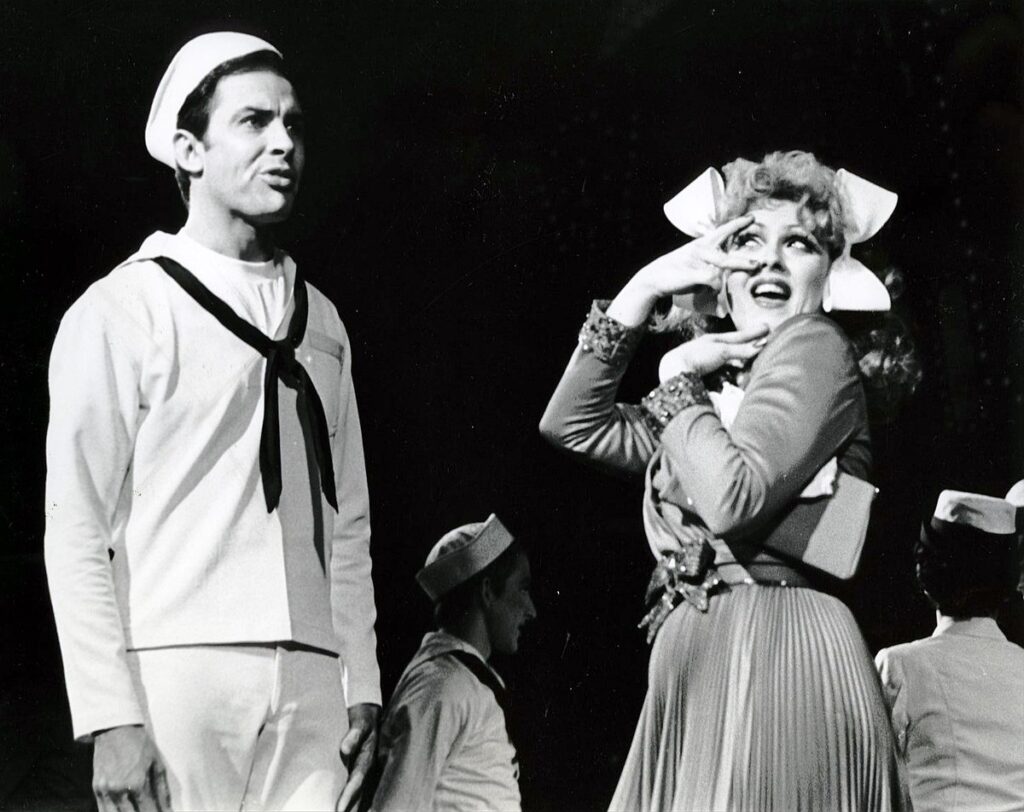
Bernadette Peters’ ability to redefine roles extends across a stunning range of productions and characters, with each turn marked by daring choices and an inimitable personal stamp.
Dot/Marie in “Sunday in the Park with George”
Peters’ performance as Dot balanced aching vulnerability with fierce independence, serving as both muse and challenger to Patinkin’s George Seurat. The show’s introspective examination of art and connection found its heart in Dot’s journey of self-discovery—rendered with crystalline articulation and emotional honesty. Songs like “Move On” still pulse with Peters’ unique blend of warmth and clarity.
The Witch in “Into the Woods”
From sinister to sidesplitting, Peters’ original Broadway Witch in “Into the Woods” haunts theatre lovers to this day. Her wit, dark humor, and underlying ache for acceptance provided the template for subsequent productions and decades of performances, both professional and amateur.
Rose in “Gypsy” (2003 Broadway Revival)
Taking on the formidable task of playing Momma Rose in “Gypsy,” Peters was compared—unfavorably, by some—upon announcement, to classic renditions by Ethel Merman, Angela Lansbury, and Tyne Daly. Yet, her performance, under Sam Mendes’ direction, drew out new depths in the character—less bluster, more psychological nuance, underpinned by raw, jagged passion. Ben Brantley noted in The New York Times, “Ms. Peters has created the most complex and compelling portrait of her long career”.
Desirée Armfeldt in “A Little Night Music”
Replacing Catherine Zeta-Jones in the 2010 Broadway revival, Peters “brought a musical delicacy and transparency” to “Send in the Clowns,” turning a beloved standard into a transformative experience for audiences and critics alike.
Sally Durant Plummer in “Follies”
As Sally in both the Kennedy Center and Broadway revivals of “Follies,” Peters brought subtleties of longing and loss to life, culminating in a shattering “Losing My Mind”.
Dolly Gallagher Levi in “Hello, Dolly!”
Inheriting the title role in “Hello, Dolly!” from Bette Midler in 2018, Peters once more made a familiar role her own, imbuing Dolly Gallagher Levi with sparkling charm and profound emotional depth. Marilyn Stasio of Variety highlighted the “acting chops to moisten eyeballs” even as she delivered comedic gems.
Vocal Technique and Performance Style
What sets Bernadette Peters apart among legendary Broadway performers is not merely her repertoire, but her unmistakable sound and interpretive genius. Her voice is a paradox: at times crystal-clear, sweet, almost childlike; at others, it explodes with brassy belt and emotional fire. Peters possesses an uncanny talent for tailoring her vocal approach to the dramatic needs of any given song and role.
Key elements of her vocal technique and performance style include:
- Vocal Range and Flexibility: Peters is a mezzo-soprano but stretches her range higher or lower as the music and character demand, making her suitable for a rich variety of leads.
- Breath Control: Her ability to sustain extended notes (as in “Anything You Can Do”) showcases disciplined breath support and control born of classical training.
- Emotional Transparency: Peters’ phrasing and diction are as notable as her tone; she crafts every lyric for maximum narrative impact, privileging storytelling above showiness. Sondheim once remarked, “She sings and acts at the same time.”
- Versatility: Whether deploying a delicate vibrato for Dot in “Sunday in the Park with George” or the strident, confident belt of Rose in “Gypsy,” Peters adapts seamlessly, never sacrificing authenticity.
As a performer, Bernadette Peters projects empathy and relatability. Her stage presence is at once commanding and intimate—her embraces of vulnerability draw the audience closer, creating a unique sense of connection. She can conjure childlike wonder or world-weary melancholia with equal skill, a rare gift that transcends technical prowess and lands squarely in the realm of intuitive artistry.
Influence and Legacy in Musical Theatre
Bernadette Peters’ journey is not just one of personal triumph; it is a story of genre-shaping influence. Her contributions have:
- Defined Sondheim’s Canon: For many, her interpretations of Sondheim’s work are definitive, forming a gold standard for subsequent performers.
- Redefined Leading Lady Standards: By refusing to be pigeonholed as merely comedic or tragic, Peters has expanded expectations for leading ladies to embody complexity, sensuality, humor, and strength—often within the same musical.
- Inspired Countless Artists: Aspiring musical theatre actors cite her as a model for technical rigor, artistic bravery, and career longevity.
- Expanded the Role of the Actor-Singer: Her commitment to “singing and acting at the same time” challenges the traditional decoupling of these disciplines, insisting instead on their seamless integration.
Her life as a recording artist furthered her influence, with six solo albums and many cast recordings earning Grammy nominations and wins—making her voice a permanent feature of theatre classrooms, cabaret performances, and cast gatherings for generations.
Television, Film, and Concert Stage
Although synonymous with Broadway, Peters has made significant marks in film, television, and the concert stage. Early film roles, like the girlfriend to Steve Martin’s Navin Johnson in “The Jerk” (1979) and the tragic Eileen in “Pennies From Heaven” (1981), revealed her versatility and comedic timing. The latter film won her a Golden Globe for Best Actress in a Musical or Comedy.
On television, Peters’ work includes:
- The Muppet Show: Earning an Emmy nomination for a now-classic guest appearance.
- The Carol Burnett Show: Recurring guest, bringing her musical theater charm into millions of living rooms.
- Cinderella (1997): As Cinderella’s Stepmother, she relished the opportunity to play against type in this star-studded ABC rendition.
- Mozart in the Jungle (2014–2018): As Gloria Windsor, she played the formidable chairwoman of the board in this Golden Globe-winning Amazon series.
- Zoey’s Extraordinary Playlist (2020–2021): A latter-day family matriarch, for which she received Emmy recognition.
- Recent Projects: Roles on “The Good Fight,” “Smash,” and “High Desert” keep her presence vibrant in contemporary pop culture.
Peters’ concert performances, from solo evenings at Carnegie Hall to worldwide orchestral tours, have become benchmarks for how musical theater interpreters can bridge genres and styles while always honoring the lyric and the dramatic impulse. Reviewers remark on her crystalline voice and her ability to connect intimately with audiences in large venues.
Philanthropy and Advocacy: Broadway Barks and Beyond
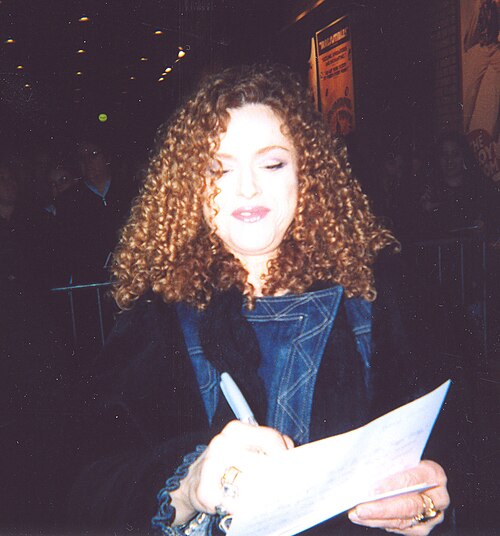
Deeply committed to leveraging her fame for social good, Bernadette Peters is as revered for her philanthropic work as for her artistry. Her signature cause is rescue animal advocacy:
- Broadway Barks: In 1999, Bernadette Peters and the late Mary Tyler Moore co-founded this annual star-studded adoption event, benefiting animal shelters and rescue organizations in New York City and beyond. Over the years, Broadway Barks has helped thousands of animals find “forever homes,” pairing canine and feline hopefuls with theater fans and Broadway stars alike. The event is synonymous with summer in Shubert Alley and regularly draws news coverage and passionate supporters.
- Children’s Books: To further support Broadway Barks, Bernadette Peters authored three children’s books—“Broadway Barks,” “Stella Is a Star,” and “Stella and Charlie: Friends Forever”—with all proceeds benefiting animal charities.
- Broader Advocacy: Peters’ support extends to AIDS research and support organizations (such as Broadway Cares/Equity Fights AIDS), children’s health charities, and accessibility initiatives for multiple disabilities.
- Awards for Service: Her efforts have been acknowledged by the Isabelle Stevenson Tony Award for philanthropic contributions, the Brooke Astor Award from the Animal Medical Center, and honors from The American Theater Wing.
Bernadette Peters’ Recent and Ongoing Projects
Well into her seventh decade, Peters remains an active, innovative force in musical theatre and beyond:
- “Stephen Sondheim’s Old Friends” (2023–2025): Peters is the top-billed star in both the West End and Broadway premieres of this all-star Sondheim revue, sharing the stage with Lea Salonga and an international cast of musical theater luminaries. The show has played to sold-out houses and rapturous reviews, with critics once again hailing Bernadette Peters as the “keeper-of-the-flame” for Sondheim’s legacy.
- Concerts and Benefit Performances: Recent highlights include her 2024 Carnegie Hall concert—her crystalline rendition of “Send in the Clowns” drawing comparisons to iconic interpretations by Judy Collins and others—and numerous headline performances at major arts venues in the U.S. and abroad.
- Television and Streaming Series: Peters continues to appear in recurring roles, notably in Apple TV+’s “High Desert” (2023), NBC’s “Zoey’s Extraordinary Playlist,” and CBS All Access’ “The Good Fight.”
- Animal Charity Initiatives: With annual iterations of Broadway Barks and the recently-launched West End Woofs in the United Kingdom, Peters’ advocacy continues to gain global reach.
Awards, Honors, and Critical Reception
Bernadette Peters’ mantelpiece groans under the weight of her honors:
| Award | Number | Notable Works |
|---|---|---|
| Tony Awards | 3 (2 wins) | Song and Dance, Annie Get Your Gun, plus an honorary Isabelle Stevenson Award |
| Drama Desk Awards | 9 (3 wins) | Dames at Sea, Song and Dance, Annie Get Your Gun |
| Theatre World Award | 1 | George M! |
| Golden Globe Awards | 3 (1 win) | Pennies from Heaven |
| Grammy Nominations | 4 | Solo albums and original cast recordings |
| Primetime Emmy Noms | 3 | The Muppet Show, Ally McBeal, Zoey’s Extraordinary Playlist |
| Star on Hollywood Walk of Fame | 1 | – |
| Theatre Hall of Fame | Youngest inductee | – |
| Isabelle Stevenson Tony Award | 1 | Broadway Barks, philanthropic work |
| Other Honors | Numerous | Hasty Pudding Woman of the Year, Brooke Astor Award, etc. |
The critical consensus across decades is resounding: Peters is not only a technical and interpretative genius, but also a trailblazer who has changed the expectations of musical theatre performance itself. Reviewers often remark on her “emotional transparency and musical delicacy … that turns [a song] into an occasion of transporting artistry” (The New York Times), her “stunning achievement” in marathon roles (Frank Rich), and her ability to “extract a laugh from every line” (Playbill).
Bernadette Peters’ Enduring Influence: The Legacy
What, at root, is Bernadette Peters’ contribution to musical theatre? The answer is multidimensional:
- Reinventing the Leading Lady: By infusing roles with vulnerability, humor, sensuality, grit, and self-mockery, Peters has upended the stereotype of the “Broadway diva,” making room for deeper, messier, and more human portrayals.
- The Sondheim Effect: Peters’ collaborations with Stephen Sondheim have not only set the interpretive standard for his works, but helped elevate Sondheim from acclaimed composer to universally acknowledged genius, thanks in part to her ability to merge lyric and character so seamlessly.
- Technique as Storytelling: Her technical skills—the flawless breath control, range, and phrasing—are never ends in themselves but are always deployed in the service of story and character.
- Mentorship and Inspiration: A new generation of performers look to her as a model for career longevity, resilience, and generosity. For countless artists in training, Peters’ cast albums, concert videos, and live performances are both tutorial and inspiration.
Bernadette Peters is more than a star; she is a cultural touchstone, a beacon for anyone who cherishes musical theatre’s emotional depths, its possibilities for transformation, and its enduring relevance. Her career, from its prodigious beginnings in Queens to its ongoing glory on Broadway, is a testament to the fusion of artistry, discipline, and heart.
As she continues to grace concert halls, stages, and screens, Peters remains a living legend whose legacy is not only in the parts she played, but in the way she redefined how musical theatre can be sung, acted, and felt. The long note she holds in “Anything You Can Do” is emblematic: a breathtaking, bold, joyously defiant proof of what is possible—in song, in art, and in life—for anyone daring enough to try.
Let us celebrate, applaud, and emulate Bernadette Peters—the reigning queen of Broadway, the ultimate storyteller, and a powerful force for good on and off the stage.
If you have the chance to hear her sing, if you meet the opportunity to watch her act, if you witness the passion she pours into every cause she adopts—seize it. For with Bernadette Peters, you’ll not just see a performance. You’ll experience what it means to be alive in the theatre.