Any seasoned theater artist will tell you that there are two composers to never use as your audition piece- Stephen Sondheim and Andrew Lloyd Webber. Sondheim and Lloyd Webber are where auditions go to die. What no one really talks about is why. So, let me do the honors.
Choosing a Sondheim piece is like handing your accompanist a cursed scroll written in 7/8 time and whispering, “Good luck, bard.” It’s not just the singer who’s sweating — it’s the poor pianist trying to sight-read a page of syncopated, key-shifting, tempo-twisting madness. It is cruel and unusual punishment. And if your bard — the accompanist — stumbles through the obscure piece you unearthed from the crypt, you get blamed. After all, it was your choice of spell.
“The goal of an audition is to let the director hear your vocal range!” You cry. Surely, “Memory”(CATS) or “Think of Me” (Phantom of the Opera) with that soaring aria, “Don’t Cry for Me, Argentina” (Evita) or if you’re more the tenor “Gethsemane” (Jesus Christ Superstar) or “Til I Hear You Sing” (Love Never Dies) would be perfect choices, you might think. Unfortunately, too many people think along those same lines, so the poor director has heard Andrew Lloyd Webber belts so many times that they haunt them in their dreams.
Hence, if Sondheim fills the accompanist with vitriol, Lloyd Webber is the bane of the director. Together, they form the twin gates of audition doom. Sondheim and Lloyd Webber are where auditions go to die.
Yet, inevitably, singers will traverse the twin gates, and why? Because beyond the audition room, in their own rites and realms, Sondheim and Webber are geniuses — architects of music and lyric who shaped the very landscape of modern musical theater.
Now, before you scream Rogers & Hammerstein at me- please know that Stephen Sondheim’s mentor was Hammerstein, so take your playbill and go sit down.
A Look Into The Twin Gates of Sondheim and Webber
The landscape of modern musical theater has been indelibly shaped by the creative forces of Stephen Sondheim and Andrew Lloyd Webber. These two composers, while often operating in parallel but divergent artistic universes, have produced some of the most pivotal works of the late 20th and early 21st centuries, fundamentally altering the expectations and experiences of audiences worldwide. Sondheim’s “Into the Woods” and “Sweeney Todd”, and Lloyd Webber’s “The Phantom of the Opera” and “Cats”, are not merely enduring hits; they are touchstones of their creators’ respective styles and philosophies.
Stephen Sondheim: Life, Influences, and Artistic Philosophy
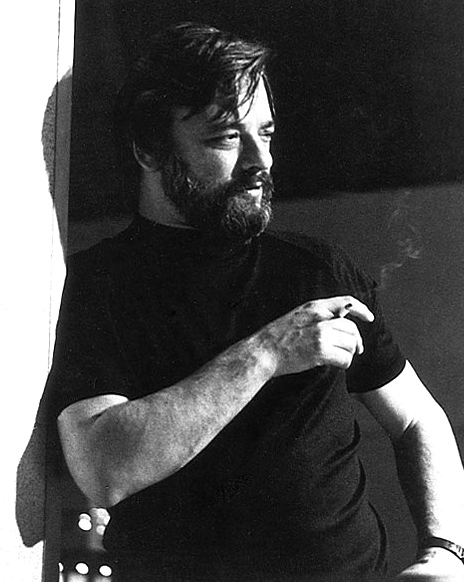
Background and Early Influences
Stephen Joshua Sondheim was born in New York City in 1930, immersed early in a musical milieu due to his mother’s singing and later, through a fortuitous mentorship with Oscar Hammerstein II, one of the architects of the American book musical. Hammerstein’s rigorous tutelage profoundly impacted Sondheim’s approach; as Sondheim himself reflected, “content dictates form. Less is more. God is in the details. All in the service of clarity, without which nothing else matters”. This embrace of craft, structure, and narrative clarity would become a hallmark of his oeuvre.
A prodigious student, Sondheim developed his compositional voice at Williams College and through studies with avant-garde composer Milton Babbitt. There, he learned to manipulate motifs and harmonic language—a trait observable in his later scores, where complex musical ideas serve dramatic character arcs rather than superficial spectacle.
Sondheim and Hammerstein
Stephen Sondheim’s introduction to Oscar Hammerstein II was ordinary in circumstance and extraordinary in consequence. Hammerstein was a family friend and neighbor of the Sondheims; the connection grew out of social proximity rather than a formal audition or recommendation. As a teenager already deeply interested in theatre and composition, Sondheim began bringing his early lyric drafts to Hammerstein, who read and critiqued them with the patient, exacting attention he famously brought to librettos and lyrics throughout his career. The meetings were informal but sustained; Hammerstein’s willingness to take a young writer seriously turned casual proximity into mentorship.
Hammerstein’s lessons were concrete and shaped Sondheim’s craft. He drilled Sondheim in the fundamentals of lyric writing: the primacy of clear dramatic intention, the importance of character-specific language, and how a lyric must serve plot and character rather than exist for its own poetic pleasure. He was generous with time and blunt with critique, offering revision-focused feedback that trained Sondheim to read his own work with the merciless ear of a dramatist rather than merely a poet. That disciplined apprenticeship taught Sondheim to subordinate cleverness to function, a value that later defined Sondheim’s approach to integrating music and narrative
The relationship was not a pedestal and pupil affair; it was a working apprenticeship that combined affection with rigor. Hammerstein treated Sondheim as a fellow craftsman-in-training, offering models, corrective notes, and a professional standard to emulate. Sondheim benefited from Hammerstein’s decades of experience in shaping book musicals and his ability to translate dramatic impulse into lyric form. That practical mentorship complemented Sondheim’s own precocious musical education and highbrow influences, channeling them toward a theatrical discipline Hammerstein embodied.
Hammerstein’s impact shows up throughout Sondheim’s work in stylistic and ethical ways. Sondheim absorbed Hammerstein’s insistence that songs must advance story and reveal character, a principle visible in the economy of songs from Into the Woods through Sweeney Todd. Even as Sondheim moved toward greater harmonic complexity and a more psychologically incisive lyricism, the Hammersteinian commitment to dramatic clarity remained a structural spine. Sondheim later paid the mentorship forward, mentoring younger writers and always acknowledging Hammerstein as a formative teacher who shaped not only his technique but his professional standards.
The Hammerstein–Sondheim meeting is a small moment with outsized repercussions. By mentoring Sondheim, Hammerstein effectively passed classical Broadway craft into the hands of a composer-lyricist who would expand and sometimes overturn the form. The Sondheim that emerged combined Hammerstein’s dramaturgical rigor with harmonic adventurousness and linguistic precision, producing shows that redefined what musical theatre could do narratively and emotionally. The lineage from Hammerstein’s book-driven sensibility to Sondheim’s sophisticated integration of music and text is one of mid-20th-century musical theatre’s most consequential continuities.
Early Career and Breakthrough
Sondheim’s first major foray on Broadway came as lyricist for “West Side Story” (1957), collaborating with Leonard Bernstein, and “Gypsy” (1959), with Jule Styne. Soon, he pivoted to writing both music and lyrics, beginning with “A Funny Thing Happened on the Way to the Forum” (1962), then entering his most impactful creative period in the 1970s and 1980s, working closely with directors Harold Prince and James Lapine.
Andrew Lloyd Webber: Biography and Formation
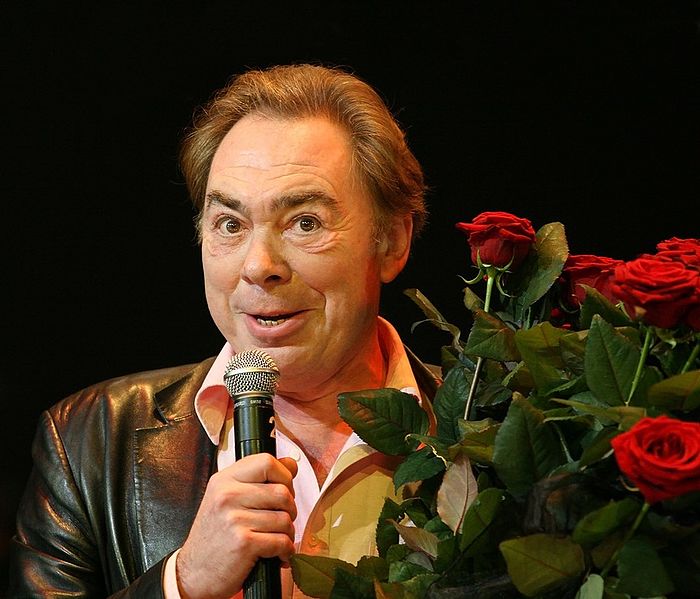
Early Life and Collaborations
Andrew Lloyd Webber, born in London in 1948, was similarly surrounded by music, with a composer father and violinist brother. He studied at Magdalen College, Oxford, and later the Royal College of Music, where his love for both theatricality and melody blossomed. Unlike Sondheim, Lloyd Webber early found his authentic voice through collaboration—most notably with lyricist Tim Rice, resulting in innovative, pop-inflected musicals starting with “Joseph and the Amazing Technicolor Dreamcoat” (1968) and “Jesus Christ Superstar” (1970).
Style Formation and Rise
Lloyd Webber’s style came to prominence with the emergence of the megamusical—an era-defining genre characterized by lavish production values, rock-driven scores, and appeals to a broad, international audience. Shows like “Evita” (1976), “Cats” (1981), and “The Phantom of the Opera” (1986) set new benchmarks for commercial and cultural impact, with Lloyd Webber’s music achieving a universal appeal that transcended traditional theater boundaries.
Key Works: Stephen Sondheim
Sweeney Todd: The Demon Barber of Fleet Street
Premiering on Broadway in 1979, “Sweeney Todd” redefined what musical theater could address both thematically and musically. Based on Christopher Bond’s Victorian melodrama, the show is a dark exploration of revenge, madness, and societal decay, set in industrial London.
Sondheim’s score is notable for its extensive use of dissonance, chromaticism, and through-composed structures, creating a relentless psychological tapestry. Signature songs—such as “A Little Priest,” “Johanna,” and “Not While I’m Around”—employ wordplay, intricate rhyme, and shifting harmonic landscapes to reflect the fractured inner worlds of the characters. The musical’s quasi-operatic form (over 80% is sung or underscored) challenges audience expectations and forges emotional identification not with heroes, but with complex antiheroes.
“Sweeney Todd” won eight Tony Awards, including Best Musical and Best Score, and is widely acknowledged as an exemplar of Sondheim’s ability to blend narrative, music, and psychological realism.
Into the Woods
“Into the Woods” (1987), with a book by James Lapine, is a tapestry of interwoven Grimm fairy tales. Characters from “Cinderella,” “Jack and the Beanstalk,” “Rapunzel,” and “Little Red Riding Hood” pursue wishes into the mystical woods—only to encounter the real-world consequences and complexity behind the fairy-tale facades.
Sondheim again uses musical motifs and thematic recurrences—most notably the persistent two-note “I wish”—to unify the story’s multifarious strands. The first act offers familiar resolutions; the second act, however, unravels these, asking profound questions about moral ambiguity, communal responsibility, and the nature of storytelling. Songs like “No One Is Alone” and “Children Will Listen” are touchstones for the show’s message: that ethical maturity requires acknowledging complexity and empathy, not simplistic binaries.
“Into the Woods” achieved both commercial and critical success, winning Tony Awards for Best Score and Best Book, and enduring through numerous revivals and a major film adaptation.
Key Works: Andrew Lloyd Webber
Cats
“Cats,” premiering in London in 1981, is a sung-through work based on T.S. Eliot’s “Old Possum’s Book of Practical Cats.” Unusual for its time, “Cats” lacks a traditional narrative, instead presenting a series of character vignettes as members of the Jellicle tribe vie for a chance at rebirth.
Lloyd Webber’s score fuses classical orchestration with pop, jazz, and music hall influences, while integrating direct settings of Eliot’s verse—a rare achievement in musical adaptation. The show’s most famous number, “Memory,” written for the character Grizabella, became an international standard, encapsulating the musical’s themes of nostalgia, loss, and transformation.
The production was an aesthetic milestone, with its revolutionary use of ensemble choreography, costumes, and set design turning “Cats” into the quintessential megamusical and a globally franchised entertainment phenomenon.
The Phantom of the Opera
First staged in London in 1986, “The Phantom of the Opera” is Lloyd Webber’s romantic tour-de-force, inspired by Gaston Leroux’s 1910 novel. The story centers on Christine Daaé, her mysterious mentor-turned-obsessor the Phantom, and Raoul, in a love triangle set against the grandeur and shadows of the Paris Opera House.
Lloyd Webber’s score is grandly operatic, blending lush melodies and electronic textures with musical pastiche. Signature songs—“The Music of the Night,” “All I Ask of You,” “Think of Me”—are both theatrical showstoppers and enduring pop standards. The production’s iconic staging (notably the crashing chandelier), elaborate costumes, and technical effects epitomize the megamusical ethos.
Critically and commercially, “Phantom” achieved record-setting longevity in both London and on Broadway, with over 13,000 performances and an estimated audience of more than 140 million worldwide, grossing in excess of $6 billion.
Compositional Styles: Innovation vs. Accessibility
| Aspect | Stephen Sondheim | Andrew Lloyd Webber |
|---|---|---|
| Melodic Style | Speech-inflected, angular, complex | Lyrical, sweeping, pop-derived |
| Harmony | Dissonant, chromatic, often shifting between major/minor; unpredictable progressions | Tonal, harmonic clarity, accessible chord progressions |
| Rhythm | Syllabic, phrase-driven; mirrors natural speech, irregular meters | Steady, anthem-like or dance-based rhythms |
| Orchestration | Chamber-ensemble, detailed and character-driven; imaginative use of timbre | Grand, lush symphonic/rock, electronic textures; focus on scale |
| Musical Form | Through-composed, motivic, integrated narrative-musical development | Through-composed or recitative-style for sung-through shows; clearly structured numbers |
| Notable Innovation | Motif as psychological driver (“I wish”), embedded layer of subtext, complex counterpoint | Fusion of popular idioms with operatic structure, spectacle-induced immersion |
Elaboration and Analysis:
Sondheim’s compositional style emerges as introspective and intellectually rigorous. He often employs unpredictable harmonic sequences—as in “Sweeney Todd’s” swelling chromatic clusters—to reflect character psychology and moral ambiguity. Character-specific motifs and fragmented lines highlight interior unrest (“Into the Woods”), while lyric-melody alignment produces both naturalistic dialogue and profound subtext.
By contrast, Lloyd Webber’s melodic gift is for anthemic, memorable tunes, easily extractable from their dramatic context (“Memory,” “The Music of the Night”). His scores privilege accessibility, often anchoring key moments in lush orchestrations and memorable refrains. The pop–classical fusion is vivid in “Phantom,” which incorporates operatic vocalism alongside electronic and rock-style elements, creating a soundscape designed to emotionally engulf the audience.
While Sondheim’s works can challenge both audiences and performers, demanding close attention, Lloyd Webber’s are immediate in their appeal and lend themselves to standalone listening and commercial recordings.
Lyrical Approaches: Nuance vs. Universality
While both composers achieved renown through words as much as music, their approaches to lyric writing are starkly different.
Sondheim, a meticulous craftsman, wrote his own lyrics and is celebrated for cerebral wordplay, conversationally inflected writing, and complex rhyme schemes. He integrated character psychology into every syllable, often embedding subtext and ironic double meanings, pushing the audience to actively engage in interpretation. His lyrics in “Sweeney Todd” and “Into the Woods” are dense, sometimes mordantly funny (“A Little Priest”), and frequently invoke philosophical reflection (“No One Is Alone”).
Sondheim’s process was deeply collaborative and recursive: brainstorming themes, establishing the precise dramatic necessity of each song, and matching the natural rhythms of speech with melody to produce a “blueprint” for the stage. He believed in “clarity above all,” emphasizing that lyrics in musical theater must be instantly understandable, resonant, and specifically tailored to character and situation.
Lloyd Webber, on the other hand, often deferred lyrics to specialized collaborators—Tim Rice, Charles Hart, Richard Stilgoe, among others. Rice’s writing, in particular, is praised for its directness and populist wit (“Don’t Cry for Me Argentina,” “I Don’t Know How to Love Him”). In “Cats,” much of the text comes verbatim from T.S. Eliot, while “Phantom” employs an operatic grandiosity, with lyrics tailored for soaring melodic lines and emotional immediacy. The effect is to create broadly relatable universes—love, loss, redemption—encapsulated in lyrics that serve as emotional shorthand.
The difference is well-summarized by practitioners and critics: “Sondheim’s words demand reflection and analysis… Lloyd Webber’s are universally accessible, emotionally direct, and easily recalled”.
Thematic Depth and Narrative Complexity
A hallmark of Sondheim’s work is his unflinching embrace of mature, ambiguous themes. He explores identity, desire, alienation, moral conflict, and the uncertainties of societal life. In “Sweeney Todd,” the pursuit of revenge leads to tragedy and cannibalistic horror, raising questions about societal structures and justice. “Into the Woods” unpacks childhood tales to uncover adult anxieties: the perils of wish fulfillment, the demands of community, the inevitability of loss, and the need for collective responsibility.
His thematic ambition is reflected in the very structure of his musicals. In “Company,” the fragmented vignette structure matches the protagonist’s search for meaning in a chaotic, alienating urban world; in “Into the Woods,” the bifurcated structure subverts the “happily ever after” in favor of a sobering confrontation with real-world ambiguity.
Lloyd Webber’s musicals, conversely, often focus on romantic yearning, redemption, obsession, and spectacle-driven myth-making. “Phantom” is at its core a meditation on the beauty and ugliness of desire, art as a path to salvation or destruction, and the tragedy of the outcast. “Cats” meditates—albeit in broad, allegorical terms—on memory, identity, and rebirth; its characters are less psychologically individuated than archetypes serving the collective ritual.
Where Sondheim’s shows are dialogic and inward, requiring analysis and reflection, Lloyd Webber’s are outwardly expressive, tapping into collective fantasies, nostalgia, and emotional catharsis.
Historical Context and Critical Reception
Sondheim
Emerging at a time when the American musical was dominated by postwar optimism and the templates set by Rodgers and Hammerstein, Sondheim challenged the genre’s escapism and sentimentality. By the 1970s, the musical was ripe for reinvention, and Sondheim led the movement toward deeper psychological realism, structural experimentation (the “concept musical”), and darker subject matter. “Company” (1970) and “Sweeney Todd” (1979) typified this shift in both form and content.
Despite early resistance from some critics who found his work dense or “unhummable,” Sondheim ultimately garnered universal acclaim, winning Tony, Grammy, Academy, and Pulitzer prizes, and inspiring subsequent generations of artists—from Jonathan Larson (“Rent”) to Lin-Manuel Miranda (“Hamilton”).
Lloyd Webber
Lloyd Webber’s ascendance coincided with the globalization of theater in the 1980s. British “megamusicals” exported to Broadway and beyond (notably by producer Cameron Mackintosh) upended expectations, introducing West End-style spectacle and branding to American stages.
Critically, Lloyd Webber enjoyed strong reviews for his early works, though later megamusicals sometimes divided opinion—some praised the emotional power and innovation; others criticized a perceived lack of artistic depth, focusing instead on the commercialism of the form. Yet, his impact is unmistakable: “Cats” and “Phantom” redefined audience demographics, pulling in tourists and new theatergoers and radically expanding the market.
Both received top theater honors: “Cats” and “Phantom” collected multiple Tony, Olivier, and Grammy awards, with media coverage and ticket sales marking their outsized influence.
Comparative Data Table
| Musical | Composer | Year | Awards (Major) | Themes & Story | Notable Songs | Longevity (Broadway/West End) |
|---|---|---|---|---|---|---|
| Into the Woods | Stephen Sondheim | 1987 | Tony (Score, Book), Grammy | Moral ambiguity, community, consequence | “No One Is Alone”, “Children Will Listen” | 765 (B), 197 (WE) + multiple revivals |
| Sweeney Todd | Stephen Sondheim | 1979 | 8 Tony, 1 Olivier, Grammy | Revenge, madness, class, justice | “A Little Priest”, “Johanna” | 557 (B), 157 (WE) + revivals |
| The Phantom of the Opera | Andrew Lloyd Webber | 1986 | Olivier, Tony, Grammy | Obsession, beauty, duality | “The Music of the Night”, “All I Ask of You” | 13,981 (B), 14,200+ (WE) |
| Cats | Andrew Lloyd Webber | 1981 | Olivier, Tony, Grammy | Memory, identity, rebirth | “Memory” | 7,485 (B), 8,949 (WE) |
(B = Broadway performances, WE = West End performances)
Influence on Musical theater
Sondheim’s Legacy
Sondheim’s artistic bravery made possible an entire school of musical theater focused on psychological depth and structural innovation. He demonstrated that musicals could address adult themes, employ complex musical languages, and avoid tidy resolutions. His influence permeates the works of Jason Robert Brown, Lin-Manuel Miranda, and Sara Bareilles, among many others.
Through cross-media adaptations (including film versions of “Sweeney Todd” and “Into the Woods”), Sondheim’s reach extends far beyond Broadway’s footlights. He also widely influenced actor-composers and playwrights, with his actor-centric scoring inspiring more collaborative approaches in musical theater direction and production.
Lloyd Webber’s Impact
Lloyd Webber effectively commercialized and globalized the musical, founding the model for the megamusical: enormous production budgets, slick international marketing, concept album releases, and standardized world tours. His business acumen established new norms around theatrical property licensing, brand extensions, and multimedia adaptations.
Musically, Lloyd Webber normalized the fusion of rock, pop, and traditional operatic forms, opening the door for successors ranging from Disney blockbusters (“The Lion King”) to jukebox musicals and modern “popera” hits.
Conclusion
Stephen Sondheim and Andrew Lloyd Webber, while often cast as rivals, are best understood as complementary architects of the modern musical’s artistic evolution. Sondheim’s probing intelligence, formal innovation, and deep empathy challenged audiences to grapple with contradiction, ambiguity, and the complexity of human experience. Lloyd Webber’s contributions, no less vital, democratized and popularized the musical, proving that emotional directness, melody, and spectacle could intersect with artistry to reach audiences at a global scale.
Both composers have, in their unique ways, expanded the expressive range and societal reach of musical theater. “Sweeney Todd,” “Into the Woods,” “The Phantom of the Opera,” and “Cats” are not merely masterworks within their genres—they are key texts in a living conversation about what the musical can hope to achieve, both as art and as entertainment for all.

🎭 Shop the Post
- Sweeney Todd — Vocal Selections (Piano/Vocal) — for singers and accompanists tackling Sondheim’s score. Buy on Amazon
- Sweeney Todd — 2005 Broadway Revival Cast — definitive recording for style and interpretation. Buy on Amazon
- Stephen Sondheim and the Reinvention of the American Musical — a deep dive into Sondheim’s craft and legacy. Buy on Amazon
- Into the Woods — Soundtrack — motif-rich listening for ensemble study. Buy on Amazon
- The Essential Andrew Lloyd Webber Collection (Piano/Vocal/Guitar) — audition staples and megamusical classics. Buy on Amazon
- How to Analyze the Works of Andrew Lloyd Webber — accessible critique and classroom-ready insights. Buy on Amazon
- Cats — Original Broadway Recording — ensemble choreography meets pop-jazz score. Buy on Amazon
- The Phantom of the Opera — 1986 London Cast — lush, operatic, iconic. Buy on Amazon
🛈 This post contains affiliate links. If you purchase through them, I may earn a small commission at no extra cost to you.