The Bat Ray: A Creature That Sweeps the Seafloor Without Even Trying
If you have ever watched a bat ray glide across the ocean floor, you know the feeling of instant calm that washes over you. Their wings move like silk in slow motion, their bodies hover with effortless grace, and their faces carry that permanently serene expression that suggests they have never once worried about anything more stressful than whether lunch is hiding under the sand. But spend a little more time observing them and you will discover a delightful truth. Beneath that peaceful exterior is a creature whose daily routine looks suspiciously like the work of a household robot vacuum. The bat ray is the ocean’s accidental Roomba, sweeping, stirring, and reorganizing the seafloor with the same earnest determination as a gadget that keeps bumping into the same table leg.
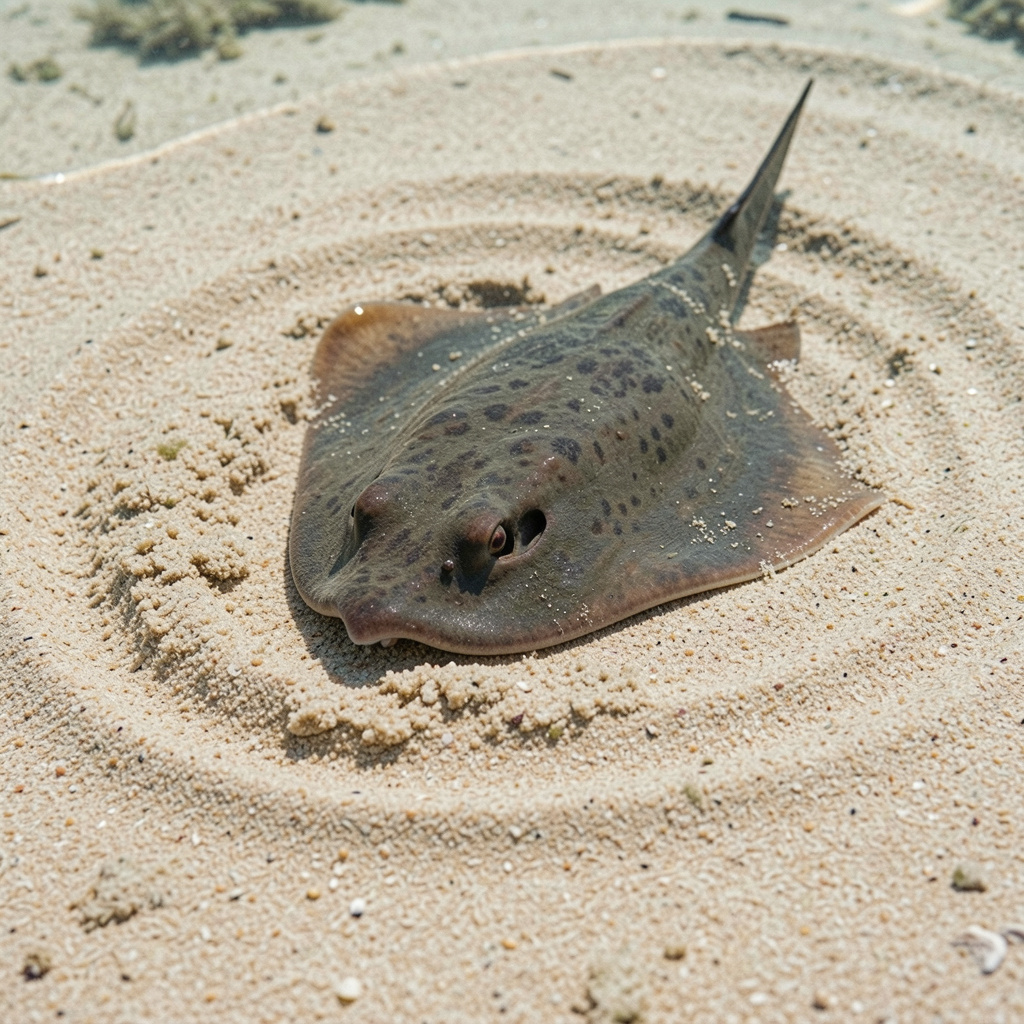
This comparison is not just cute. It is surprisingly accurate. Bat rays are natural diggers, and their method of finding food involves flapping their wings to create suction that lifts sand in swirling clouds. They are not trying to tidy up. They are simply hungry. But in the process of hunting for buried clams and crustaceans, they accidentally clean, aerate, and rearrange the seafloor in ways that benefit a whole cast of other marine creatures. They are the unintentional custodians of their environment, and they do it all with the kind of cheerful obliviousness that makes them impossible not to love.
The Morning Routine of a Bat Ray
Imagine a bat ray beginning its day. Sunlight filters down through the water in soft ribbons. The kelp forest sways like a sleepy crowd stretching after a long night. The bat ray glides forward, wings rippling, and then suddenly stops. Something delicious is hiding beneath the sand. The ray hovers, flaps its wings, and the seafloor erupts in a puff of sediment. Out pops a clam, a worm, or some other unfortunate creature that thought it had chosen a safe hiding spot. The ray slurps it up with the enthusiasm of someone discovering a forgotten snack in the back of the fridge. Meanwhile, a group of small fish dart in to grab whatever the ray missed. They are the freeloaders of the ocean, following the ray like tiny fans hoping for crumbs.
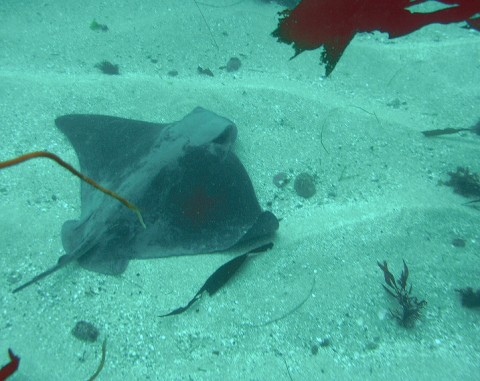
This behavior is called bioturbation, a scientific term that sounds far more serious than the activity itself. In reality, it is a bit like watching someone fluff a pillow. The sand gets lifted, oxygen flows in, nutrients get redistributed, and the entire area becomes a livelier place. Creatures that depend on freshly stirred sediment thrive. Plants benefit from the increased oxygen. Even the water becomes clearer once the cloud settles. The bat ray has no idea it is doing any of this. It is simply trying to get breakfast. But the ecosystem quietly thanks it for the effort.
Bat Rays As the Accidental Gardener of the Seafloor
There is something charming about an animal that improves its environment without meaning to. Beavers build dams on purpose. Termites construct elaborate mounds with architectural precision. Even earthworms know they are tunneling. But bat rays are just living their lives, flapping their wings, making a mess, and accidentally helping everyone else. They are the marine equivalent of someone who drops a bag of chips and ends up feeding half the pigeons in the park.
If you watch a bat ray long enough, you will notice that it rarely digs alone. Other fish quickly learn that a ray’s excavation efforts are a reliable source of snacks. They hover nearby, waiting for the moment the sand lifts. When it does, they rush in with the enthusiasm of shoppers on a clearance sale. The ray does not mind. It barely seems to notice. It is too busy flapping and snuffling and generally behaving like a creature that has never once considered the concept of personal space. This relationship is not quite symbiotic, but it is certainly convenient. The ray gets its meal, and the fish get theirs. Everyone wins.
The Art and Science of Bat Ray Excavation
The digging itself is a marvel of natural engineering. Bat rays use their wings to create a downward force that pushes water into the sand. This creates a suction effect that lifts sediment in a swirling plume. Their mouths, located on the underside of their bodies, are perfectly positioned to vacuum up whatever emerges. Their teeth are arranged in flat plates that can crush shells with surprising strength. Watching them eat is a bit like watching someone operate a very gentle, very polite jackhammer.
Despite their impressive abilities, bat rays are gentle creatures. They are curious, social, and often travel in groups. In some places, they gather in such large numbers that the water seems to ripple with wings. Divers who encounter them often describe the experience as peaceful, almost meditative. Rays glide past with the calm confidence of animals that know they are beautiful and see no reason to rush. Even when they dig, they do it with a kind of earnest enthusiasm that feels more endearing than chaotic.
A Friendly Face in the Aquarium: Why We Love The Bat Ray
Their gentle nature makes them popular in aquariums, where visitors can sometimes touch them in shallow pools. A bat ray will often swim right up to the edge, flapping its wings as if waving hello. It is hard not to smile when one approaches. Their faces have a natural friendliness to them, even though the expression is simply the shape of their anatomy. Still, it is easy to imagine them as the cheerful neighbors of the sea, always ready to say good morning before going off to rearrange the sand again.
One of the most delightful things about bat rays is how quickly they learn. Young rays watch adults dig and soon begin practicing the technique themselves. Their first attempts are clumsy, sending up small, uneven puffs of sand. Over time, they refine their movements until they can create perfect circular craters in the seafloor. These craters can be surprisingly large, sometimes several feet across. If you were to swim over a sandy bay after a group of rays had passed through, you might think you were looking at the aftermath of a tiny meteor shower.
Crater Cities and Seafloor Neighborhoods
These craters are more than just evidence of a good meal. They become microhabitats for other creatures. Small fish hide in them. Crabs explore them. Algae settle into the disturbed sediment. The seafloor becomes a patchwork of textures and shapes, each one created by a bat ray that was simply trying to find lunch. In this way, bat rays shape their environment in subtle but meaningful ways. They are not architects in the traditional sense, but their presence leaves a lasting mark.
There is a certain joy in watching an animal that seems so content with its role in the world. Bat rays do not rush. They do not fret. They glide, they dig, they eat, and they repeat. Their lives are simple, but their impact is significant. They remind us that not every contribution needs to be intentional to matter. Sometimes just being yourself is enough to make the world a little better.
The Quiet Comedy of Bat Ray Behavior
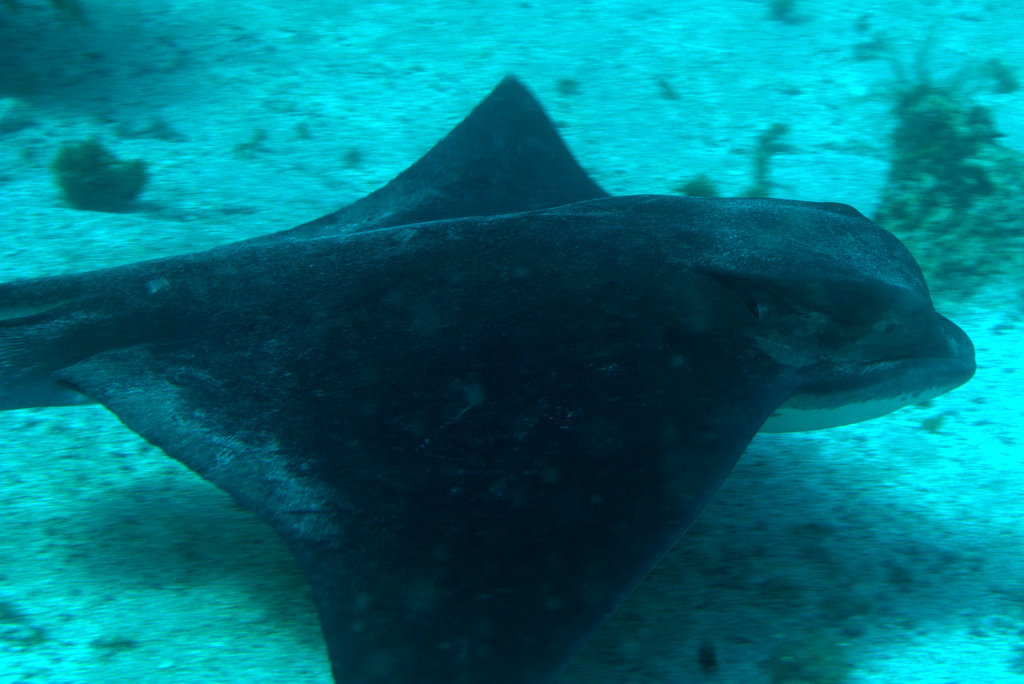
Of course, no discussion of bat rays would be complete without acknowledging their sense of humor. Not literal humor, of course, but the kind that humans project onto animals when they behave in ways that feel relatable. A ray that digs too enthusiastically and ends up covered in sand looks like someone who sneezed into a bag of flour. A ray that glides up to a diver and stares directly into their mask seems to be asking if they have any snacks. A ray that flaps its wings in a sudden burst of energy resembles a person trying to shake crumbs off a tablecloth. These moments make them endlessly entertaining to watch.
Their resemblance to a Roomba becomes even more apparent when you consider how single minded they can be. A ray that has decided to dig will not be deterred. It will flap and hover and wiggle until it finds what it is looking for. If a rock is in the way, it will simply dig around it. If another ray is nearby, it will dig anyway. If a fish swims directly into the cloud of sand, that is the fish’s problem. The ray is on a mission, and nothing will stop it from completing its task.
The Bat Ray’s Role in the Bigger Picture
This determination is part of what makes them such effective ecosystem engineers. They do not give up easily. They do not get distracted. They do not worry about whether their efforts are appreciated. They just keep digging, one crater at a time, shaping the seafloor with every flap of their wings. It is a quiet kind of persistence, the sort that goes unnoticed until you step back and look at the bigger picture.
In the grand tapestry of the ocean, bat rays are the gentle, persistent threads that keep everything moving. They stir the sand, feed the fish, aerate the sediment, and create habitats without ever realizing they are doing anything special. They are the unsung heroes of the shallow bays and sandy bottoms, working tirelessly in their own unhurried way. And they do it all while looking like the friendliest creatures in the sea.
A Final Sweep Across the Sand
So the next time you think about the ocean’s great engineers, do not forget the humble bat ray. It may not build dams or weave nests or carve tunnels, but it plays its part with quiet dedication. It glides through the water with the grace of a dancer and digs with the enthusiasm of a toddler in a sandbox. It is the ocean’s accidental Roomba, cleaning and rearranging the world around it without ever meaning to. And in its own gentle way, it makes the seafloor a better place for everyone who calls it home.
If that is not worth celebrating, nothing is.
If you choose to celebrate these beautiful bat rays with me, here are my recommendations (I really love the necklace):

Snag this little ray before it swims off the shelf. It’s the perfect desk buddy for anyone who’s fallen in love with these sandy‑gliding weirdos.
The perfect book for young ocean lovers and grown‑up ray nerds alike. Copies go quick, so reel yours in while it’s still on the shelf.
Ray lovers jump on this print because it’s one of the few realistic options on Amazon. Add it to your cart now before it disappears into the deep.
I keep coming back to this necklace because it’s just that pretty. Sure, it’s a bit more manta‑leaning, but the colors and silhouette make it an easy standout. I love it and I am sure you will too!
If you want a sticker that actually looks like a real bat‑ray cousin, this is the one. Ray enthusiasts grab these quickly because accurate designs are rare, so get yours before they go out of stock.