A Story of Childhood, Tragedy, and the Soul Inside the Suit
If you’ve ever spent a sleepless night watching a grainy security camera feed in Five Nights at Freddy’s, you already know that Freddy Fazbear is terrifying. With his top hat, microphone, and those unsettling dead eyes, he prowls the darkness of Freddy Fazbear’s Pizza like he owns the place, and honestly? He kind of does. But here’s the thing that most casual fans miss entirely: Freddy isn’t just a haunted animatronic. He is, at his core, a little boy named Gabriel, and once you understand that, the whole game changes.
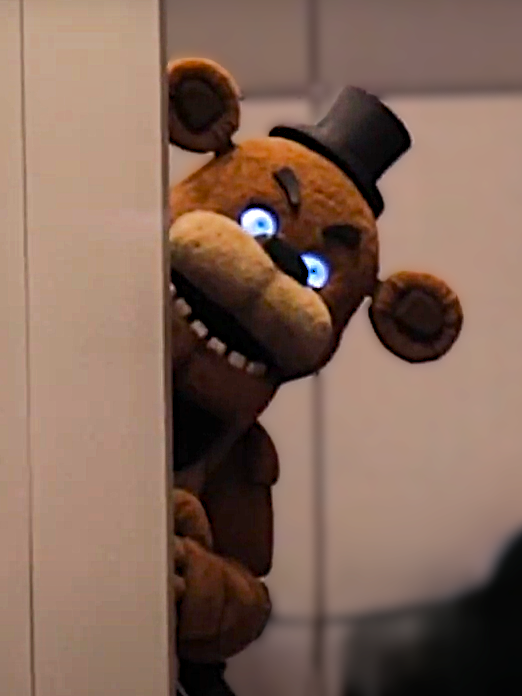
This post is your complete guide to the soul behind the suit, starting with who Gabriel was in life and ending with a much deeper understanding of why Freddy Fazbear behaves the way he does. Grab a flashlight, check your power meter, and let’s get into it.
Who Was Gabriel? The Boy Before the Bear
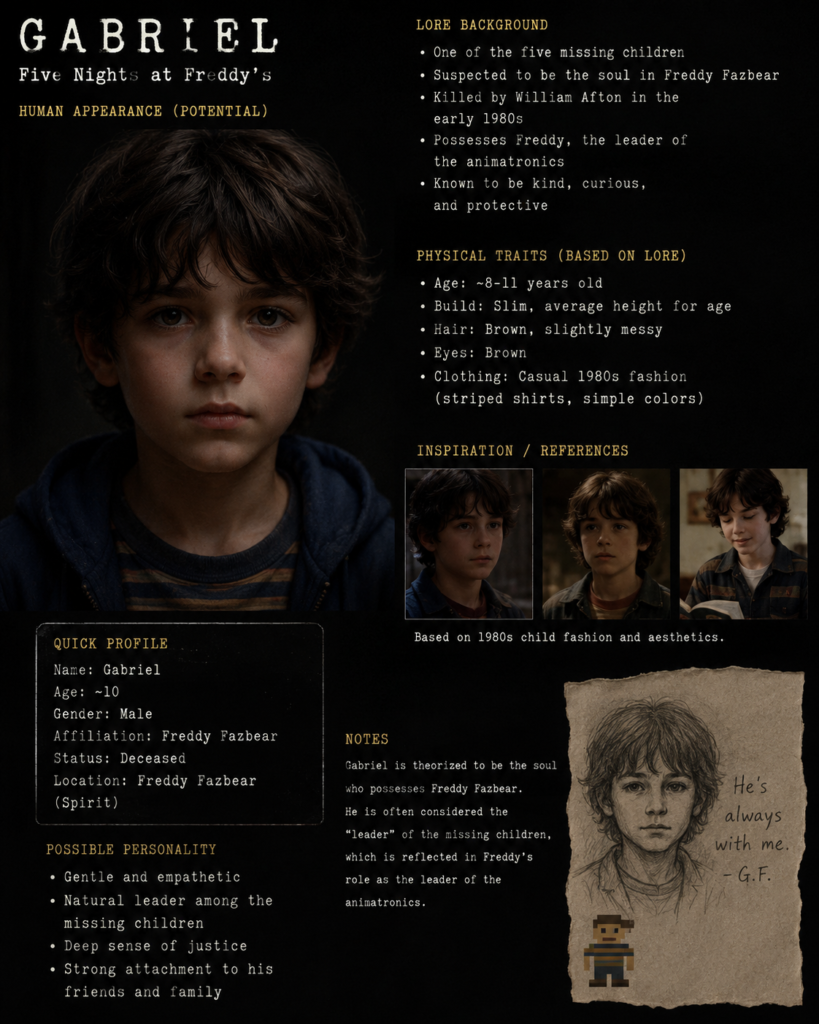
Within the rich and famously convoluted lore of Five Nights at Freddy’s, the names of the Missing Children are some of the most emotionally heavy details in the entire franchise. The five children murdered by William Afton and subsequently stuffed into the original animatronic suits are the very foundation of the series’ tragedy, and Gabriel is one of those five. Specifically, it is widely accepted among FNAF lore scholars and backed by evidence in the games themselves that Gabriel is the child whose soul came to inhabit Freddy Fazbear, the lead animatronic and unofficial mascot of the whole terrifying operation.
Gabriel, like the other children, was a young boy who visited Freddy Fazbear’s Pizza, a place that was supposed to be a safe, joyful haven. Birthday parties, arcade games, animatronic performances, cheap pizza, all the hallmarks of childhood joy in the era the games evoke. The restaurant was designed to be a place kids loved and trusted, which makes what happened there all the more devastating. Gabriel and his friends were lured by William Afton, a co-founder of the establishment and one of gaming’s most genuinely chilling villains, and they were killed. Their souls, unable to move on, became bound to the animatronic suits on display in the very restaurant where they lost their lives.
Gabriel’s Personality and Spirit
The FNAF franchise doesn’t give us long dialogue trees or detailed character bios for the Missing Children, but lore pieces scattered across the games, books, and developer hints paint a picture. Gabriel, as Freddy, is consistently interpreted as the leader of the group, which tells us something important about who he was before death. He’s understood to have been the kind of kid who took charge, who was confident and protective of those around him. He’s the one the others looked to, even in the terrifying context of being trapped souls in metal shells. That quality, that instinct to lead and to be at the center of things, survived whatever crossing from life to whatever comes after.
The fact that Gabriel’s soul ended up in Freddy specifically feels meaningful when you think about it. Freddy is the headliner, the star of the show. He’s the one with the microphone, the one who performs for the crowd, the one whose name is literally on the building. If the souls migrated to suits that in some way resonated with who they were, then Gabriel being Freddy suggests he had that same kind of energy in life: outward-facing, expressive, someone who held the room even at a young age.
The tragedy of Gabriel isn’t just that he died young. It’s that he was someone with personality and presence, a kid with a whole life ahead of him, and all of that potential was stolen and then twisted into something that now frightens the very children he might have grown up to care for.
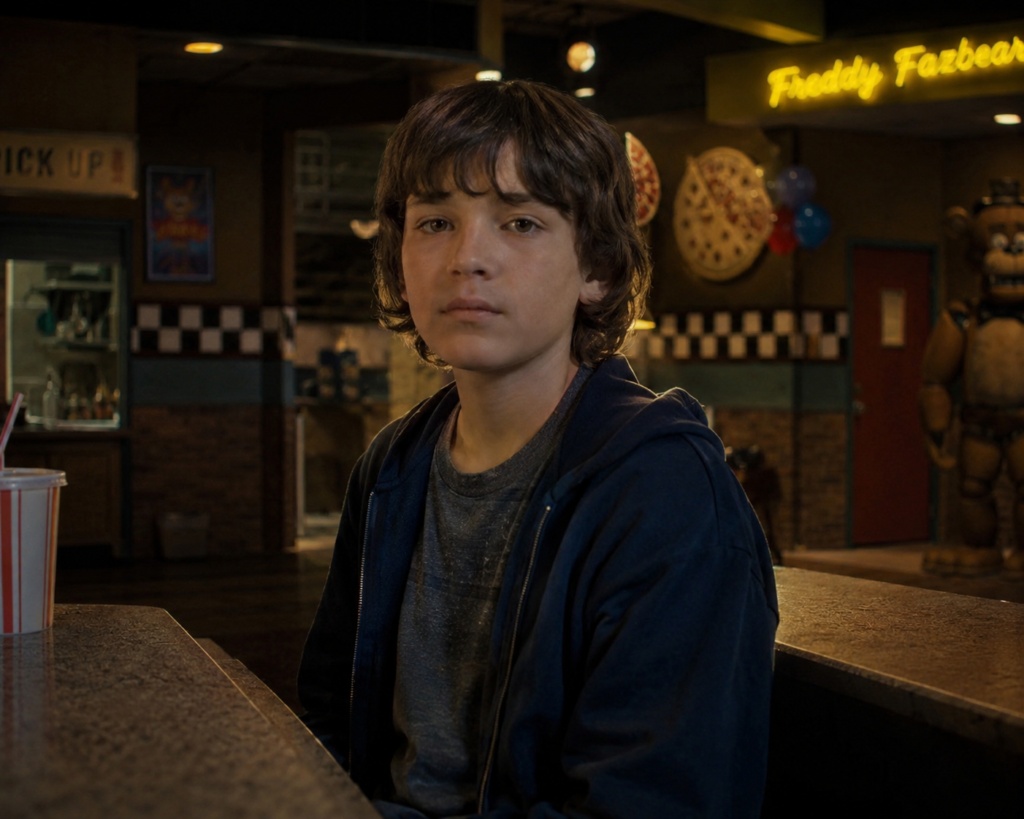
Freddy Fazbear: More Than Just a Jump Scare
Now here’s where a lot of players get Freddy wrong. Because Freddy is the scariest animatronic in the first game for a very specific and counterintuitive reason: he’s the most patient. While Bonnie and Chica are clattering around the building making noise and triggering the cameras, Freddy hangs back. He watches. He moves methodically. He waits for your power to go out, and then, in the dark, he plays his music box tune right before he gets you. That’s not the behavior of a mindless machine. That’s strategy. That’s almost… intelligence.
A lot of players interpret this patience as pure predatory menace, and they’re not wrong on the surface. But understanding that Freddy is Gabriel reframes it in a haunting way. Gabriel was a leader, someone who didn’t just rush headfirst into things but who understood how to read a situation. In death, bound to a malfunctioning animatronic stuffed with endoskeleton parts and driven by a child’s confused, anguished soul, that quality has curdled into something dangerous. The leadership instinct is still there. It just has nowhere healthy to go.
Freddy’s Behavior in the Games
Across the multiple games in the series, Freddy’s behavior shifts quite a bit, and tracking those shifts actually tells a coherent story if you look at it through the lens of Gabriel’s soul. In the original game, Freddy is the most dangerous enemy precisely because he holds back until the optimal moment, which as discussed is very on-brand for someone with leadership qualities. He doesn’t waste effort. In Five Nights at Freddy’s 2, we encounter a withered version of Freddy, deteriorated and even more unpredictable, which reflects the ongoing degradation of the animatronics and, symbolically, the toll that years of being trapped in a decaying suit takes on a child’s spirit.
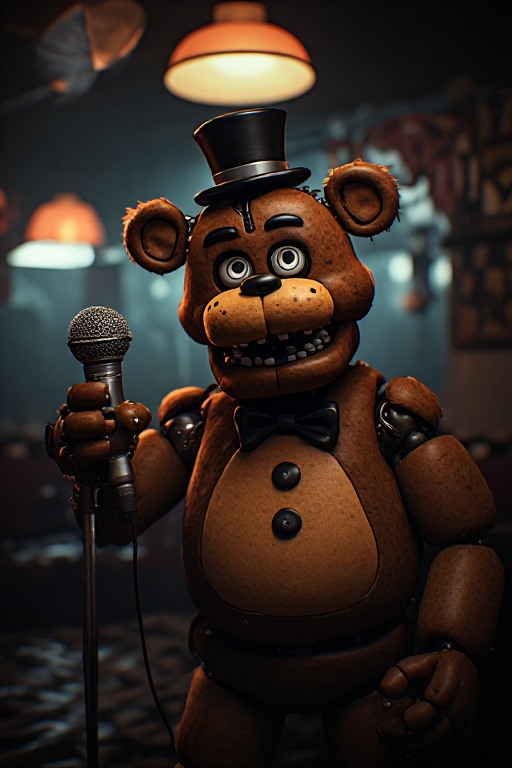
What’s genuinely moving, in a heartbreaking way, is that all the animatronics including Freddy are explicitly stated to be attracted to and drawn toward children. Their programming tells them that a human not in a suit after hours is an endoskeleton that needs to be put in a suit, which is why they attack the security guard. But the deeper implication is that the children inside these suits haven’t forgotten what they were. They’re pulled toward childhood spaces, toward the sounds of laughter and the presence of young people, not out of malice but out of an aching, distorted memory of what it felt like to be alive and small and surrounded by friends at a birthday party.
The Moment of Peace
One of the most important pieces of Freddy’s lore, and honestly one of the most emotionally devastating moments in the entire franchise, comes at the end of the original Five Nights at Freddy’s. The “Golden Freddy” ending and the implications of the mini-games in later titles suggest that the children’s souls, including Gabriel’s, are eventually able to find rest once the wrongdoing against them is in some way confronted or avenged. The small sprite animations showing the children finally free, finally smiling, are some of the most quietly powerful moments in gaming history, especially given how much weight you carry into them once you understand who those children were.
For Gabriel specifically, the idea that his soul finds peace is the conclusion of a story that began with a confident, lively little boy walking into a pizza place he loved and trusted. Everything in between is tragedy. But the ending, for all the jump scares and chaos and purple-guy lore spirals along the way, is ultimately about rest. About children being allowed to stop suffering. That’s not what most people expect when they think about an animatronic bear trying to stuff them into a suit.
Why Freddy Fazbear Deserves More Empathy
Here’s the honest takeaway that this deep dive has been building toward: Freddy Fazbear is not the villain of Five Nights at Freddy’s. He never was. He’s a victim who has been turned into a weapon by circumstance, by William Afton’s actions, by the negligence of adults who kept reopening a restaurant with haunted animatronics and a suspicious number of missing children reports. Freddy is terrifying because a little boy who deserved a long, ordinary life is instead trapped in a mechanical bear costume, operating on corrupted instincts and a soul that doesn’t fully understand what it’s doing or why.
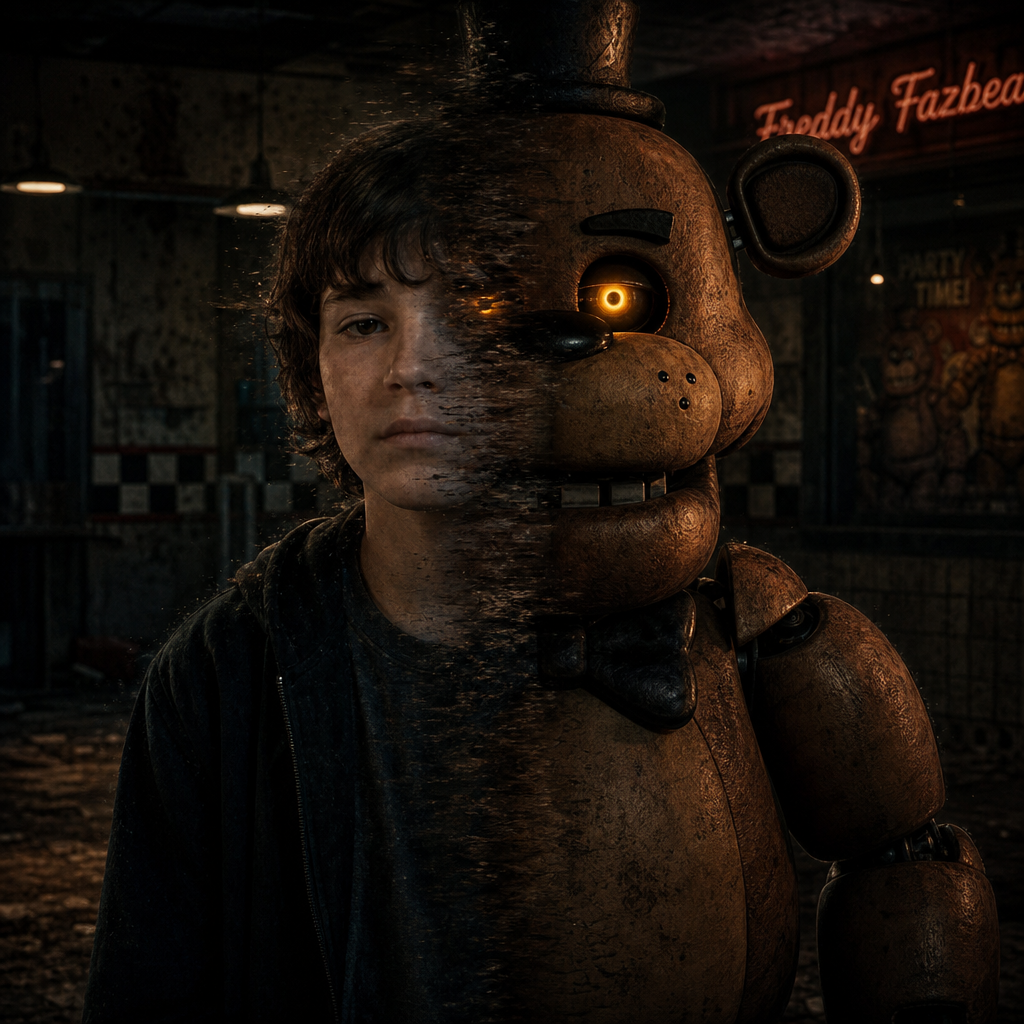
When players learn the lore and revisit those early nights watching Freddy inch closer on the camera feeds, the experience transforms. That slow, deliberate stalk across the dining room isn’t just a monster hunting you. It’s Gabriel, confused and in pain, doing the only things the world he’s been left in allows him to do. The same kid who probably once ran laps around that dining room at his own birthday party, laughing and free, is now the thing that haunts it.
Understanding the relationship between Gabriel and Freddy Fazbear doesn’t make the game less scary, but it makes the whole franchise something much richer than a simple horror experience. Five Nights at Freddy’s, at its best, is a story about children who were failed by the adults around them and what happens when grief and injustice go unresolved for too long. Freddy is the face of that story, quite literally, and he wears it with the same patient, watching dignity that Gabriel must have carried in life.
So the next time Freddy’s music box tune starts playing in the dark and you know what’s coming, maybe take a second before you panic. You’re not just looking at a haunted animatronic. You’re looking at Gabriel. And he just wants someone to finally understand.
Want to go deeper? The FNAF lore rabbit hole goes extraordinarily far, from the Sister Location timeline to the implications of the Fazbear Frights anthology books. But it all starts with understanding that at the center of this franchise is a group of children whose stories matter, and Gabriel’s story, told through every methodical step Freddy Fazbear takes across that darkened stage, is one worth knowing.

Five Nights At Freddy’s: The Core Collection
Revisit the original terror. Every camera flip feels heavier when you know who’s really behind Freddy’s eyes. Don’t skip the game that started it all.
Don’t miss the story the games only hint at. The graphic novel shows the tragedy behind the suits in a way you can’t unsee.
Five Nights At Freddy’s: The Movie
If you haven’t watched the FNAF movie yet, you’re missing half the emotional punch of the lore. It hits different once you know Gabriel’s story.
Think you know the lore? You don’t until you dive into the theories that tie the whole nightmare together. Don’t be the last to connect the dots.
Bring the pizzeria’s eerie glow home. This neon sign is the ultimate vibe-setter for late‑night lore dives. Grab it before it disappears.