Fairy tales love to promise that everything will be fine once the wedding bells ring. The couple kisses, the music swells, the curtain falls, and the narrator assures us that everyone lived happily ever after. It is a comforting idea. It is also, as Into the Woods gleefully demonstrates, a complete fabrication. The musical takes that familiar promise, tosses it into the nearest briar patch, and asks a far more interesting question. What happens after happily ever after.
The answer, as it turns out, is messy. It is complicated. It is occasionally hilarious. It is sometimes heartbreaking. And it is always deeply human.
So let us wander into the woods together and explore how the show dismantles the myth of happily ever after and replaces it with something far more morally honest.
Act One: The Fairy Tale as We Think We Know It
Act One of Into the Woods is the fairy tale comfort zone. Wishes are made. Quests are undertaken. Giants are slain. Curses are broken. People fall in love. People get married. People get what they want. It is the familiar rhythm of childhood stories, complete with catchy songs and a narrator who seems very sure of himself.
But even in this act, the musical plants seeds of moral complexity. Cinderella wants to go to the festival, but she also wants to avoid making a choice. Jack wants to keep Milky White, but he also wants money. The Baker and his Wife want a child, but they also want to avoid confronting their own shortcomings. Little Red Riding Hood wants adventure, but she also wants safety. Everyone wants something, and everyone is convinced that getting it will solve everything.
The moral world of Act One is simple on the surface. Wishes are good. Happy endings are earned. Problems can be solved with a little courage and a little magic. Yet the show hints that these characters are not ready for what they think they want. They are not prepared for the consequences of their choices. They are not aware that the woods have teeth.
Act One ends with triumph. The audience applauds. The characters celebrate. The orchestra practically sparkles. And then Act Two arrives like a giant’s footstep.
Act Two: When the Fairy Tale Grows Up
Act Two is where the moral center of Into the Woods reveals itself. The characters have achieved their happily ever after, and they discover that it is not the end of the story. It is the beginning of a new one. A harder one. A more honest one.
Cinderella finds that palace life is not as simple as sweeping ashes. The Baker and his Wife discover that parenting is not solved by acquiring a baby like a magical prize. Jack learns that killing a giant has consequences. Little Red learns that bravery is not the same as invincibility. Rapunzel learns that freedom is frightening. And the Prince learns that fidelity is not included in the royal job description.
The woods return, not as a place of adventure but as a place of reckoning. The characters must confront the fallout of their earlier actions. They must face the truth that wishes come with a price. They must learn that morality is not a fairy tale rulebook but a series of choices made in the dark.
This is where the musical becomes something extraordinary. It stops being a parody of fairy tales and becomes a meditation on adulthood. It becomes a story about responsibility, grief, forgiveness, and the terrifying freedom of making your own path.
Into the Woods: The Woods as a Moral Landscape
The woods are not just a setting. They are a metaphor for the moral wilderness of life. They are the place where certainty dissolves. They are the place where characters must confront themselves. They are the place where choices matter.
In Act One, the woods are exciting. They are full of possibility. They are the place where wishes come true. In Act Two, the woods are dangerous. They are full of consequences. They are the place where wishes unravel.
The shift reflects a fundamental truth. Childhood sees the world as a place where problems can be solved with the right magic. Adulthood sees the world as a place where problems must be faced with courage, humility, and the occasional improvised plan involving a cow, a slipper, and a handful of beans.
The woods force the characters to grow. They force them to question their assumptions. They force them to take responsibility. And they force them to recognize that morality is not about being perfect. It is about choosing to do better.
The Princes: Charm Without Character
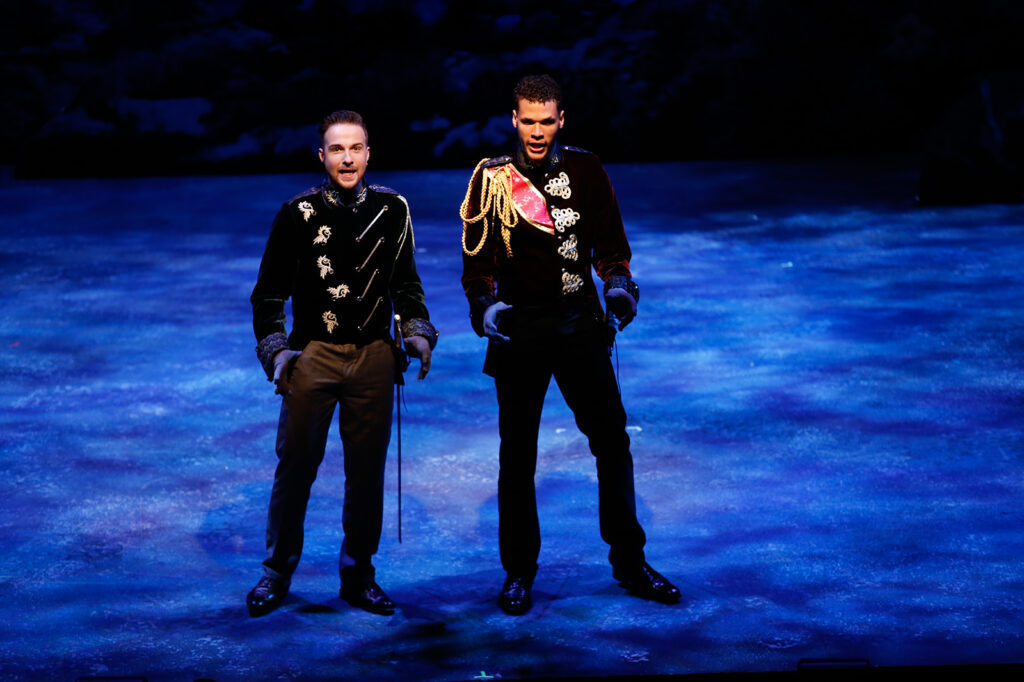
Let us talk about the princes. They are handsome. They are dramatic. They are very good at running through forests in slow motion. They are also, morally speaking, disasters.
The princes embody the fairy tale promise of happily ever after. They are the reward. They are the dream. They are the glittering solution to all problems. And then Act Two reveals that they are, in fact, human. Deeply flawed humans. Humans who believe that being charming is the same as being good.
Their famous line, delivered with perfect sincerity, sums it up. They were raised to be charming, not sincere. It is funny, of course, but it is also a moral indictment. Charm is easy. Sincerity is hard. Charm is a performance. Sincerity is a choice.
The princes teach us that happily ever after cannot be built on charm. It must be built on character. And character requires work.
The Baker and His Wife: The Heart of Into the Woods’ Moral Complexity
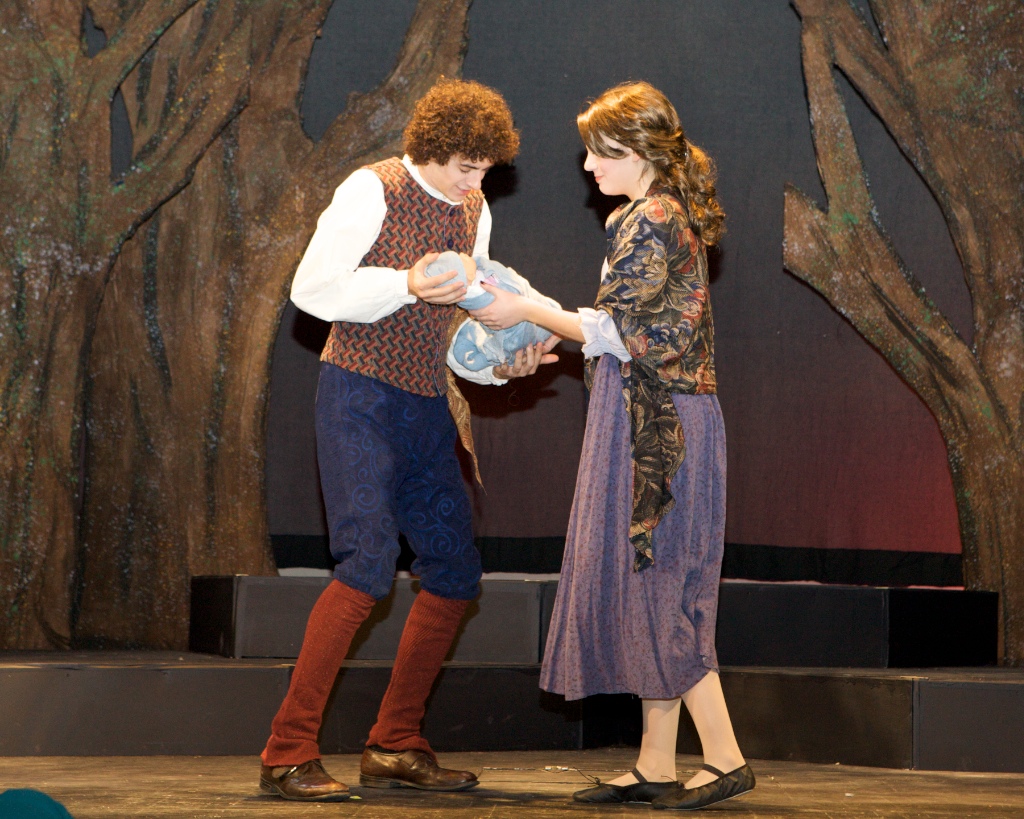
The Baker and his Wife are the emotional core of the show. They are the characters who most clearly embody the moral journey from wishful thinking to mature responsibility.
In Act One, they believe that having a child will fix everything. They believe that their problems are external. They believe that their happiness depends on acquiring something they lack. They are willing to bend rules, make deals, and steal from witches to get what they want.
In Act Two, they discover that parenthood is not a reward. It is a responsibility. They discover that marriage is not a fairy tale. It is a partnership. They discover that morality is not about following instructions. It is about making choices when there is no narrator to guide you.
The Wife’s encounter with the Prince is one of the most morally complex moments in the show. It is not framed as a simple mistake. It is framed as a moment of longing, confusion, and vulnerability. It is framed as a human moment. And her death shortly afterward is not a punishment. It is a reminder that life does not wait for us to figure ourselves out.
The Baker’s grief, guilt, and eventual acceptance form the emotional climax of the story. He learns that running away is not an option. He learns that responsibility is not a burden but a choice. He learns that he must become the kind of person he wants his child to look up to.
His journey is the moral heart of the musical. It is the journey from fear to courage. From avoidance to accountability. From wishing to doing.
The Witch: Morality Without Illusion
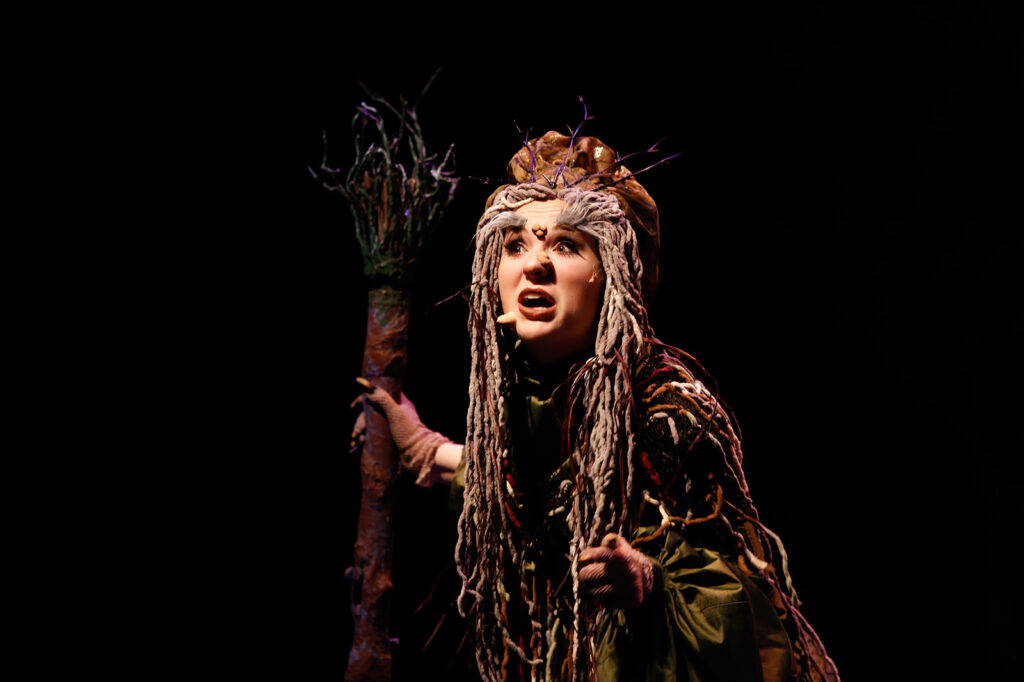
The Witch is the truth teller of the story. She is harsh. She is blunt. She is occasionally terrifying. But she is also the only character who refuses to pretend that happily ever after is real.
She understands that wishes have consequences. She understands that people are flawed. She understands that the world is unfair. Her morality is not gentle, but it is honest.
Her song “Last Midnight” is a moral thesis. She accuses the others of blaming her for problems they created. She calls out their hypocrisy. She points out that they want someone to blame because it is easier than taking responsibility.
The Witch is not morally perfect. She is controlling. She is manipulative. She is driven by fear. But she is also the character who sees the world most clearly. Her disappearance is not a victory. It is a loss. It is the loss of the one person who refused to let the others hide from the truth.
The Giant: Consequences Made Literal
The Giant is not a villain. The Giant is a consequence. She is the embodiment of the idea that actions have fallout. Jack stole from her. Jack killed her husband. And now she wants justice.
Her presence forces the characters to confront the fact that their earlier triumphs were not morally clean. Killing the giant in Act One was not a heroic victory. It was an act of violence with repercussions.
The Giant is the moral weight of the story. She is the reminder that choices echo. She is the reminder that harm cannot be undone with a song. She is the reminder that fairy tale endings are often built on someone else’s suffering.
The Final Moral: No One Is Alone, but Everyone Is Responsible
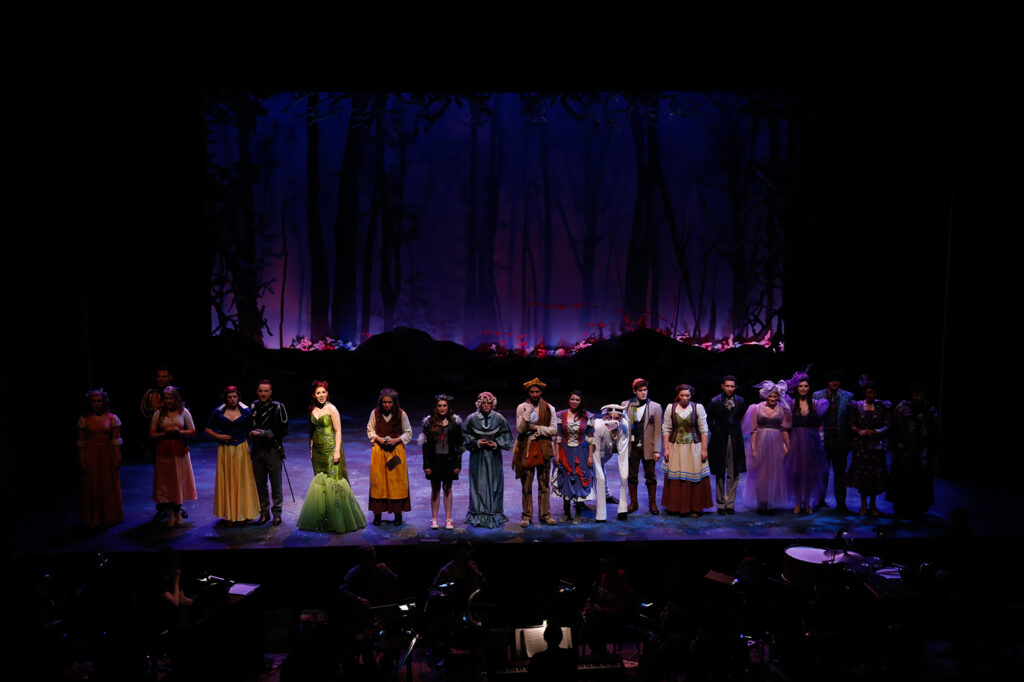
The final message of Into the Woods is not that happily ever after is impossible. It is that happily ever after is not a destination. It is a process. It is a choice. It is something you build, not something you receive.
The characters learn that they cannot rely on magic. They cannot rely on princes. They cannot rely on narrators. They must rely on each other. They must rely on themselves.
The show ends not with a wedding but with a promise. A promise to do better. A promise to face the woods together. A promise to take responsibility for the world they are creating.
It is a more mature ending. It is a more honest ending. And it is, in its own way, a more hopeful ending.
Stepping Out of the Woods
Into the Woods dismantles the myth of happily ever after not to destroy hope but to deepen it. It teaches that life is complicated. It teaches that morality is messy. It teaches that choices matter. And it teaches that even when the path is dark, we do not walk it alone.
If you ever find yourself wishing for a fairy tale ending, remember this. The woods are scary, yes, but they are also where we grow. They are where we learn. They are where we become the people we are meant to be.
And if you ever hear a narrator trying to tell you what to do, feel free to ignore him. The story is yours now.

Don’t miss your chance to own Into the Woods in its best format — the Blu‑ray is getting harder to find, and once it’s gone, it’s gone. Grab it now before prices climb again.
Into the Woods Original Broadway Soundtrack
The original Broadway cast album is getting harder to snag at a decent price — and this is the definitive Into the Woods recording. If you want Bernadette Peters’ iconic performance in your collection, grab it now before this edition becomes scarce.
I collect keychains, and this one shot straight onto my must‑grab list. Designs like this disappear fast, and once they’re gone, they rarely come back in stock. If you want an Into the Woods piece you can actually carry with you, snag it before the last few vanish.
For all those who go to the store with a list of items, this is for you… this Into the Woods vinyl sticker is one of those designs that disappears the moment fans notice it. If you want this clean, bold decal before the last batch sells out, grab it now while it’s still floating around.