I want to preface this post about Cats with a disclaimer.
This is not me hating drag. This is not me discrediting drag performers or drag performance as an art form. Drag is powerful, expressive, and absolutely valid. What follows, my dear readers, is not an attack on drag. It is a defense of a piece of theatre I had the privilege of living inside. Cats — the love letter it once was — meant something profound to those of us who lived inside its original world. As a nonbinary performer who once played Jemima (now renamed Syllabub in newer productions), I experienced firsthand the beauty, discipline, and feline mysticism that defined the original show. And it’s from that place of love and lived experience that I’m writing this.
And yes, I’m fully aware that Lord Andrew Lloyd Webber has publicly stated that he loves this new reimagining and approves of it. But for me, a performer who cherished my character and loved the Jellicle tribe as it once existed, that approval doesn’t soften the blow. If anything, it deepens the ache. Because now I understand “Memory” in a way I never expected: the grief of watching something once beautiful, mystical, and feline be reshaped into something unrecognizable. The love letter I knew has been overwritten, infused and superimposed with drag‑revue culture until the original heartbeat is almost impossible to hear. The mismatch of forms didn’t evolve the show; it fractured it. And that loss is real, no matter who signs off on the new version.
CATS: The Love Letter
Before we can talk about the reimagining, we have to talk about what Cats originally was and why it mattered. Cats was never just a musical. It was a love letter — a strange, poetic, movement‑driven tribute to the creatures who share our homes, our windowsills, and sometimes our entire personalities.
There are really two ways to experience Cats. Neither is wrong, and both interpretations shape how audiences understand the show.
1. The Love‑Letter Lens
This is the version dancers, actors, and choreographers understand instinctively. It’s the version I lived when I stepped into the Jellicle tribe as Jemima. In this interpretation, Cats becomes a gentle, mystical invitation to observe felinity the way cats observe us: with curiosity, patience, and reverence. Every movement, every gesture, every tilt of the head is rooted in feline behavior. The show becomes a ritual that celebrates personality, dignity, mystery, and the quiet magic of simply being a cat.
It isn’t about plot. It’s about presence. It’s about learning to see the world through whiskers and moonlight.
This is the Cats that feels like poetry.
2. The Death‑Pageant Lens
Then there’s the version many audience members experience, especially those unfamiliar with the movement language or the feline metaphor. To them, Cats looks like a surreal talent show where each character presents their “sob story” in hopes of being chosen to ascend to the Heaviside Layer. It’s Hunger Games meets America’s Got Talent, where the Golden Buzzer isn’t about talent but about emotional impact.
And honestly, that interpretation isn’t wrong either.
Structurally, Cats is a ritualized competition. Grizabella wins not because she’s the best dancer or singer, but because her story resonates the most. It’s a narrative device, not a flaw.
But here’s the important part: even the “death‑pageant” interpretation only works when the performers are clearly cats. The emotional architecture collapses the moment the show stops being feline.
This becomes painfully obvious in two key passages that frame the entire musical:
• “The Naming of Cats” at the beginning
• “The Addressing of Cats” at the end
These aren’t just songs. They are the ritual doorway in and the ritual doorway out. They establish the rules of the Jellicle world. They tell the audience, “You are entering a culture that is not human. Respect it. Observe it. Learn from it.”
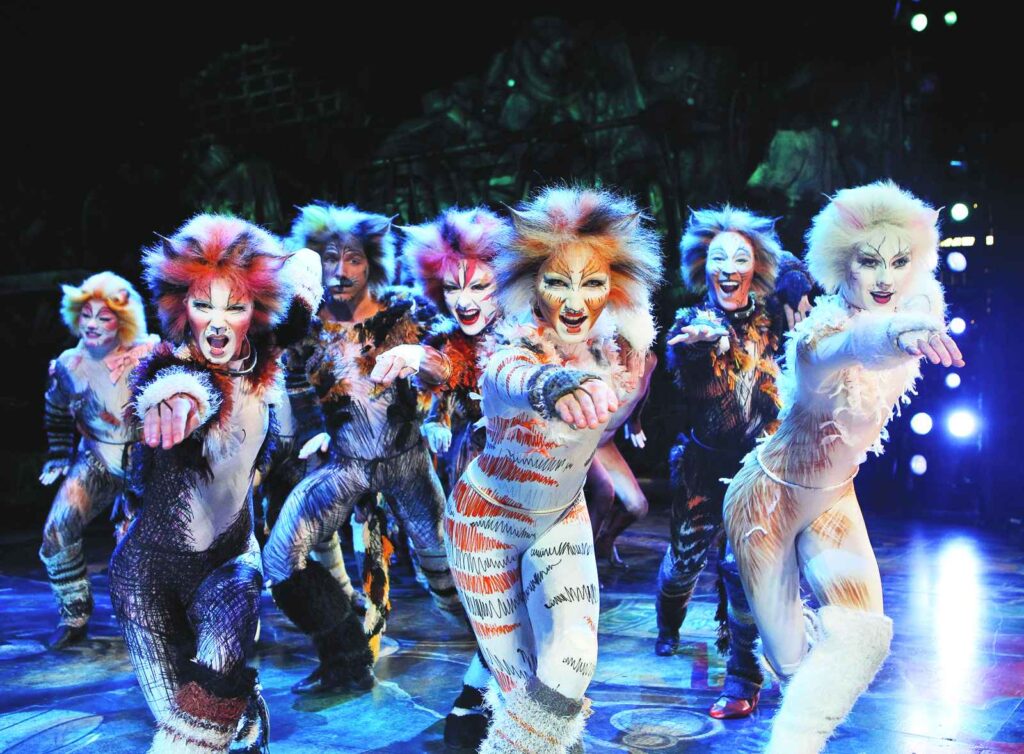
Neither passage works when the performers are humans instead of cats. The magic evaporates. The metaphor breaks. The invitation collapses.
When a performer stands onstage as a human in drag‑revue styling and recites “The Naming of Cats,” the entire metaphysical premise falls apart. The audience is no longer being welcomed into a feline tribe. They’re being asked to pretend that humans in club fashion have “ineffable effable effanineffable” secret names. It becomes parody, not poetry.
And “The Addressing of Cats,” which is meant to be a formal, almost sacred closing ritual, loses all of its gravitas when the performers are no longer embodying cats. Instead of a mystical farewell from a nonhuman culture, it becomes a winking curtain call.
These passages only function when the cast is feline. Without that, the show stops being Cats. It becomes something else entirely.
These two lenses — the poetic love letter and the reincarnation pageant — are the twin pillars that hold up the original production. They explain why Cats works despite its unconventional structure. They explain why performers like me fell in love with it. They explain why the Jellicle world feels cohesive, mystical, and strangely profound.
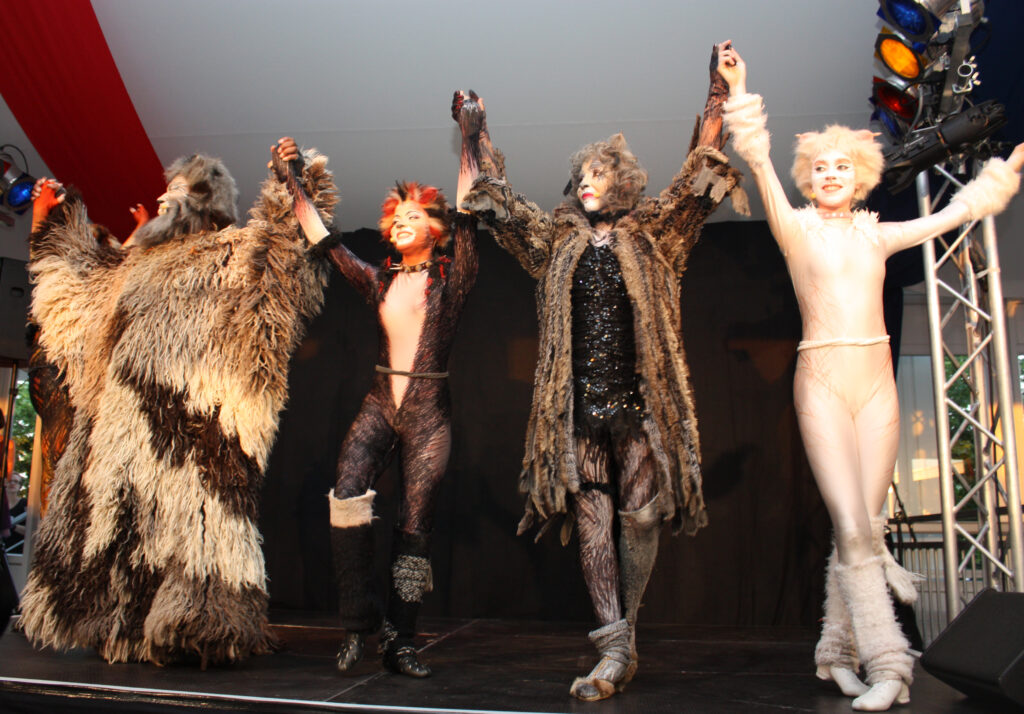
They also explain why the new reimagining fails. Once the felinity is removed, the love letter disappears. What remains isn’t Cats. It’s a revue wearing the costume of a show it no longer understands.
Why Drag Doesn’t Belong in the Jellicle Junkyard
(And Why That’s Not an Attack on Drag)
To understand why the new reimagining of Cats doesn’t work, it helps to think about artistic languages. Every art form speaks its own dialect. Ballet communicates one way, mime another, ballroom another still. Drag has its own vocabulary too: bold, declarative, human‑centered, and rooted in persona and self‑awareness. It thrives on being seen, on the performer’s relationship to identity, gender, and audience perception.
The original Cats speaks a completely different language. Its entire world is built on felinity — on animal‑based movement, nonhuman social cues, and a ritualistic tone that asks the audience to observe rather than participate. The performers aren’t meant to be heightened humans. They’re meant to be creatures with their own culture, their own rules, and their own quiet mysticism.
This is where the clash happens. Drag is inherently human. Cats is inherently not. When you place a human‑centered performance style on top of a world that depends on nonhuman embodiment, the two vocabularies fight each other. The audience is no longer entering a feline tribe. They’re watching humans in heightened human personas reciting text written for animals who do not think or move like us.
The result isn’t fusion. It’s dissonance.
The feline movement language says, “We are not you.” The drag‑revue language says, “Look at me.” Those impulses can’t coexist without one erasing the other.
And in this reimagining, the felinity loses. The moment a performer stands onstage in drag styling and delivers lines meant for a cat, the world‑building breaks. The ritual breaks. The invitation breaks. The show stops being a love letter to felinity and becomes something else entirely — a revue wearing the costume of a story it no longer understands.
This isn’t about drag being wrong. Drag is powerful and valid. It’s simply the wrong artistic language for this particular world. The Jellicle Junkyard was never meant to be a cabaret or a runway. It was meant to be a ritual space built on animal behavior and nonhuman identity. When that foundation is replaced with a human‑centered art form, the love letter disappears.
And that is the heart of the grief.
How the Reimagining “Killed the Play”
There is an episode of Girl Meets World where Farkle and Riley are in a school play. Farkle completely derails the performance, blissfully unaware that anything has gone wrong. At the end, he beams with pride, convinced he has done well. Maya looks him dead in the eyes and says, with the kind of honesty only Maya Hart can deliver: “You killed the play.”
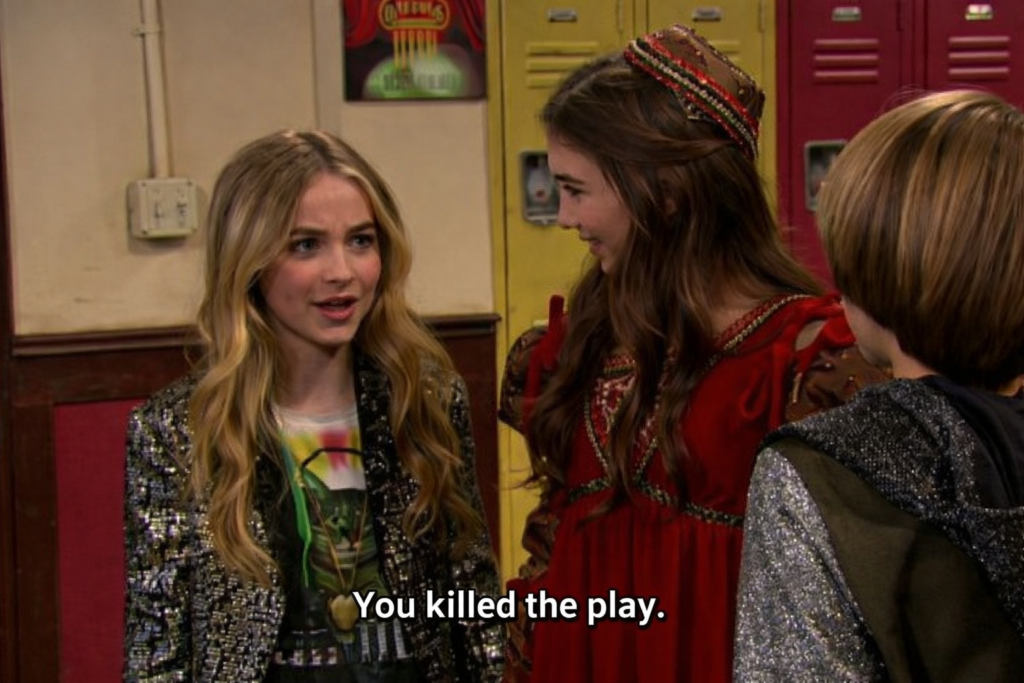
As I watched the reimagined Cats, now titled Cats: The Jellicle Ball, I found myself sharing her sentiment. Not out of spite. Not out of resistance to change. But out of the unmistakable feeling that something essential had been broken. Something had been altered so fundamentally that the show could no longer stand under the weight of its own contradictions. They had killed the play.
Let me tell you why.
Why The Jellicle Ball Killed Cats
The tragedy of Cats: The Jellicle Ball is not that it tried something new. Theatre evolves. Styles shift. Reinterpretation is part of the art form. The tragedy is that this reimagining replaced the very thing that made Cats what it was. It didn’t build on the original. It didn’t transform it. It removed its foundation and then tried to balance the entire show on a void.
The original Cats is built on felinity. Not as a costume. Not as a gimmick. As the core dramaturgical engine of the entire piece.
Every movement, every relationship, every ritual, every moment of stillness depends on the performers embodying creatures who are not human. The show only works when the audience is invited into a nonhuman culture with its own rules and rhythms. That is the magic. That is the love letter.
The Jellicle Ball discards that entirely.
It replaces the feline movement language with human-centered performance. It replaces ritual with spectacle. It replaces mysticism with camp. It replaces the quiet dignity of a tribe of cats with the bold, declarative energy of drag revue culture. And while drag is a powerful and valid art form, it speaks a language that directly contradicts the one Cats was written in.
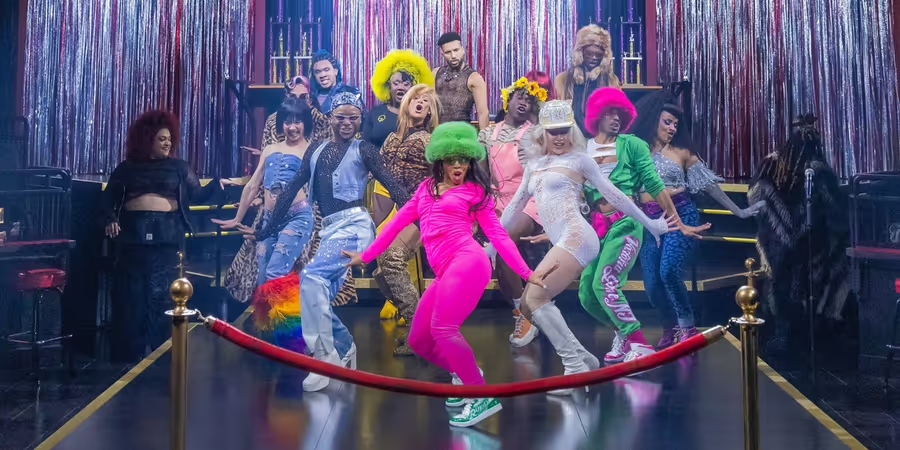
The result is a production where the text and the performance style are at war with each other. The words say “we are cats,” but the bodies say “we are humans performing heightened human personas.” The songs ask for reverence, but the staging asks for applause. The world-building asks for immersion, but the aesthetic asks for irony.
The show collapses under the weight of its own contradictions.
The Naming of Cats no longer welcomes the audience into a mystical feline tribe. The Addressing of Cats no longer sends them out of it. The rituals no longer feel sacred. The characters no longer feel like creatures. The junkyard no longer feels like a world.
And without those things, Cats is not Cats. It is a revue wearing the skin of a story it does not understand.
That is how The Jellicle Ball killed the play. Not with malice. Not with disrespect. But with a fundamental misunderstanding of the artistic language that held the original together.
They didn’t reinterpret Cats. They removed the thing that made it breathe.
Epilogue: The Heart of the Jellicle Loss
In the end, Cats: The Jellicle Ball didn’t just reinterpret a musical; it dismantled a world. The original Cats was a love letter written in the language of movement, mystery, and nonhuman grace. The reimagining translated that letter into a dialect it was never meant to speak. The result was dazzling to look at, but hollow to feel.
For those of us who lived inside the original, the grief isn’t about change — it’s about erasure. The felinity, the ritual, the quiet reverence for the creatures who inspired it all, have been replaced by a human‑centered spectacle that doesn’t understand the soul it inherited. And that’s why the ache remains.
The Jellicle tribe once invited audiences to witness something otherworldly. Now, it asks them to applaud something familiar. The magic has been traded for irony, the ritual for performance, the mystery for commentary. And in that exchange, the heartbeat of Cats was lost.
They didn’t just change the show. They killed the play. And those of us who loved it will always feel the silence that followed.
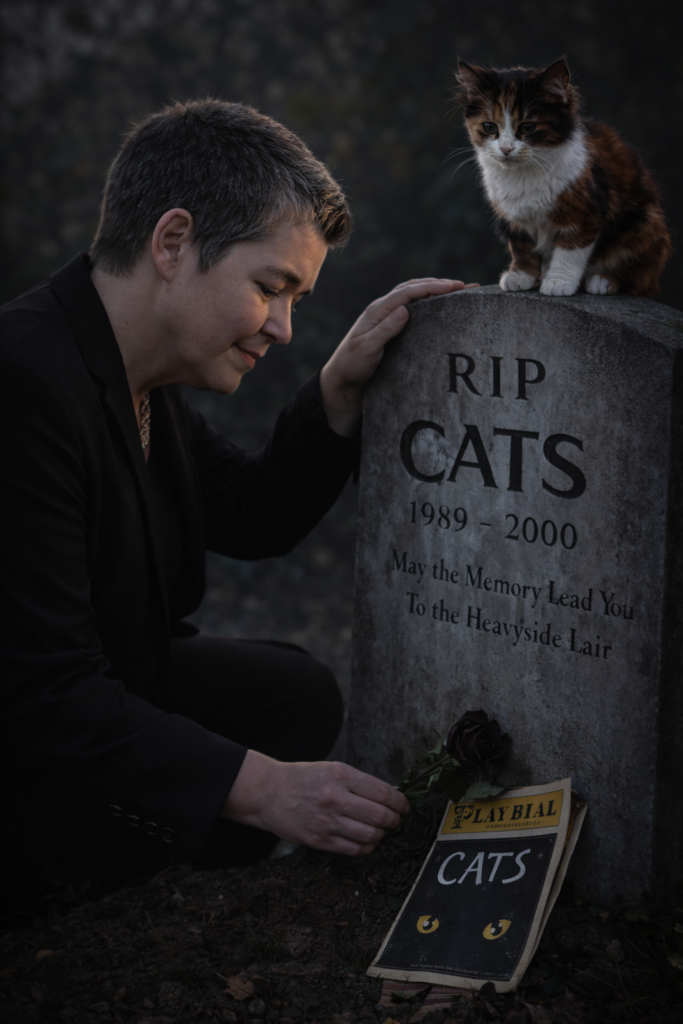
To read more about CATS and my take on the musical, check out “Jellicle Cats and Pollicle Dogs” at: https://phantomorcaquest.com/jellicle-cats-and-pollicle-dogs/