A Beluga Introduction That Feels Like Meeting a New Friend
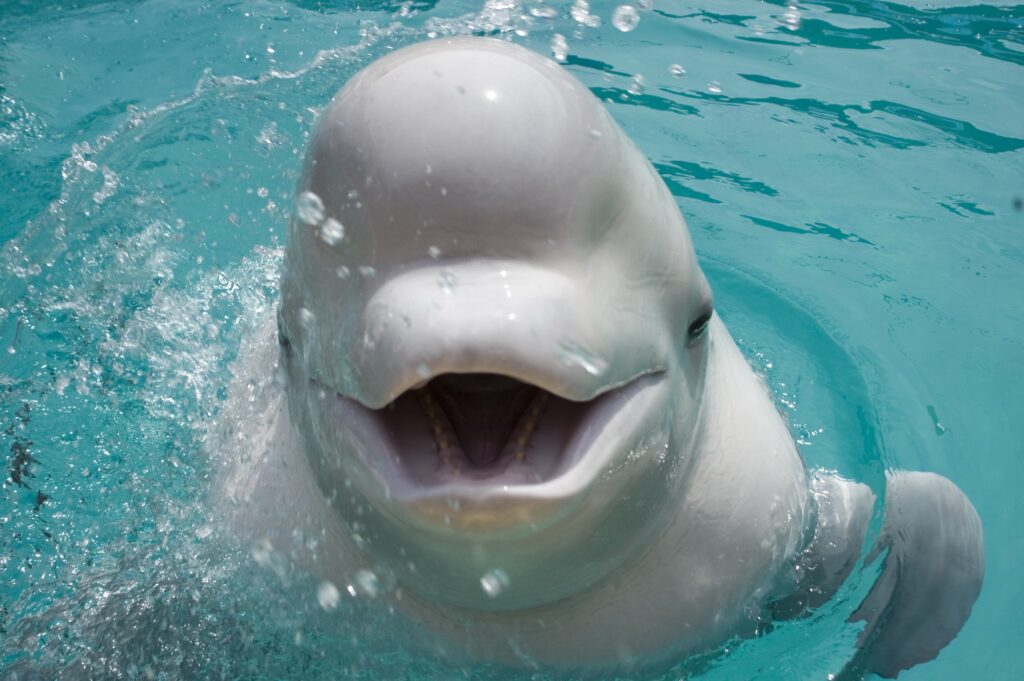
There is something instantly charming about a Beluga. Maybe it is the soft white color that makes them look like friendly marshmallows drifting through icy water. Maybe it is the round forehead that seems perfect for booping, although I would never recommend trying that unless you enjoy being politely escorted away by marine biologists. Or maybe it is the fact that Belugas are basically the ocean’s extroverts, chatting away with whistles, chirps, and clicks that sound like they are auditioning for a sea‑themed musical.
Belugas are often called the canaries of the sea because of their incredible vocal range. They do not just communicate. They perform. If you have ever wondered what it would be like if dolphins formed a choir, Belugas are the answer. Their sounds bounce through the water like little sonic postcards, each one carrying emotion, intention, and sometimes a bit of sass.
How Beluga Sounds Shape Their Social World
Beluga communication is not just noise. It is a full language system woven into their daily lives. These whales live in tight social groups, and their voices help them maintain those bonds. Imagine a neighborhood where everyone keeps in touch through cheerful singing instead of text messages. That is a Beluga pod.
Their whistles can be long and melodic. Their chirps are short and playful. Their clicks are rapid and precise, often used for echolocation. When you put it all together, you get a soundscape that feels alive, almost like a bustling underwater café where everyone is catching up on the latest news.
Scientists have recorded Belugas using different sound patterns depending on the situation. When they are excited, their calls become faster and brighter. When they are curious, the sounds stretch out as if they are asking questions. When they are comforting one another, the tones soften. It is emotional intelligence expressed through music.
Beluga Behavior and the Art of Being Social
Belugas are not solitary wanderers. They thrive in company. Their pods can range from a handful of individuals to hundreds during seasonal migrations. Within these groups, Belugas show off a whole repertoire of behaviors that reveal just how socially complex they are.
They nuzzle. They rub against each other. They swim in synchronized patterns that look like underwater choreography. They even play games, sometimes with objects like driftwood or seaweed. If you have ever seen a Beluga carry a piece of kelp like it is a fancy scarf, you know they have a flair for drama.
Their social nature is deeply tied to their vocal abilities. A Beluga pod is constantly talking, checking in, coordinating movements, and reinforcing relationships. It is like a group chat that never goes silent. This constant communication helps them navigate the challenges of Arctic life, from finding food to avoiding predators to caring for calves.
Their Smile and Why It Makes Us Melt
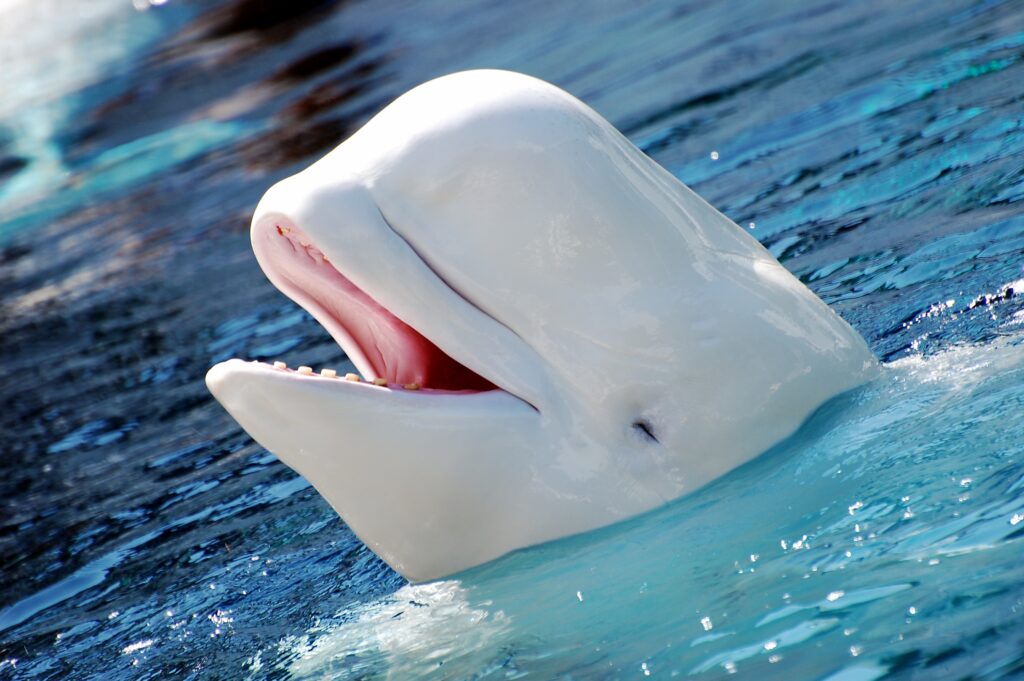
Belugas have a natural facial structure that looks like they are always smiling. It is not an intentional expression, but it certainly feels like one. Their upturned mouths give them a friendly appearance that humans find irresistible.
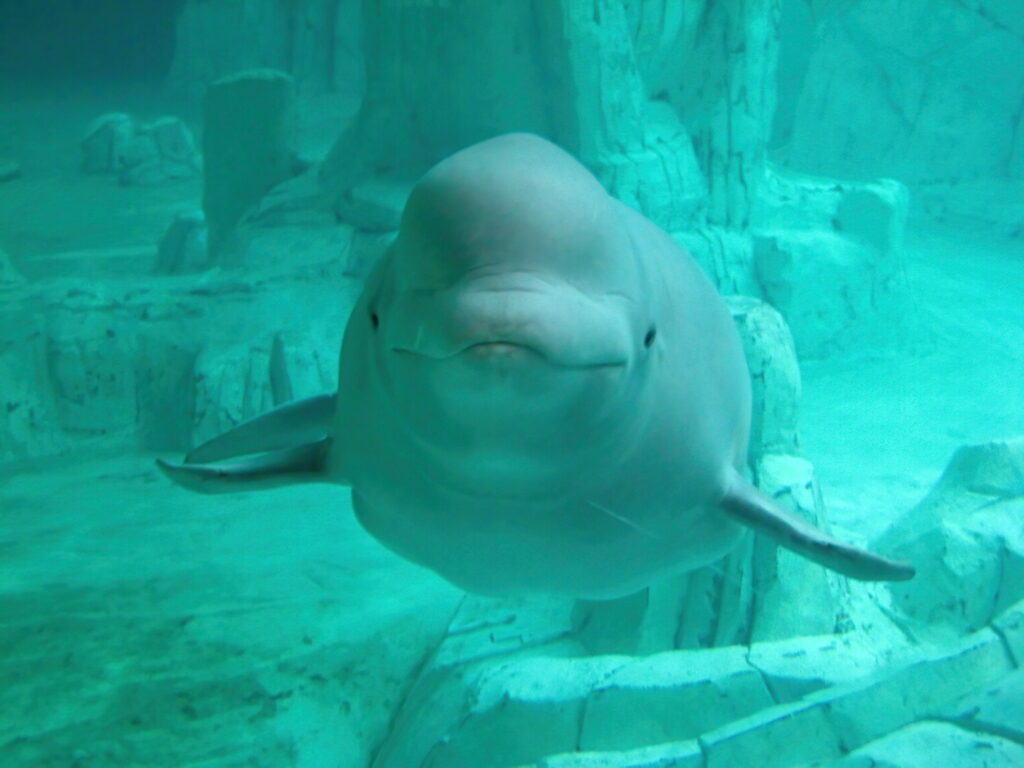
This perceived smile has made Belugas popular in marine education programs. People feel connected to them. They seem approachable, gentle, and expressive. While we should always respect their wild nature, it is hard not to feel a little spark of joy when a Beluga looks your way with that signature grin.
Adaptations That Keep Them Thriving
Belugas live in some of the harshest environments on Earth. The Arctic is not exactly known for its hospitality. Yet these whales have evolved a suite of adaptations that make them perfectly suited for icy waters.
Their white coloration helps them blend into the snowy and icy surroundings, offering camouflage from predators. Their thick layer of blubber acts like a cozy winter coat, keeping them warm even when the water temperature dips below freezing. Their flexible necks allow them to maneuver around ice and navigate tight spaces, something most whales cannot do.
And of course, their vocal abilities help them communicate through dense, dark waters where visibility is limited. Sound travels far in the ocean, and Belugas use that to their advantage.
Echolocation and the Magic of Sound Navigation
Echolocation is one of the most impressive tools in the Beluga toolkit. They produce rapid clicks that bounce off objects in the water. When the echoes return, the whales interpret them to understand the size, shape, distance, and even texture of whatever is around them.
It is like having built‑in sonar. Belugas can find fish hiding under ice, locate openings in frozen surfaces, and navigate murky waters with ease. Their echolocation is so refined that scientists believe they can distinguish between different types of fish based on the echoes alone.
Baby Belugas are the Sweetness of Family Life
Beluga mothers are attentive and nurturing. Calves are born gray and gradually lighten as they grow. These little ones stay close to their mothers for several years, learning how to communicate, navigate, and find food.
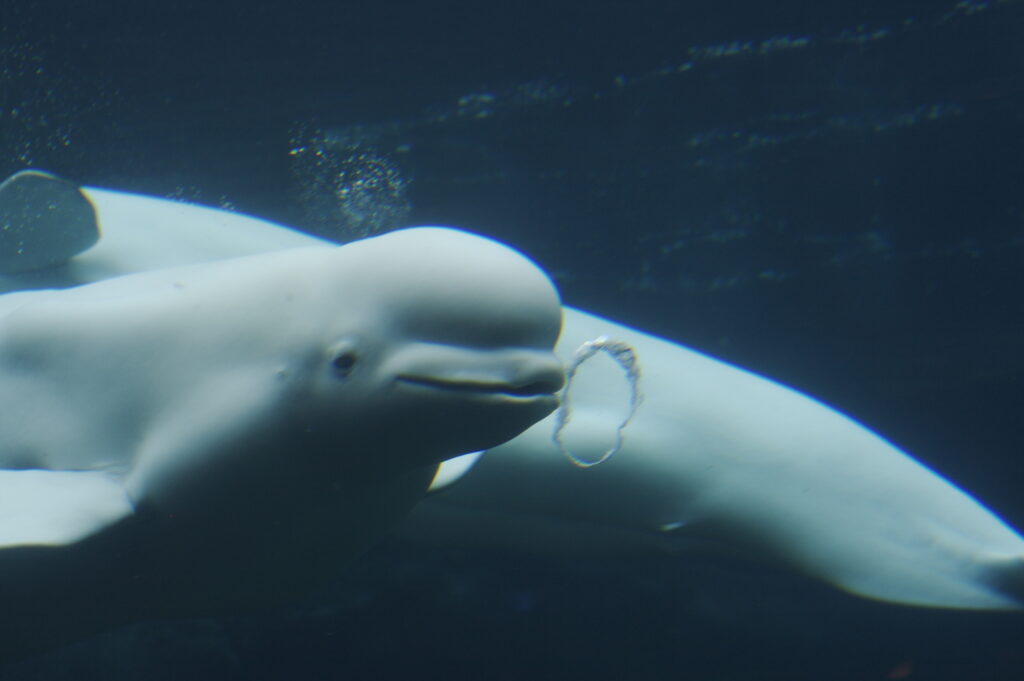
Calves often make softer, higher‑pitched sounds that resemble baby babbling. It is adorable. They practice their vocal skills by mimicking adults, gradually expanding their range until they can participate fully in pod communication.
Family bonds are strong in Beluga communities. Mothers, aunts, and older siblings all help care for calves. It is a group effort, and it reinforces the social structure that keeps pods functioning smoothly.
Migration and Seasonal Adventures
Belugas are not homebodies. They migrate seasonally, traveling between feeding grounds and breeding areas. These migrations can cover hundreds of miles and involve large gatherings of whales.
During summer, Belugas often move into shallow estuaries and river mouths. These areas provide warm water and abundant food. In winter, they head back to deeper Arctic waters, navigating through shifting ice and changing conditions.
Their migrations are guided by sound. Belugas use their vocalizations to stay connected with their pod, coordinate movements, and avoid hazards. It is a symphony of navigation, with each whale contributing to the collective awareness of the group.
Beluga Conservation and Why Their Voices Matter
Belugas face several threats, including climate change, pollution, and habitat disruption. As Arctic ice melts, their environment changes rapidly. New shipping routes bring noise pollution that interferes with their communication. Contaminants in the water affect their health.
Conservation efforts focus on protecting their habitats, reducing noise pollution, and monitoring populations. Scientists study Beluga vocalizations to understand how environmental changes impact their behavior. Their voices are not just beautiful. They are data.
By listening to Belugas, researchers can track stress levels, social dynamics, and migration patterns. It is a powerful reminder that sound is central to their lives. Protecting their ability to communicate is essential for their survival.
Intelligence and Emotional Depth
Belugas are highly intelligent. They show problem‑solving skills, curiosity, and emotional awareness. They respond to human gestures, recognize individuals, and adapt to new situations.
Their vocalizations reflect this intelligence. They do not just make sounds. They use them intentionally. They express excitement, frustration, affection, and curiosity. Their communication is layered and nuanced, revealing a rich inner world.
Some researchers believe Belugas may even have signature calls similar to names. If true, that means they identify each other through personalized sounds. It is a fascinating possibility that highlights their social complexity.
Culture and Learned Behaviors of a Beluga Whale
Culture is not limited to humans. Many animal species show learned behaviors passed down through generations. Belugas are one of them.
Different Beluga populations have distinct vocal patterns, feeding techniques, and migration routes. These differences suggest cultural transmission. Young whales learn from older ones, preserving traditions that help them survive.
This cultural richness makes Belugas even more remarkable. They are not just reacting to their environment. They are shaping their own social world through shared knowledge.
Their Curiosity and Playfulness
Belugas are naturally curious. They investigate new objects, approach boats, and interact with researchers. Their playful nature makes them delightful to observe.
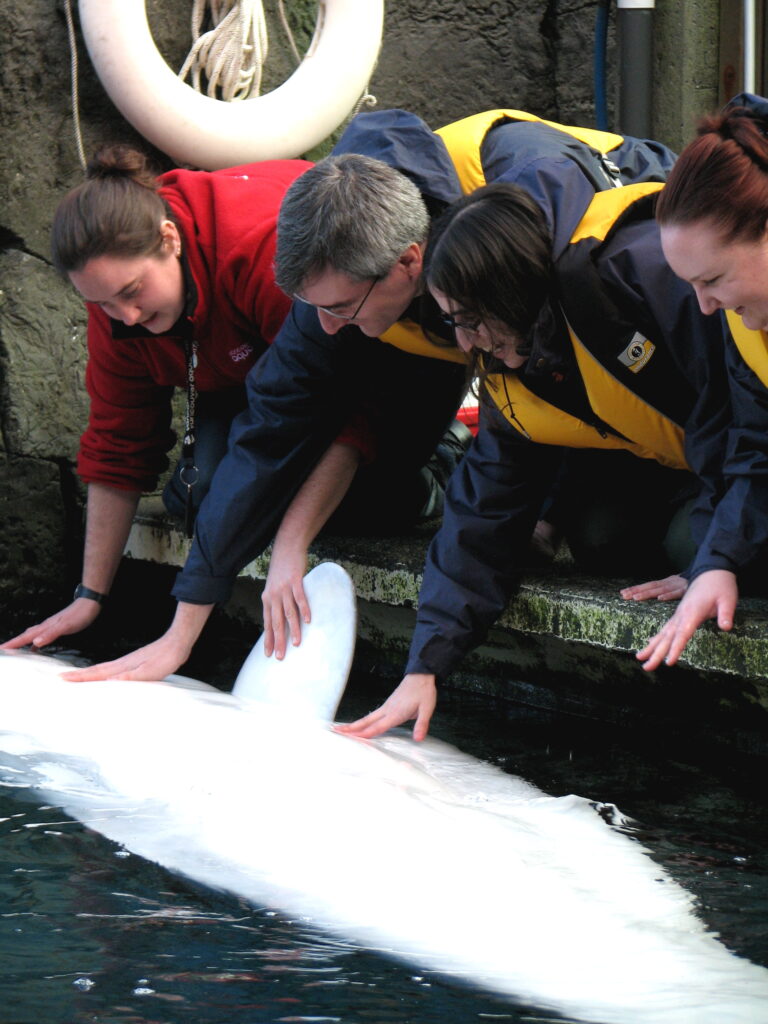
They often engage in games, tossing objects or chasing each other through the water. Their vocalizations during play are bright and energetic, almost like laughter. It is hard not to imagine them having fun.
Their curiosity also helps them learn. By exploring their environment, they gather information that supports survival. It is a blend of intelligence and joy that makes them stand out among marine mammals.
Beluga Voices as a Window Into the Ocean
The ocean is vast and mysterious, but Beluga voices offer a glimpse into its hidden world. Their sounds travel through water, carrying stories of movement, emotion, and connection.
Listening to Belugas is like tuning into an underwater radio station. You hear the rhythm of their lives, the pulse of their social bonds, and the echoes of their environment. It is a reminder that the ocean is not silent. It is alive with communication.
Belugas help us understand that sound is a vital part of marine ecosystems. Protecting their voices means protecting the health of the ocean itself.
The Wonder and the Joy of Learning About Them
There is something magical about Belugas. Their friendliness, their expressiveness, their musical communication, and their social warmth all combine into a creature that feels familiar yet extraordinary.
Learning about them is like discovering a new friend who has been singing just beneath the waves all along. Their voices invite us to listen, to care, and to appreciate the beauty of connection.
Belugas remind us that communication is not just about words. It is about emotion, intention, and the desire to reach out to others. They are the canaries of the sea, filling the ocean with songs that echo through icy waters and into our hearts.
If you ever get the chance to hear a Beluga vocalize, take a moment to appreciate the artistry. It is not just a sound. It is a story. And it is one worth listening to.
Supporting Autumnelf on Ko‑Fi helps fuel new essays, book projects, ocean‑life explorations, theatrical deep dives, and the creative quests that make Phantom Orca Quest a vibrant, multimedia experience.
Get Me a Spark of Magic