Florence has a way of making everything feel softer. Maybe it is the sunlight that looks like it has been filtered through a jar of honey. Maybe it is the fact that everyone seems to be strolling instead of striding, as if the entire city collectively agreed to take a breath. Whatever the reason, it is the perfect setting for a story that treats neurodivergence with tenderness instead of tragedy. The Light in the Piazza leans into that softness with its whole chest, and honestly, I love it for that.
How Innocence Becomes a Lens for Neurodivergence
Clara’s innocence is often described as childlike, but the musical never uses that word as a weapon. It is not a punchline, and it is not a warning sign. It is simply part of who she is. Her way of moving through the world is shaped by her brain, her history, and her heart. The show never tries to “fix” her. Instead, it invites us to see her innocence as a form of clarity. She notices beauty without hesitation. She loves without calculation. She trusts without fear.
This is where the musical quietly reframes neurodivergence. Instead of presenting Clara’s differences as limitations, it treats them as part of her emotional vocabulary. She feels deeply. She expresses joy without filtering it through social expectations. She is open in ways that many people spend their whole lives trying to relearn. The show does not pretend that her innocence makes life simple. It just refuses to treat her neurodivergence as a tragedy.
And honestly, that feels revolutionary.
Neurodivergence and Disability Through Margaret’s Eyes
Margaret, Clara’s mother, is the character who carries the weight of fear. She is the one who has spent years trying to protect Clara from a world that can be cruel to anyone who does not fit neatly into its expectations. Her love is fierce, but it is also shaped by anxiety. She knows how people talk. She knows how people judge. She knows how quickly tenderness can turn into condescension.
Watching Margaret navigate her daughter’s neurodivergence is like watching someone try to hold sunlight in their hands. She wants to keep Clara safe, but she also wants her to be happy. She wants her to be loved, but she fears what might happen if someone misunderstands her innocence. She wants her to have a full life, but she is terrified of the world’s sharp edges.
Margaret’s arc is not about learning to “let go.” It is about learning to trust that Clara’s differences do not make her fragile. They make her human. They make her worthy of love. They make her capable of choosing her own joy.
Romance as a Reframing of Neurodivergence
When Clara meets Fabrizio, the musical does something quietly radical. It lets her fall in love without turning her neurodivergence into a plot twist. Fabrizio does not treat her innocence as something to exploit or pity. He treats it as part of her charm. He sees her enthusiasm, her openness, her delight, and he responds with genuine affection.
Their romance is not framed as a risk. It is framed as a possibility.
This is where the musical pushes back against the idea that people with disabilities or neurodivergent traits must be protected from love. Clara is allowed to want. She is allowed to choose. She is allowed to feel desire, joy, confusion, and hope. She is allowed to be a full romantic protagonist.
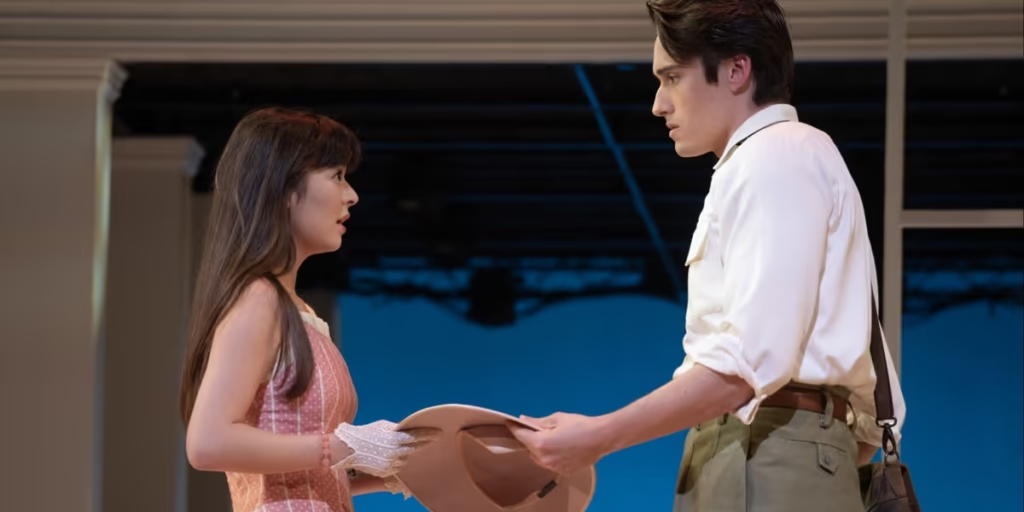
And Fabrizio? He is allowed to love her without needing to “save” her. He is not a rescuer. He is simply a young man who sees someone luminous and wants to be close to her. Their connection is built on sincerity, not saviorism.
The Beauty of Imperfect Love
The Light in the Piazza is not interested in perfect love. It is interested in honest love. Messy love. Love that grows in the cracks and corners of life. Clara and Fabrizio’s relationship is not flawless, but it is real. It is an honest kind of love, shaped by their personalities, their families, their fears, and their hopes.
Clara’s neurodivergence does not make her unlovable. It makes her human. It makes her vulnerable. It makes her brave. The musical treats her differences as part of the texture of her character, not as obstacles to romance.
Margaret’s love for Clara is imperfect too. She makes mistakes. She hesitates and worries. But she also learns. Margaret learns that protecting Clara doesn’t mean hiding or sheltering her. She learns that love can be expansive. She learns that her daughter’s future does not have to be defined by fear.
The show’s final moments are not triumphant in a traditional musical-theater way. They are quiet, warm, and hopeful. This last impression suggests that imperfect love is still love, and that love shaped by neurodivergence is not lesser. It is simply different.
A Source of Light
One of the most striking things about the musical is how it uses light as a metaphor. Light is everywhere. It is in the piazza. It is in Clara’s name. It is in the way she sees the world. Her neurodivergence is not framed as darkness. It is framed as radiance.
Clara’s innocence is not naivety. It is clarity. She sees beauty without cynicism. She sees love without suspicion. Also, she sees joy without apology. Her neurodivergence becomes a way of illuminating the world around her.
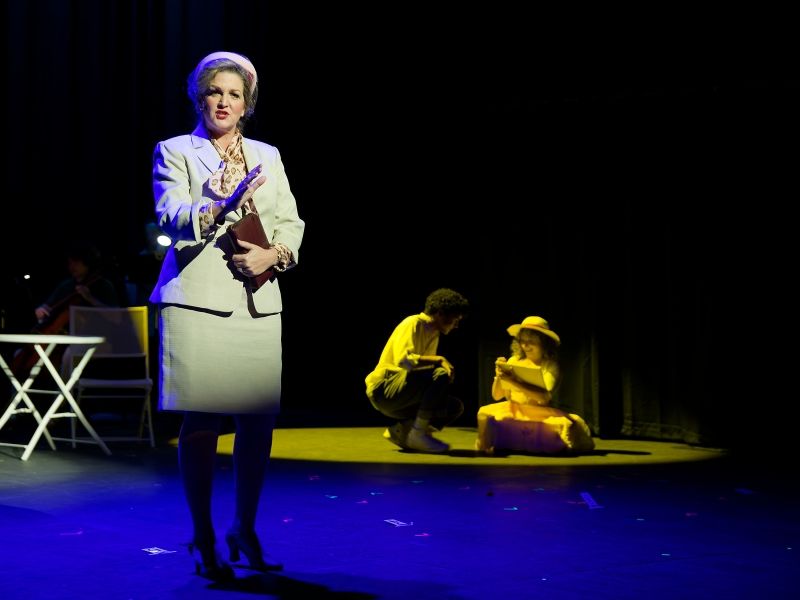
Margaret sees this too, even when she is afraid. She sees how Clara’s presence changes the people around her. She sees how Fabrizio responds to her daughter’s openness. She sees how Clara’s way of loving is not broken. It is simply different.
The musical invites us to consider that neurodivergence can be a source of light. Not because it is magical or inspirational, but because it is human. Because it is part of the spectrum of ways people experience the world. Because it deserves tenderness instead of tragedy.
The Piazza as a Space for Neurodivergent Joy
Florence is not just a backdrop. It is a character. It is a place where people slow down enough to notice each other. It is a place where beauty is not rushed. It is a place where Clara’s way of moving through the world feels natural instead of unusual.
The piazza becomes a space where neurodivergent joy can exist without being questioned. Clara’s delight feels genuine rather than childish, her enthusiasm comes across as charming instead of odd, and her openness reads as a true gift.
In a world that often demands conformity, the piazza becomes a sanctuary for difference.
Why This Reframing Matters
Stories shape how we see people. They shape how we understand disability, innocence, and neurodivergence. When a musical chooses tenderness over tragedy, it changes the narrative. It tells audiences that neurodivergent people are not burdens. They are not cautionary tales. They are not problems to solve.
They are people who deserve love, agency, joy, and complexity.
Clara’s story matters because it refuses to flatten her. It refuses to turn her into a symbol. It refuses to treat her neurodivergence as a limitation on her humanity. Instead, it treats her as someone capable of choosing her own happiness.
Margaret’s story matters because it reflects the fears many caregivers carry. It shows how love can be shaped by worry, but also how love can grow beyond it. It shows how parents can learn to trust their neurodivergent children’s autonomy.
Fabrizio’s story matters because it shows that neurodivergent people can be loved without being fetishized, pitied, or rescued. They can be loved simply because they are wonderful.
A Final Word on Neurodivergence and Imperfect Love
The Light in the Piazza is not a story about overcoming disability. It is a story about embracing humanity. It is a story about how neurodivergence can coexist with romance, joy, fear, and hope. It is a story about how imperfect love can still be beautiful.
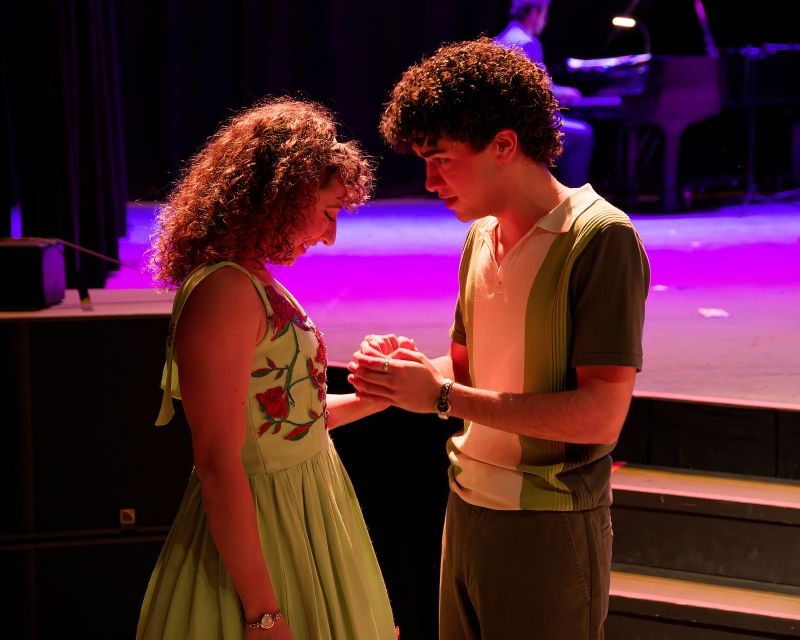
Clara’s innocence is not a flaw. Margaret’s fear is not villainous. Fabrizio’s affection is not naive. Their love is imperfect, but it is real. It is tender. It is hopeful. It is luminous.
And maybe that is the point. Maybe the beauty of imperfect love is that it makes room for everyone. Maybe it makes room for neurodivergence. Maybe it makes room for innocence. Maybe it makes room for joy that does not look like everyone else’s.
Supporting Autumnelf on Ko‑Fi helps fuel new essays, book projects, ocean‑life explorations, theatrical deep dives, and the creative quests that make Phantom Orca Quest a vibrant, multimedia experience.
Get Me a Spark of Magic