Kelp forests have a way of making you feel like you’ve stepped into a cathedral built by the ocean. Light filters down in soft green ribbons. Everything sways with the kind of rhythm that would make a metronome jealous. And somewhere in that gentle underwater sway, a creature glides along with the confidence of someone who knows they are absolutely nailing their outfit. The Leafy Sea Dragon is the ocean’s quiet showstopper, a master of disguise who looks like it woke up and chose fashion.
How the Leafy Sea Dragon Masters Camouflage
The first time you see a Leafy Sea Dragon, you might think the kelp itself has decided to go for a stroll. Its body is covered in leaf-like appendages that flutter with the current. These aren’t fins. They aren’t even functional for movement. They are pure aesthetic. Imagine accessorizing so hard that your accessories become your entire survival strategy. That is the Leafy Sea Dragon’s vibe.
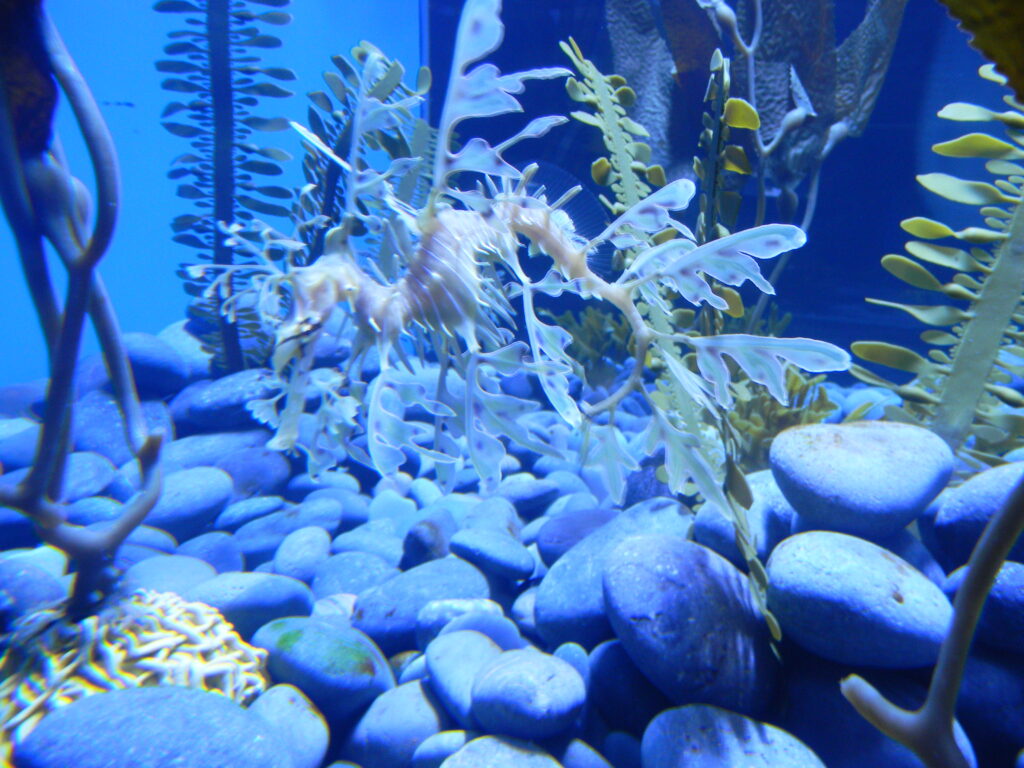
Its camouflage works because predators in the kelp forest are looking for fish-shaped things. They are not looking for wandering salad. The Leafy Sea Dragon leans into this confusion with absolute commitment. It doesn’t dart or dash. It drifts. It sways. It performs the underwater equivalent of “nothing to see here.” Even its coloration shifts depending on its environment, blending golds, greens, and browns into a leafy palette that would make any interior designer proud.
In the Kelp Forest, It Moves Like a Whisper
There is something poetic about watching a Leafy Sea Dragon move. It doesn’t swim so much as it participates in the water. Tiny, nearly invisible fins along its neck and tail do the actual work, but you’d never know unless you squinted. The rest of the body just floats along, pretending to be foliage. It’s like the creature is whispering to the ocean, “Don’t mind me. Just a plant. Definitely not delicious.”
This slow, drifting movement is part of its charm. Many fish zip around like they’re late for something. The Leafy Sea Dragon, on the other hand, seems to have achieved enlightenment. It has no rush. No urgency. It is the chill friend who shows up to brunch exactly on time, already calm, already glowing, already matching the aesthetic of the restaurant without even trying.
Leafy Sea Dragon Parenting: A Tale of Unexpected Tenderness
One of the sweetest surprises about the Leafy Sea Dragon is its approach to parenting. The males carry the eggs. Yes, you read that right. The dads do the baby-toting. They keep the eggs tucked along the underside of their tails, oxygenating them and protecting them until they hatch. It’s a quiet kind of devotion, the sort that fits perfectly with the creature’s gentle nature.
When the babies finally emerge, they look like miniature versions of the adults, complete with tiny leaf-like appendages. They are adorable in a way that makes you want to knit them sweaters, even though that would be wildly impractical underwater. These little dragons drift away to begin their own leafy lives, each one a tiny whisper in the kelp.
Why Its Camouflage Is More Than Just a Costume
Camouflage in the ocean is serious business. For the Leafy Sea Dragon, it’s not just about looking fabulous. It’s about survival. Predators like larger fish and even some birds would happily snack on a sea dragon if they could find one. The leafy appendages break up the creature’s outline, making it harder to spot. It’s the same principle behind military camouflage, except significantly more whimsical.
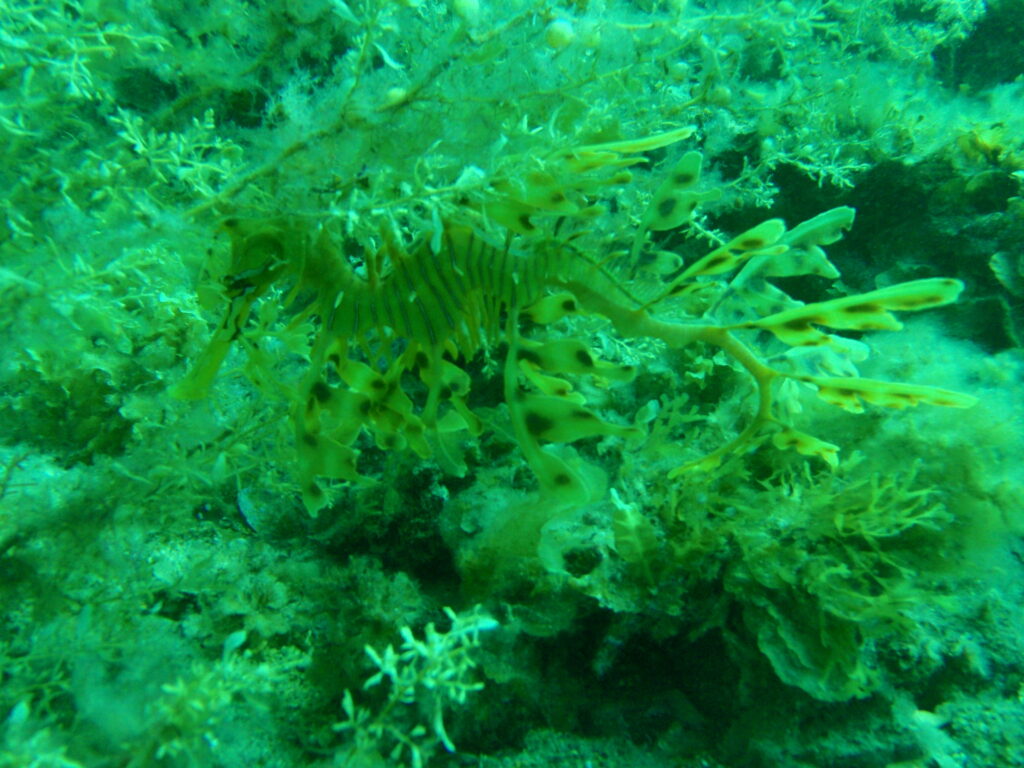
The Leafy Sea Dragon’s camouflage also helps it hunt. It feeds on small crustaceans and plankton, sucking them up with a long, straw-like snout. By blending in, it can drift close to its prey without causing alarm. It’s the ultimate stealth mode, except instead of crouching behind a rock, it just pretends to be a plant. Honestly, it’s iconic.
Leafy Sea Dragon Conservation: Protecting a Quiet Marvel
Despite its magical appearance, the Leafy Sea Dragon faces real challenges. Habitat loss, pollution, and climate change threaten the kelp forests it calls home. These forests are sensitive ecosystems, and when they decline, the creatures that depend on them struggle.
Conservation efforts focus on protecting kelp habitats and monitoring sea dragon populations. Some regions have even established marine protected areas where Leafy Sea Dragons can drift in peace. Scientists study their behavior, reproduction, and movement patterns to better understand how to help them thrive. It’s a team effort, and the dragons, in their quiet way, are worth every bit of it.
The Creature’s Place in Ocean Mythology
If you’ve ever looked at a Leafy Sea Dragon and thought, “This feels like something out of a fantasy novel,” you’re not alone. Its appearance has inspired stories, artwork, and even a few myths. Some cultures once believed sea dragons were guardians of underwater treasures. Others thought they were spirits of the kelp forest itself.
There is something undeniably mystical about them. They look like creatures that should be delivering cryptic advice to heroes on quests. If a Leafy Sea Dragon ever spoke, I’m convinced it would have the voice of someone who has seen everything and still chooses kindness.
Leafy Sea Dragon Movement: A Dance with the Current
Watching a Leafy Sea Dragon move is like watching a dance choreographed by the ocean. Every sway feels intentional. Every drift feels like part of a larger rhythm. It’s easy to imagine the kelp forest as a ballroom and the sea dragon as its most elegant dancer.
This movement isn’t just beautiful. It’s functional. By mimicking the motion of kelp, the Leafy Sea Dragon avoids drawing attention. Predators see the swaying leaves and think nothing of it. Meanwhile, the dragon glides along, living its leafy life with grace.
A Closer Look at Leafy Sea Dragon Anatomy
The anatomy of a Leafy Sea Dragon is a delightful study in purposeful weirdness. Its body is elongated and covered in leaf-like appendages. Its snout is long and narrow, perfect for slurping up tiny prey. Its fins are nearly invisible, tucked away like secret tools.
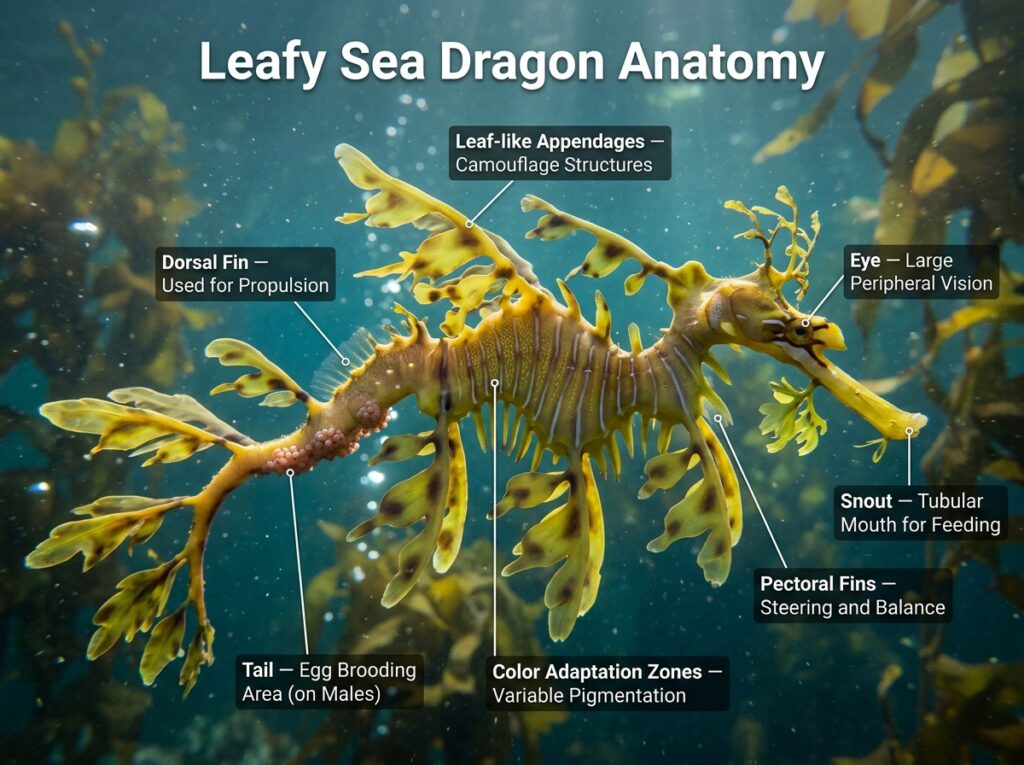
One of the most fascinating features is its ability to change color. While it can’t shift hues as dramatically as a cuttlefish, it can adjust its tones to better match its surroundings. This subtle color-shifting helps it blend into different parts of the kelp forest. It’s like having a wardrobe that automatically updates based on the room you walk into.
Leafy Sea Dragon Behavior: Quiet, Gentle, and Endlessly Charming
The Leafy Sea Dragon is not a creature of drama. It doesn’t chase. It doesn’t fight. It doesn’t perform acrobatics. It simply exists with a kind of gentle confidence that makes you want to sit down and rethink your own stress levels.
Its behavior is slow and deliberate. It spends its days drifting, feeding, and occasionally socializing with other sea dragons. They aren’t particularly territorial, and they don’t form tight groups. Instead, they share space peacefully, like neighbors who wave politely but don’t necessarily borrow each other’s lawn tools.
Habitat Of The Kelp Forest Cathedral
The kelp forest is the perfect home for the Leafy Sea Dragon. These underwater forests are rich with life, from tiny crustaceans to larger fish and even seals. The kelp itself grows tall and strong, anchored to the ocean floor and reaching toward the sunlight.
Within this forest, the Leafy Sea Dragon finds everything it needs. Food. Shelter. Camouflage. A place to raise its young. The kelp forest is both playground and sanctuary, a world where the dragon’s leafy disguise becomes part of the scenery.
Why This Unique Fish Captures Human Imagination
There are many beautiful creatures in the ocean, but the Leafy Sea Dragon holds a special place in human imagination. Part of it is its appearance. Part of it is its gentle nature. And part of it is the way it moves, drifting like a dream through the water.
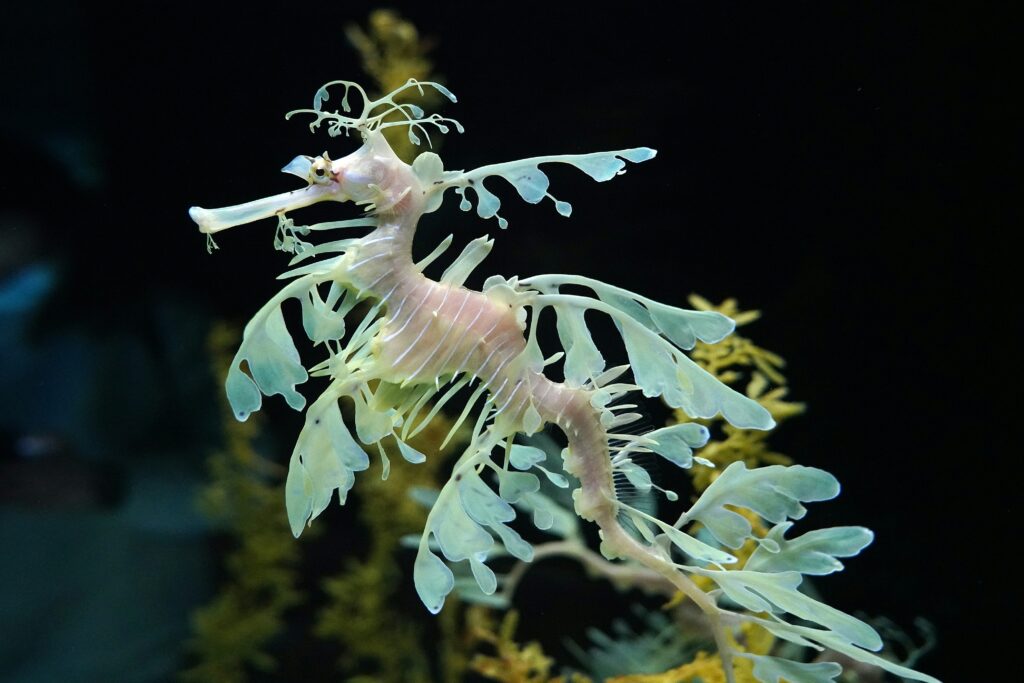
People are drawn to creatures that feel magical, and the Leafy Sea Dragon fits that description perfectly. It reminds us that the ocean is full of wonders we haven’t fully explored. It encourages curiosity. It invites awe. It whispers, in its leafy way, that the world is bigger and stranger and more beautiful than we often remember.
Fun Fishy Facts to Make You Smile
The Leafy Sea Dragon has a few quirks that feel like nature’s way of adding personality. For example, it doesn’t have teeth. It just slurps its food like a tiny underwater smoothie enthusiast. It also doesn’t have a swim bladder, which means it relies entirely on its fins and buoyancy to stay afloat. This gives it that signature drifting movement that looks like it’s perpetually vibing.
Another delightful fact is that Leafy Sea Dragons can be surprisingly social during mating season. They perform a kind of synchronized dance, drifting together in a slow spiral. It’s basically the ocean’s version of a romantic waltz.
Celebrating the Leafy Sea Dragon’s Quiet Brilliance
There is something deeply comforting about the Leafy Sea Dragon. It doesn’t roar. It doesn’t sting. It doesn’t chase. It simply exists with quiet brilliance, blending into the kelp forest and living its leafy life. In a world that often feels loud and fast, the sea dragon reminds us that gentleness is powerful. Camouflage can be beautiful. And sometimes the most extraordinary creatures are the ones that move like whispers.
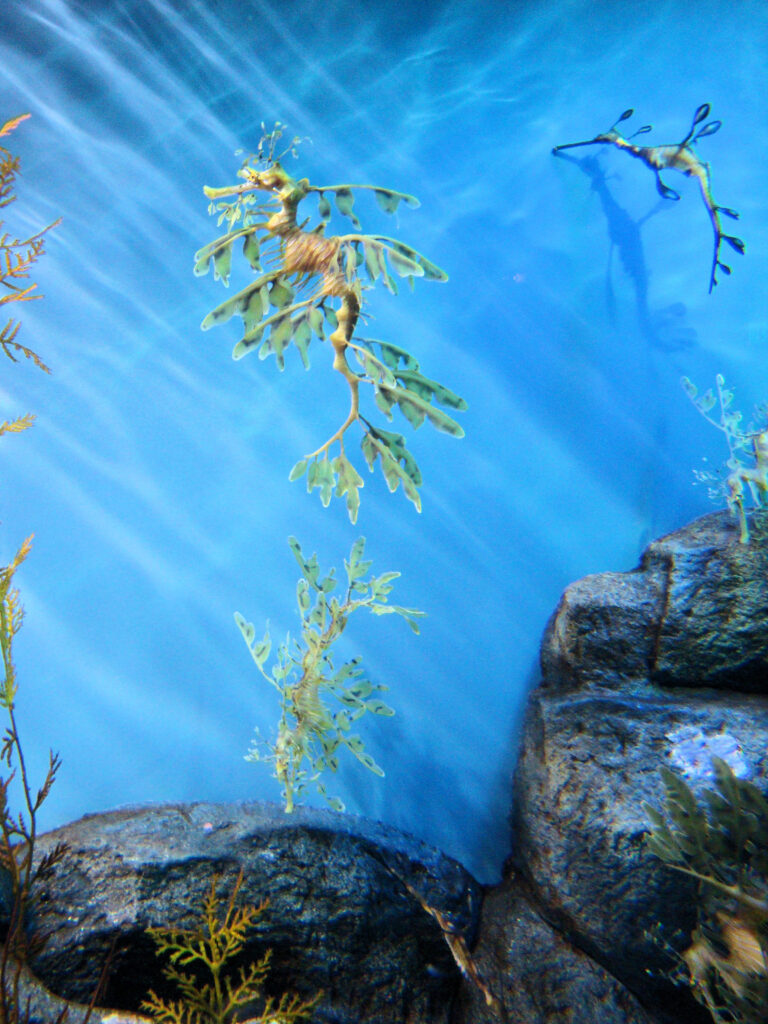
If you ever find yourself diving in a kelp forest, keep an eye out. You might just spot a Leafy Sea Dragon drifting by, disguised as a wandering leaf, carrying its quiet magic through the water. And if you do, take a moment to appreciate the wonder of a creature that has mastered the art of being both seen and unseen.
Supporting Autumnelf on Ko‑Fi helps fuel new essays, book projects, ocean‑life explorations, theatrical deep dives, and the creative quests that make Phantom Orca Quest a vibrant, multimedia experience.
Get Me a Spark of Magic