Hadestown loves to pretend it’s just a story about a boy, a girl, and a very ill‑advised walk to the underworld. But the show’s real engine hums under the floorboards. It’s a world built on scarcity, and not the natural kind. This is scarcity with a purpose. Scarcity as a strategy. Scarcity as a leash.The underworld in Hadestown is not simply a place where the dead go. It’s a factory town with a single boss, a single source of food, a single source of heat, and a single source of permission. Everything funnels through Hades, and everything is designed to keep people wanting just a little more than they have. Not enough to thrive. Just enough to survive. It’s the kind of setup that makes you squint and go, “Ah. I’ve seen this trick before.”
The workers don’t remember their names. They don’t remember their lives. They don’t remember the world above. But they remember the hunger. They remember the cold. They remember the promise that if they work hard enough, maybe they’ll get a taste of something better. That’s the magic of manufactured scarcity. It doesn’t just limit resources. It limits imagination.
Capitalism’s Cold Logic in Hadestown
Capitalism in Hadestown isn’t a metaphor that hides behind subtlety. It’s right there in the lyrics, in the staging, in the sweat on the workers’ brows. Hades runs a company town where labor is compulsory and wages are nonexistent. The workers build a wall that keeps them in and keeps everyone else out. They’re told it’s for their protection. They’re told it’s necessary. They’re told it’s progress.
It’s hard not to laugh a little at the absurdity, except the joke lands with a sting. The wall is a project that never ends. It’s a job that can never be finished. It’s a promise that can never be fulfilled. The workers are trapped in a loop of labor that benefits only the man at the top. And Hades, bless him, is very proud of his efficiency.
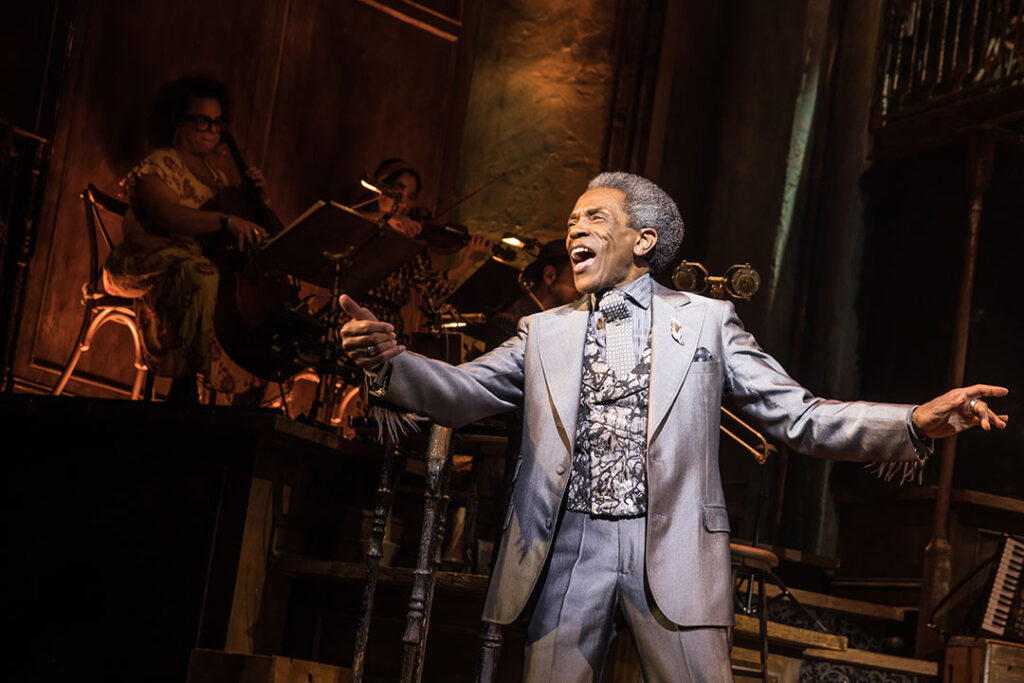
Photo by Matthew Murphy, courtesy of Hadestown Broadway.
Hadestown uses this setup to poke at the idea of progress as something that can be owned. Something that can be hoarded. Something that can be weaponized. When Hades sings about keeping out the enemy, he’s really talking about keeping out change. Keeping out hope. Keeping out any possibility that the workers might realize they deserve more than a life spent stacking stones.
Climate Control and the Chilling Power of Hades
Climate is not just a backdrop in Hadestown. It’s a tool. The world above is frozen, and the world below is burning. Hades controls both. He decides when the workers shiver and when they sweat. He decides when Persephone can bring spring and when she must return underground. He decides the temperature of the world, and by extension, the temperature of everyone’s fear.
Climate in Hadestown is a kind of emotional thermostat. When the world above freezes, people become desperate. Desperate people make choices they wouldn’t otherwise make. They take deals they shouldn’t take. They follow voices they shouldn’t trust. Hades knows this. He counts on it.
The show nudges us toward the idea that climate catastrophe is not always an accident. Sometimes it’s a consequence of greed. Sometimes it’s a consequence of control. Sometimes it’s a consequence of someone deciding that the world should be shaped to their liking, no matter who suffers. The cold is not just weather. It’s policy.
The Underworld’s Tight Grip on Control
Control in Hadestown is quiet. It’s not enforced with swords or guards or dramatic proclamations. It’s enforced with contracts. With routines. With the slow erosion of memory. The workers don’t rebel because they don’t remember what rebellion feels like. They don’t dream because they don’t remember what dreaming is.
Hades doesn’t need to shout. He doesn’t need to threaten. He just needs to keep everyone busy. Keep them tired. Keep them convinced that the world is the way it is because it has to be. That’s the brilliance of his system. It’s self‑maintaining. It’s self‑justifying. It’s self‑perpetuating.
Hadestown shows us how control can be disguised as stability. How oppression can be disguised as order. How a cage can be disguised as a home. And how people can be convinced to thank the person who locked the door.
Orpheus’s Hope as a Disruption
Orpheus wanders into this system like a glitch. He believes in abundance. He believes in warmth. He believes in love as something that can change the world. He believes in the possibility of a future that isn’t dictated by fear. And that belief is dangerous.
His song is not just pretty. It’s political. It’s a challenge to the idea that the world must be cold. That the world must be controlled. That the world must be built on scarcity. When he sings, the workers remember. They remember their names. They remember their lives. They remember that they once had choices.
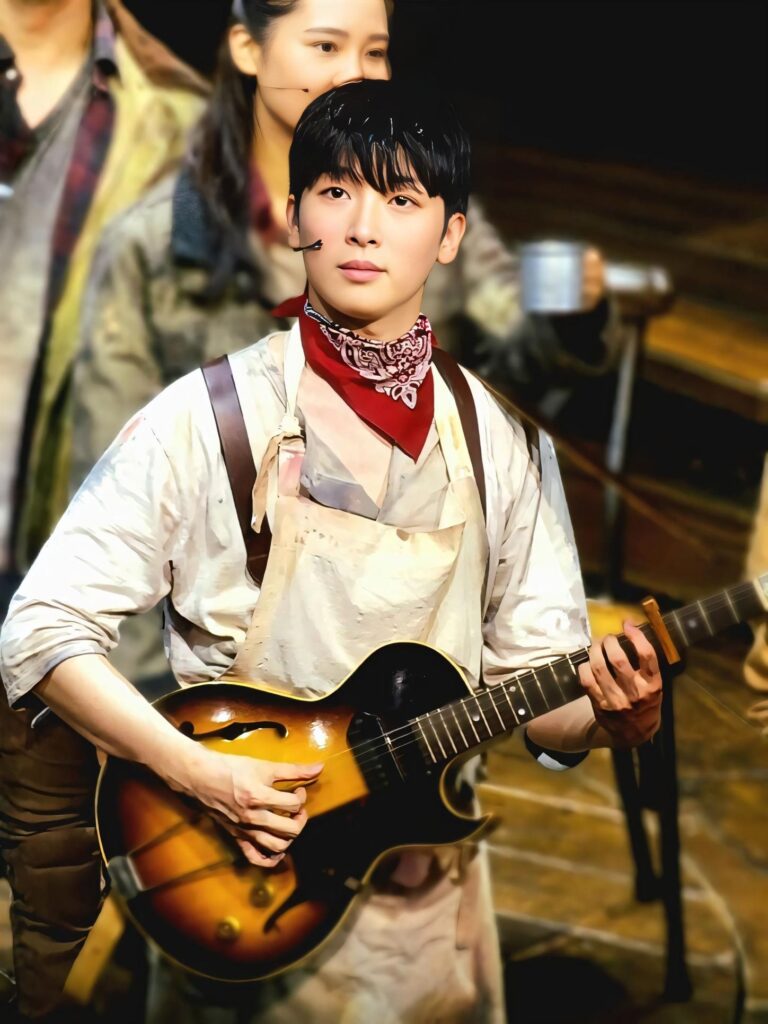
Rosuacamus, CC0, via Wikimedia Commons
Orpheus’s hope is a spark, and sparks are notoriously difficult to contain. Hades knows this. Persephone knows this. The Fates definitely know this. The underworld trembles because hope is contagious. Hope is unruly. Hope is a threat to any system built on fear.
Why Orpheus’s Failure Matters
The tragedy of Hadestown is not that Orpheus fails. It’s that his failure feels inevitable. The system is designed to break him. The walk out of the underworld is a test he was never meant to pass. The rules are stacked. The stakes are impossible. The pressure is unbearable.
But the show doesn’t treat his failure as a moral flaw. It treats it as a warning. A quiet one. A gentle one. The kind that sits with you long after the curtain falls. Orpheus doesn’t fail because he is weak. He fails because the world he’s walking through is built to make him doubt. Built to make him fear. Built to make him turn around.
Hadestown uses his failure to remind us that hope alone is not enough. Hope needs structure. Hope needs community. Hope needs systems that support it rather than crush it. Orpheus tries to change the world with a song, but the world he’s singing into is louder, colder, and far more practiced at keeping people in line.
The Politics of Hadestown’s Ending
The ending of Hadestown is famously cyclical. The story begins again. The workers return to their labor. The world returns to its cold. Orpheus and Eurydice return to their tragedy. But the cycle is not hopeless. It’s a challenge.
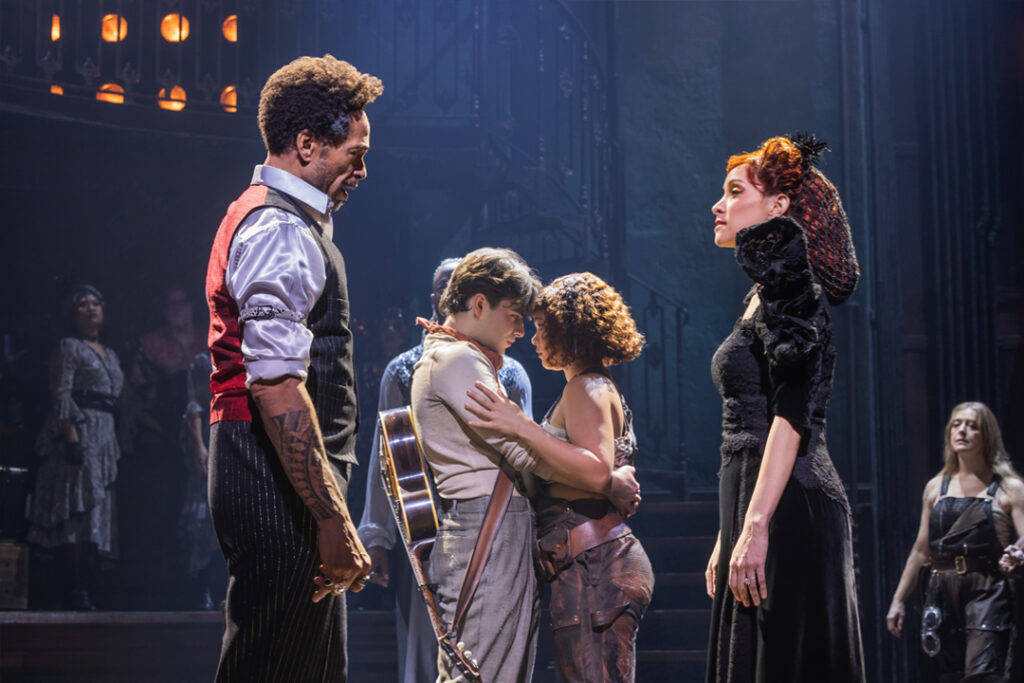
Photo by Matthew Murphy, courtesy of Hadestown Broadway
The show asks us to consider whether the cycle can be broken. Whether the next Orpheus might succeed. Whether the next group of workers might remember sooner. Whether the next version of the story might tilt toward freedom instead of fear.
Hadestown doesn’t hand us an answer. It hands us a question. A big one. A messy one. The kind that makes you stare at the ceiling at two in the morning. What does it take to change a world built on scarcity, climate manipulation, and control? What does it take to walk forward without turning back?
Why Hadestown’s Politics Feel So Personal
Part of the magic of Hadestown is how personal its politics feel. The show doesn’t lecture. It doesn’t preach. It doesn’t wag a finger. It tells a story about love and loss and longing, and tucked inside that story is a blueprint for understanding how power works.
The underworld feels familiar because we’ve seen versions of it. We’ve lived versions of it. We’ve worked in places where the rules don’t make sense. We’ve felt the chill of systems that benefit a few at the expense of many. We’ve watched people forget their names because remembering hurts too much.
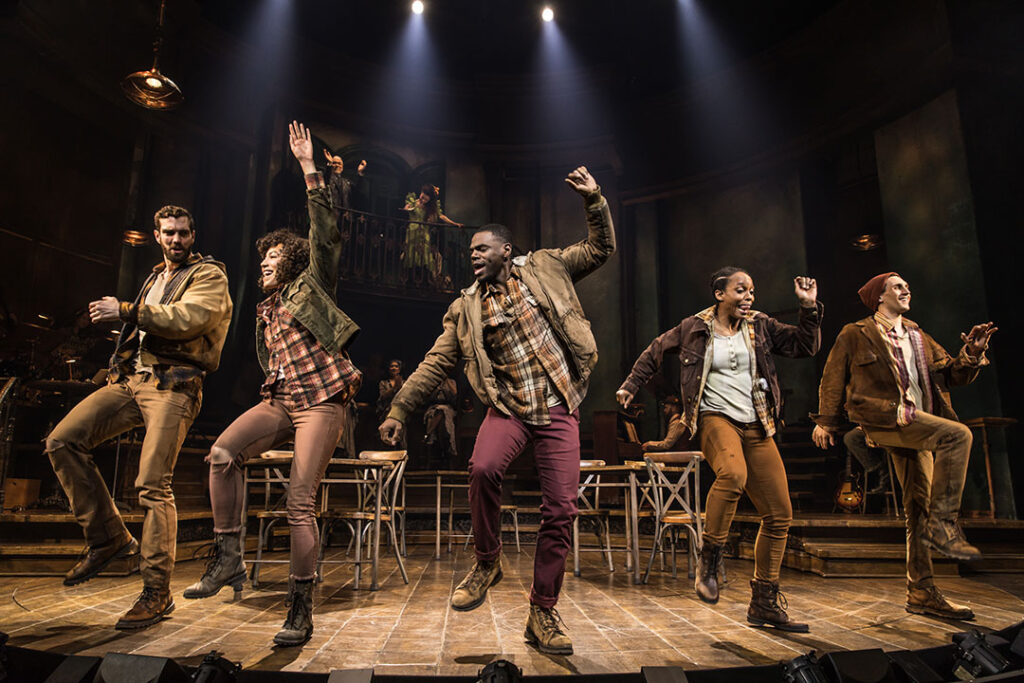
Photo by Matthew Murphy, courtesy of Hadestown Broadway
Hadestown gives us a way to talk about these things without drowning in them. It gives us music. It gives us myth. It gives us a story that feels ancient and modern at the same time. And it gives us a reminder that even in the darkest places, someone might start singing.
The Quiet Call to Action
The show ends with a refrain that feels like a shrug and a dare. It’s a sad song, but it’s also a stubborn one. It insists that the story is worth telling again. It insists that trying again matters. It insists that failure is not the end.
Hadestown’s politics are not loud. They’re not angry. They’re not wrapped in slogans. They’re wrapped in melody. They’re wrapped in myth. They’re wrapped in the idea that the world can be different, even if it isn’t yet.
The warning is gentle, but it’s real. Systems built on scarcity and control do not crumble because one person sings. They crumble because many people do. They crumble because someone refuses to turn around. They crumble because someone decides that the cold is not inevitable.
And maybe, just maybe, the next time Orpheus walks, he won’t walk alone.
Supporting Autumnelf on Ko‑Fi helps fuel new essays, book projects, ocean‑life explorations, theatrical deep dives, and the creative quests that make Phantom Orca Quest a vibrant, multimedia experience.
Get Me a Spark of Magic