There is something wonderfully sneaky about Hairspray.
At first glance, it is a story about a teenager who really, really wants to dance on television. That sounds pretty harmless.
Tracy Turnblad loves dancing. She loves the Corny Collins Show. She wants to be one of the teenagers dancing on television, preferably while wearing an outfit that can survive approximately seventeen thousand revolutions of 1960s choreography.
And then Hairspray quietly hands us a much bigger question: Who gets to be seen? Because that is where things get interesting.
The Corny Collins Show is not simply a television program. It is a gatekeeper. It decides who belongs on the screen, who is considered fashionable, who gets to be part of the cultural conversation, and who gets shoved into a separate corner and told that this is perfectly normal.
Spoiler alert: Tracy does not think it is normal.
And as someone who is Deaf and autistic, that part of Hairspray hits me particularly hard. Because I have spent a lot of time thinking about visibility. Not just the “Look, a Deaf person exists!” kind of visibility, either.
I mean the much more complicated question of whether you are actually being included, or whether someone has simply put you somewhere visible and then expected you to figure out how to participate in a system that was never designed with you in mind.
Those are not the same thing. And Hairspray understands that.
Hairspray Starts With a Dance Show, But the Rules Are Doing the Talking
The world of Hairspray is Baltimore in 1962, and the racial segregation of the time is built directly into the television show Tracy loves. White teenagers dance on the regular Corny Collins Show. Black teenagers are restricted to “Negro Day.”
That distinction is the entire problem. Because the teenagers can already dance together. They know the same music. They watch the same show. They admire the same performers. They live in the same city.
The artificial barrier is not being created by the teenagers. It is being imposed on them by adults and institutions.
And that is one of the things I love about the story. It takes a huge social issue and makes the mechanism visible.
There is a rule. The rule says these people can participate here and those people can participate over there. And then Tracy comes along with the most dangerous question known to any poorly designed system:
“Why?”
That question gets underestimated.
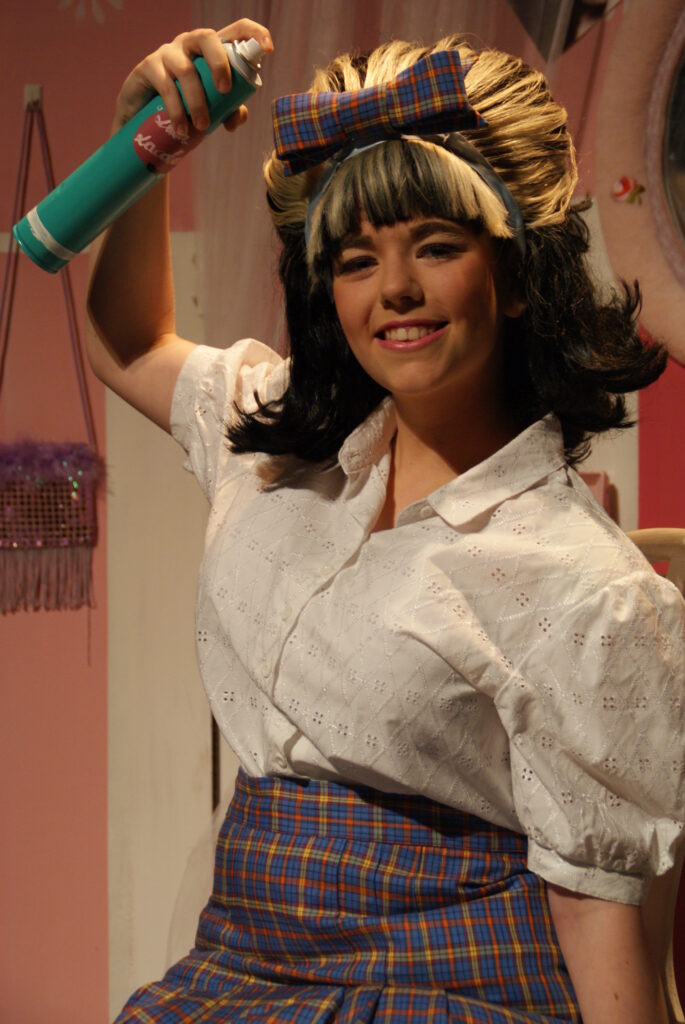
People are remarkably good at following rules without examining them. We learn what is “normal,” what is “appropriate,” what is “just how things are,” and eventually the explanation disappears entirely. There is simply a rule.
And if you are autistic, you may have encountered the delightful experience of asking why a rule exists only to receive the deeply satisfying answer of, “Because that’s the rule.”
Excellent. Thank you. That explains absolutely nothing.
Tracy’s particular brand of optimism works because she does not automatically accept that an existing rule is therefore a good rule. She sees a system. She sees that the system is unfair. And she starts poking it. Repeatedly. With choreography.
What Hairspray Understands About Visibility
The television screen matters because being visible is not the same thing as being included.
That distinction is something I wish more stories about representation understood. You can put a marginalized person in the room and still exclude them from the actual conversation. You can invite someone to an event and provide no accommodation that allows them to participate. You can say, “Everyone is welcome!” while designing the entire experience around the assumption that everyone hears, everyone sees, everyone processes information the same way, everyone can navigate the same environment, and everyone knows the unwritten social rules. Technically, everybody was invited. Practically, somebody forgot to make sure everyone could actually participate.
Hello. That is not inclusion. That is decorative inclusion. And Hairspray gives us a very literal version of that problem. Black teenagers are allowed to have their own television day. Technically, they are on television. But they are not being treated as equal participants in the same cultural space. The distinction is enormous.
As a Deaf person, I find that especially resonant. Visibility is not the finish line. I do not need someone to point at me and say, “Look! A Deaf person!” I need the environment to actually communicate with me. I need access. I need to be able to participate in the conversation rather than being physically present while everyone else has the conversation around me. That is the difference between being present and belonging. And Hairspray keeps coming back to that distinction.
The Rules of Hairspray Are Supposed to Look Normal
One of the cleverest things about Hairspray is that the segregation is presented as an established part of everyday life.
It is not announced every morning with a giant flashing sign saying: “HELLO, WE ARE CURRENTLY DOING RACISM.”
It is simply the way the television show operates. And that is how systems often work.
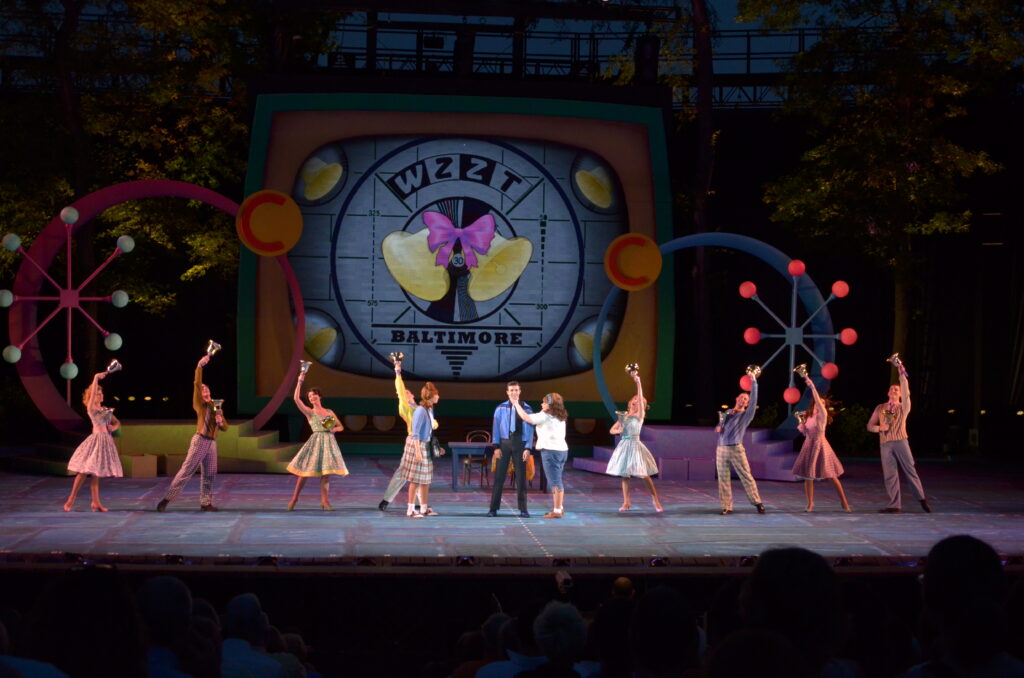
The more ordinary an unfair rule becomes, the easier it is to stop noticing the unfairness. This is where my autistic brain starts poking the story with a metaphorical stick. Because there is a huge difference between a rule being necessary and a rule merely being established. Those are not synonyms.
A rule can exist because it serves a legitimate purpose. A rule can also exist because somebody made it up thirty years ago, everybody forgot why, and now changing it would require a meeting. Possibly three meetings. Possibly a committee. Possibly a form. Nobody knows. The rule just lives there now.
Hairspray asks us to examine that kind of thinking on a much larger and much more serious scale. Why is this rule here? Who benefits from it? Who is harmed by it? What happens if we remove it? And perhaps most importantly, who gets to decide whether it stays?
Those are uncomfortable questions. They are also necessary questions.
Tracy’s Hairspray Optimism Is More Radical Than It Looks
Tracy does not start out as a civil rights leader. She wants to dance. That is important. She is not standing in her bedroom reading political theory while dramatically highlighting passages with a pink marker. She sees something she loves and notices that the people she likes are being excluded from it.
Her response is essentially: “That seems stupid.”
And honestly? Sometimes that is where social change begins.
Not with a perfectly constructed argument. Not with everyone suddenly becoming an expert. Sometimes it starts with somebody looking at a system and going, “Wait. Why are we doing this?” That kind of literal thinking can be incredibly powerful. Autistic people are often criticized for being “too literal,” but sometimes literal thinking is exactly what exposes an absurd social convention.
If the rule is “Black teenagers cannot dance on this television show,” then asking why is not being difficult. It is examining the premise.
If the answer is “because that is how things have always been done,” Tracy has every right to look at that answer and basically respond: “Okay, but that’s not actually an answer.” And then she goes dancing.
Hairspray Turns Integration Into Joy
This is where Hairspray becomes particularly beautiful.
Integration is not presented solely as a solemn political objective. It becomes a celebration. People dance together. They sing together. They laugh together. They become friends.
The joy itself becomes evidence that the separation was artificial. The music does not care about segregation. The choreography does not care. The teenagers certainly do not care.
The boundary has been imposed from the outside. And once people start crossing it, the absurdity becomes obvious.
That is powerful.
Because joy is sometimes treated as though it is incompatible with serious activism. But why? Why does resistance have to look miserable? Why can’t people fight injustice and have fun at the same time? Why can’t the teenagers demanding integration also dance? Why can’t they laugh? Why can’t they fall in love? Why can’t they have an absolutely ridiculous amount of hairspray in their hair? Human beings are not machines that stop needing joy when something terrible is happening.
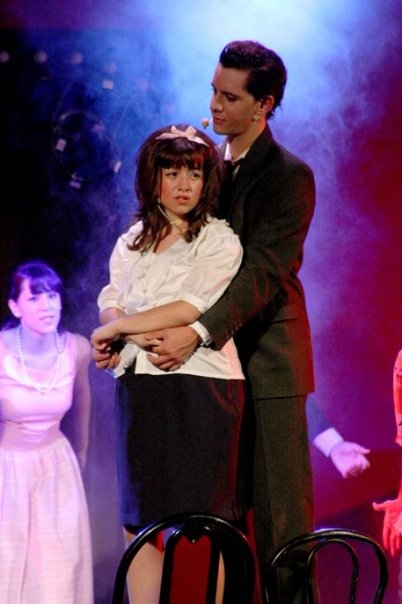
Sometimes joy is how people remind themselves what they are fighting for.
The Deaf and Autistic Question: Who Gets to Participate?
This is where my own perspective gets particularly tangled up with Hairspray.
There is a difference between being allowed into a space and being given meaningful access to that space. That distinction is huge for disabled people.
Imagine being told you are welcome at an event. Wonderful. Then you arrive and discover that all the important information is announced verbally, the presentation has no captions, nobody has arranged an interpreter, the organizers keep saying, “Just ask someone to tell you what you missed,” and somehow you are now responsible for constructing your own access while everyone else simply gets to enjoy the event.
You are technically there. But are you participating? That question matters.
And I think it helps illuminate what Hairspray is saying about racial integration. The Black teenagers are not asking for permission to exist. They already exist. They are not asking to be tolerated. They are asking to participate equally. That distinction is enormous.
“You’re allowed to be here” is not the same as “You belong here.”
The first gives someone permission. The second recognizes them as a participant.
The Politics of Hairspray’s Dance Floor
And suddenly, the dance floor becomes political. Who gets to dance? Who gets to perform? Who gets to be seen? Who gets to decide what counts as beautiful? Who gets to take up space? Who gets to stand in the middle of the room without apologizing? Those are questions about power. And that is why the dancing matters.
A dance floor sounds frivolous until someone tells you that you are not allowed on it. Then suddenly the floor becomes very important.
That is something disabled people know too. A ramp is just a ramp until the stairs are the only entrance. Captions are just captions until everyone else is receiving information you cannot access. An interpreter is just an interpreter until you are sitting in a room where the conversation determining something important about your life is happening without you. Accessibility can look invisible to the people who do not need it. Until it isn’t there. Then everybody notices the barrier.
Hairspray does something similar with segregation. The boundary becomes impossible to ignore once the characters start challenging it.
Motormouth Maybelle Gives Hairspray Its History
Tracy’s optimism is infectious, but it cannot carry the entire story. That is where Motormouth Maybelle matters so much. She understands that this fight did not begin with Tracy. She knows what segregation costs. She knows what exclusion feels like. She understands that there is a history behind the cheerful television program and its smiling dancers. When she sings “I Know Where I’ve Been,” the story slows down long enough to acknowledge that history. And I love that. Because optimism without context can become shallow.
You cannot simply smile hard enough and make injustice disappear. But you also cannot build a better world without believing that a better world is possible. Motormouth and Tracy represent two sides of that equation. Tracy brings the stubborn optimism. Motormouth brings the lived understanding. Together, they make the movement bigger than either of them.
Hairspray and the Right to Take Up Space
There is another reason Tracy’s story works so well for me.
Tracy is fat. And she dances anyway. She is repeatedly told, directly and indirectly, that her body does not fit the image of the girl who belongs on television. Her response is not to disappear until she becomes acceptable. She takes up space. Literally. Sometimes quite a lot of it. And I adore that.
There is something deeply connected between body acceptance, racial integration, disability access, and other forms of inclusion. The underlying question is often the same: Who gets to exist publicly without having to make themselves smaller first? Who gets to be seen without becoming palatable? Who gets to participate without first proving that they deserve the accommodation?
Tracy does not earn the right to dance by becoming someone else. She dances as Tracy. That matters.
The Beautiful Thing About Hairspray Is That Nobody Has to Become Less Human
The story could have treated social change as a process where everyone becomes Serious Political Person Number 47. Instead, everybody stays gloriously human. They flirt. They argue. They make jokes. They mess things up. They get excited. They dance. They have complicated feelings. They have enormous hair.
Nobody has to stop being a person in order to fight for something important. That may be one of the most hopeful messages in Hairspray.
Change does not require people to become emotionless symbols. The people fighting for inclusion still deserve joy. Actually, they deserve more than joy.
They deserve the ordinary things that exclusion tries to make extraordinary. They deserve to go to school. They deserve to dance. They deserve to appear on television. They deserve to participate. They deserve to be heard. They deserve to be seen.
And for disabled people, that last pair can be particularly complicated. Being seen is not enough if nobody is listening. Being present is not enough if nobody has made participation possible. Being invited is not enough if the door is technically open but there is a staircase blocking the entrance. Access is not a favor. Participation is not a reward. Belonging should not require somebody to audition for humanity.
Why Hairspray Still Makes Me Want to Dance
That is ultimately why Hairspray works so well. It takes something joyful and refuses to let us dismiss it as meaningless.
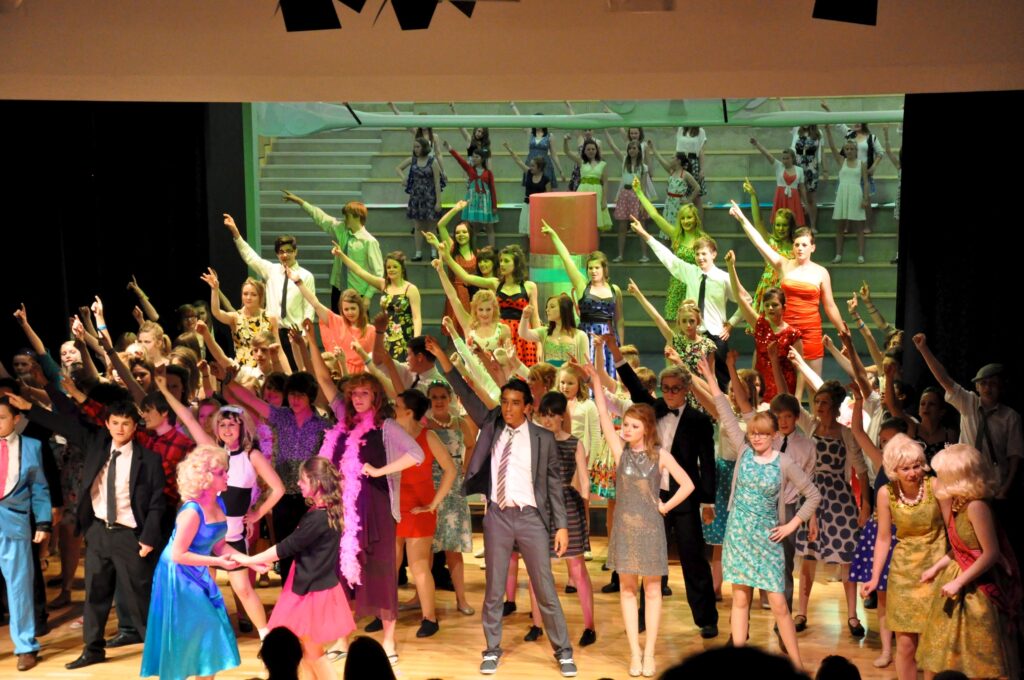
Dancing matters because people were told they could not dance together. Television matters because visibility matters. Music matters because culture can bring people together even when institutions try to keep them apart. Optimism matters because somebody has to believe the rules can change before the rules actually change. And asking “Why?” matters because sometimes the answer to “That’s just how things are” is: “Okay. But why?”
That question can be inconvenient. Good. Sometimes inconvenience is exactly what a broken system needs.
Hairspray reminds us that integration is not merely about allowing people into the same room. It is about recognizing that they were always supposed to have a place in the room.
And perhaps that is why the dancing feels so important. The teenagers are not dancing because the problem has been solved. They are dancing because they refuse to let the problem define the entirety of their lives. They are dancing because they are joyful. They are dancing because they are angry. They are dancing because they are young. They are dancing because the music is good. They are dancing because they belong there.
And honestly? Sometimes you have to put on the biggest hair you can find, turn up the music, and make enough joyful noise that somebody finally notices the door was never supposed to be closed in the first place. Just remember to check your Aqua Net supply first.
Revolution is hard enough without running out of hairspray.
Supporting Autumnelf on Ko‑Fi helps fuel new essays, book projects, ocean‑life explorations, theatrical deep dives, and the creative quests that make Phantom Orca Quest a vibrant, multimedia experience.
Get Me a Spark of Magic
