There are musicals that want to inspire you. There are musicals that want to make you cry. Then there is The Book of Mormon, a show that seems perfectly content to make you laugh so hard you nearly choke on your overpriced theater snacks before immediately forcing you to confront an uncomfortable question.
Created by Trey Parker, Matt Stone, and Robert Lopez, The Book of Mormon exploded onto Broadway with the subtlety of a marching band crashing through a library. It was loud, irreverent, shocking, and wildly different from most mainstream musicals audiences had encountered. Yet beneath the profanity, absurdity, and deliberately outrageous humor lies a surprisingly thoughtful discussion about belief, community, storytelling, and the complicated relationship between faith and truth.
That complexity is exactly why conversations about the show have never really gone away. Years after its debut, audiences still debate whether it is brilliant satire or harmful caricature. Some see it as a fearless critique of organized religion. Others view it as a strangely sincere story about the people who dedicate their lives to helping others. Many viewers somehow arrive at both conclusions before intermission.
The truth is that The Book of Mormon thrives in contradiction. It celebrates faith while making fun of religion. It questions belief while admiring conviction. It asks audiences to laugh while simultaneously examining whether that laughter comes at someone’s expense.
That tension is what makes it one of the most fascinating musicals of the twenty-first century.
Why Mormon Missionaries Became the Perfect Target for Satire
Satire works best when audiences immediately recognize what is being satirized. Mormon missionaries fit that requirement almost perfectly.
Even people who know very little about The Church of Jesus Christ of Latter-day Saints can usually identify the familiar image of white shirts, black ties, name tags, and relentlessly optimistic young missionaries, usually 18 or 19 years old, knocking on doors.

That recognizable image gives the musical a strong foundation. Audiences instantly understand who these characters are supposed to be and what they believe.
The show follows two young missionaries who are absolutely convinced they are prepared to change the world. Unfortunately for them, the world has other plans.
Like many great comedic characters, the missionaries are not malicious. Quite the opposite. They genuinely want to help people. Their confidence comes from sincerity rather than arrogance.
The humor emerges when their certainty crashes headfirst into reality. A reality that stubbornly refuses to cooperate.
As anyone who has ever confidently assembled furniture without reading the instructions can tell you, certainty and competence are not always the same thing.
The musical repeatedly explores that gap.
Mormon Satire That Reaches Beyond Religion
Although the title points directly toward Mormonism, the show’s targets extend far beyond a single faith tradition.
Many of its sharpest jokes are aimed at broader cultural assumptions.
The musical critiques American exceptionalism, simplistic worldviews, cultural ignorance, and the tendency to believe that complex problems can be solved with easy answers. Mormon missionaries provide the framework, but the satire frequently expands to include many aspects of modern society.
The story challenges the belief that sincerity alone can fix every problem. It questions the idea that outsiders automatically understand the communities they are trying to help. It highlights how easily good intentions can collide with complicated realities.
These themes resonate far beyond religion.
In many ways, the missionaries become stand-ins for anyone who enters an unfamiliar situation convinced they already have all the answers.
History is filled with examples of this phenomenon. Governments do it. Corporations do it. Internet commenters definitely do it.
The musical uses Mormon missionary culture as its lens, but the resulting observations apply to a much larger human tendency.
The Surprising Respect Hidden Inside the Comedy
One reason The Book of Mormon continues to spark discussion is that it refuses to remain in a single lane.
For much of its runtime, the show seems committed to relentlessly mocking religious beliefs and practices. Then something unexpected happens.
Moments of genuine sincerity begin appearing beneath the jokes.
The musical may poke fun at doctrine, but it often treats faith itself with surprising respect.
The missionaries are frequently naïve. They are often wrong. They make mistakes that range from awkward to spectacularly catastrophic. Yet their desire to help people remains authentic.
The show never fully dismisses that. Instead, it suggests that belief can inspire kindness, generosity, perseverance, and community. Even when the characters misunderstand situations or stumble through impossible circumstances, their commitment to helping others still matters.
This creates one of the show’s most fascinating contradictions.
The musical laughs at religion. The musical also recognizes that religion can provide meaning. Rather than choosing one position, it explores both simultaneously.
When Mormon Humor Starts Raising Difficult Questions
The easiest form of satire targets institutions. The most complicated form often targets communities. This is where discussions surrounding The Book of Mormon become significantly more challenging.
The show employs broad stereotypes, exaggerated behaviors, and intentionally absurd scenarios. These techniques are common in comedy because they generate quick laughs and easily recognizable situations.
However, comedy does not exist in isolation.
Audiences bring their own assumptions, experiences, and biases into the theater. As a result, different viewers can interpret the same joke very differently.
Some audience members see the satire as primarily directed toward missionary culture and religious institutions. Others feel that the jokes land on real individuals whose beliefs and identities become the punchline. Neither perspective can simply be dismissed. Comedy is often shaped as much by audience interpretation as by creator intent.
When Jokes Affect Real Communities
The challenge with satire is that jokes do not always stay contained within the context in which they were created.
A joke about an institution may influence how people view its members. A joke intended to highlight absurdity may reinforce stereotypes for audiences unfamiliar with the subject matter.
This concern frequently appears in discussions about The Book of Mormon.
Many religious groups have spent decades being portrayed through simplified or exaggerated media representations. When those portrayals become dominant cultural narratives, they can shape public understanding whether they are accurate or not.
Even successful satire must contend with that reality.
Humor can illuminate truth. It can also oversimplify it.
The musical’s willingness to operate in that uncertain territory is part of what makes it so compelling and controversial.
The Line Between Mormon Satire and Harm
Finding the line between satire and harm is rarely straightforward.
If satire never challenged audiences or created discomfort, it would likely lose much of its power. Great satire often provokes strong reactions because it exposes contradictions, hypocrisy, and uncomfortable realities.
At the same time, artistic intent does not automatically erase impact. Something can be cleverly written and still cause harm. Something can be offensive and still contain legitimate criticism. Much of the debate surrounding The Book of Mormon centers on balancing those truths.
Supporters often argue that no belief system should be immune from satire. Critics frequently point out that repeated portrayals influence public perception, especially when audiences have limited exposure to the real communities being depicted.
Both arguments contain valid concerns. The difficulty comes from trying to evaluate humor, representation, intention, and impact simultaneously.
There is no simple formula that determines where satire ends and harm begins.
If there were, social media would be a far quieter place.
Why the Debate Continues Years Later
Many controversial productions fade from public attention after their initial shock value wears off.
The Book of Mormon has not.
Part of that longevity comes from the quality of the musical itself. The songs are memorable, the comedy remains effective, and the storytelling is surprisingly strong.
More importantly, the questions at the center of the show remain relevant.
How should faith be portrayed in entertainment?
What responsibilities do artists have when depicting real communities?
Can comedy challenge harmful systems without reinforcing stereotypes?
Can laughter create greater understanding?
The musical deliberately avoids providing definitive answers. Instead, it encourages audiences to wrestle with those questions long after leaving the theater. That lingering uncertainty keeps the conversation alive.
Mormon Faith as a Source of Community
Lost amid the controversy is a simple fact that the musical repeatedly acknowledges.
Faith helps many people.
Not every person experiences religion the same way. Not every faith community functions identically. Nevertheless, countless individuals find belonging, comfort, and purpose through shared beliefs.
The show recognizes this reality even while critiquing organized religion.
The musical’s characters derive strength from their convictions. Their beliefs encourage them to persevere in difficult circumstances and maintain hope when situations seem impossible.
That does not mean the show treats faith as perfect.
Far from it.
The narrative consistently highlights flaws, misunderstandings, and contradictions. Yet it also acknowledges that belief can motivate people to care for one another and work toward a better future.
Why Belief Still Matters in The Book of Mormon
One of the most interesting aspects of the musical is that it never fully abandons the importance of belief.
The story repeatedly suggests that people need stories. They need meaning. They need purpose.

Whether those stories are religious, cultural, personal, or philosophical, they often help people navigate a complicated world.
The show seems less interested in proving which beliefs are correct and more interested in examining the role belief plays in human life. That perspective allows it to critique religious systems without entirely rejecting faith itself.
What The Book of Mormon Really Says About Belief
It is tempting to view the musical as simply anti-religious because so many of its most famous moments are openly irreverent. From Elder Cunningham’s wild imagination to an entire song built around a completely made-up phrase that has no meaning in any language and essentially serves as a musical way of giving a higher power the middle finger, there are plenty of moments that make you wonder whether anything in this musical is taking Mormonism, or faith in general, seriously.
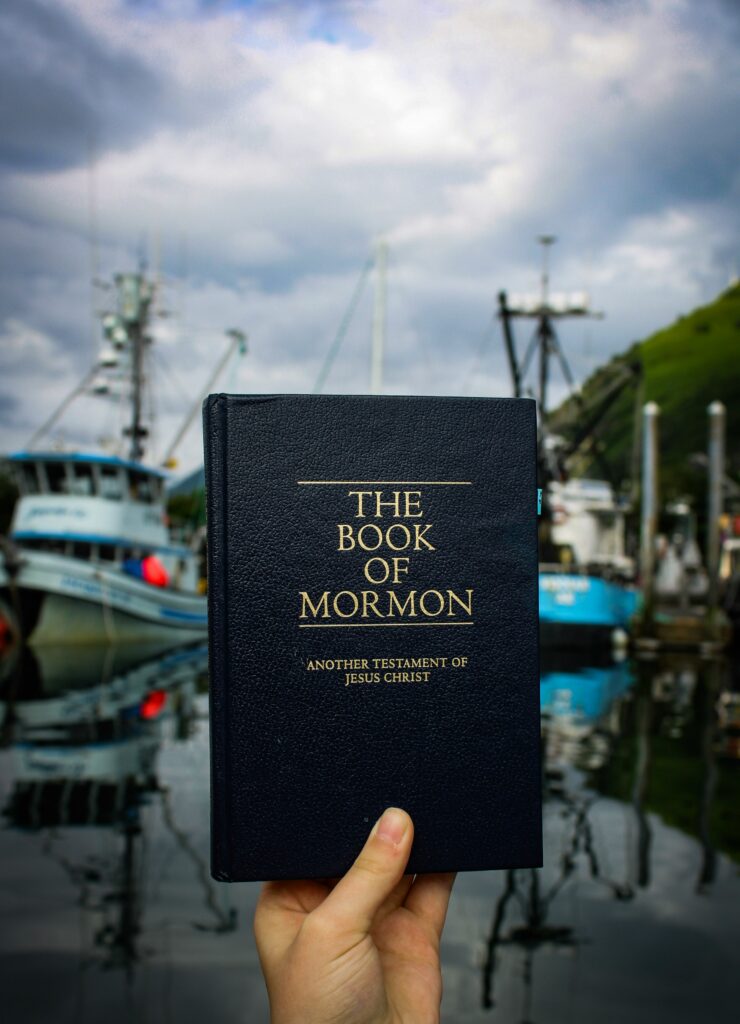
A closer look reveals something more nuanced: The show challenges certainty far more aggressively than it challenges belief.
Characters who insist they possess all the answers often struggle. Characters who adapt, grow, and learn from others tend to succeed. The musical repeatedly emphasizes compassion over doctrine, empathy over certainty, and action over ideology.
Rather than asking whether belief is true, it asks what people do with their beliefs.
Do they help others?
Do they create community?
Do they inspire kindness?
These questions become increasingly important as the story progresses.
By the final curtain, the show’s focus has shifted away from factual debates and toward the human impact of faith.
Representation, Comedy, and the Mormon Conversation
Comedy occupies a unique role in society.
It can challenge powerful institutions and expose hypocrisy. It can help audiences discuss difficult subjects that might otherwise feel impossible to approach. At the same time, comedy can reinforce misconceptions and amplify stereotypes.
The Book of Mormon demonstrates both possibilities.
Its satire exposes arrogance, cultural misunderstandings, and unquestioned assumptions. Yet it also raises important questions about who gets to tell stories and who becomes the object of those stories. The resulting conversation is not always comfortable.
Neither is the musical itself.
That discomfort is part of what has allowed the production to remain culturally relevant for so long. People continue debating the musical because it never completely resolves its contradictions. Instead, it places those contradictions directly in front of the audience and invites discussion.
The Enduring Legacy of Satire on Stage
What ultimately makes The Book of Mormon remarkable is not its shock value. Plenty of productions have attempted to shock audiences. Very few have managed to remain culturally significant long after the initial surprise fades.
The show’s lasting impact comes from its willingness to explore difficult questions while resisting easy answers. It laughs at religious certainty while recognizing the comfort faith can provide. It critiques institutions while acknowledging the good intentions of many people within them. It embraces outrageous comedy while asking audiences to consider the consequences of that comedy.
That balancing act is rarely comfortable. It is not supposed to be.
The musical walks a narrow line between critique and celebration, sincerity and satire, humor and harm. Sometimes it stumbles. Sometimes it succeeds brilliantly. Often it does both at the same time.
And perhaps that is why audiences continue talking about it.
The conversation surrounding The Book of Mormon is ultimately bigger than Mormonism itself. It is a conversation about storytelling, representation, belief, and the complicated ways laughter shapes our understanding of the world.

More than a decade after its debut, the musical continues asking the same question that sits at the heart of great satire:
Can laughter illuminate truth without erasing the people living it?
Supporting Autumnelf on Ko‑Fi helps fuel new essays, book projects, ocean‑life explorations, theatrical deep dives, and the creative quests that make Phantom Orca Quest a vibrant, multimedia experience.
Get Me a Spark of Magic
