Some fantasy worlds feel like places you visit. Sanctuary feels like a place that survives despite every possible effort to destroy it.

For more than two decades, the Diablo franchise has invited players into a bleak world where angels are flawed, demons are relentless, and ordinary people somehow keep getting caught in the middle of cosmic disasters. It is a setting built on tragedy, corruption, and endless conflict, yet millions of players keep returning because there is something strangely comforting about wandering into a dungeon, defeating horrors beyond imagination, and finding a slightly better helmet.
That cycle of terror and treasure became one of gaming’s most influential formulas. Diablo did not just create memorable adventures. It helped shape an entire genre.
How Diablo Began in Tristram
The story starts in 1996 with the original Diablo, developed by Blizzard North. At first glance, the premise seemed wonderfully simple. A small town called Tristram sits above a labyrinth of increasingly dangerous dungeons. Deep below waits Diablo, the Lord of Terror.
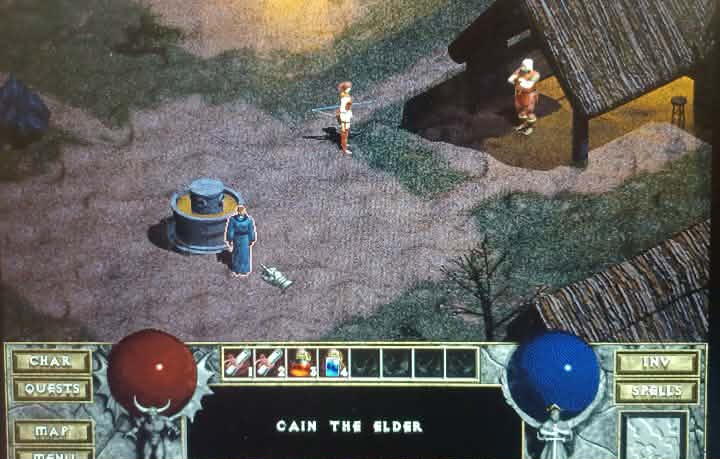
Players descended floor by floor, battling monsters, collecting loot, and gradually uncovering the dark fate of King Leoric and his kingdom. The atmosphere was unlike many fantasy games of the era. Instead of bright heroism, Diablo embraced shadows, isolation, and dread.
Every trip into the cathedral felt risky. Every closed door felt suspicious. Every strange noise made players wonder whether something horrifying was about to leap out of the darkness.
Usually, the answer was yes.
Yet, despite all that darkness, there was something endearing about Diablo, and that was the characters. From Pepin wanting to cure what ails you, to Griswold asking what he can do ya fer, to Farnham simply wanting to be left alone to drink in peace while spewing random trauma triggers and existential dread, the cast of characters in Diablo was unlike any other game at the time.
But the one who stood out most to me? Deckard Cain.
I’ve never been able to shake the feeling that Deckard Cain, voiced by Michael J. Gough, sounds like Patrick Stewart attempting a Sean Connery impression after spending a few decades studying forbidden tomes. Once that idea lodged itself in my head, there was no getting it back out.
Honestly, if you dropped Cain onto the bridge of the Enterprise, nobody would blink.
“Captain, the Prime Evils are not unlike the Borg. Stay awhile and listen.”
The original Diablo was also notable for its accessibility. While role-playing games often featured complex systems and sprawling rulebooks, Diablo distilled the experience into fast-paced action. Click on monster. Monster falls over. Collect shiny object. Repeat until bedtime somehow becomes three in the morning, which was an incredibly effective formula.
But I cannot talk about Diablo without talking about Tremain the Priest.
“Who is THAT?! He’s not in the game!” I can already see you posting in the comments before hearing me out. It’s a fair question.
True. He’s not in the finished, released version of the game. But he is hiding in the game’s surviving files So, who is Tremain?
Early versions of the game included a quest in which players would recover the cursed sword Shadowfang so Tremain could destroy it with his holy powers. Unfortunately, this being Diablo, the sword had other ideas. Rather than cleansing the blade, Tremain would be consumed by its corruption and slain.
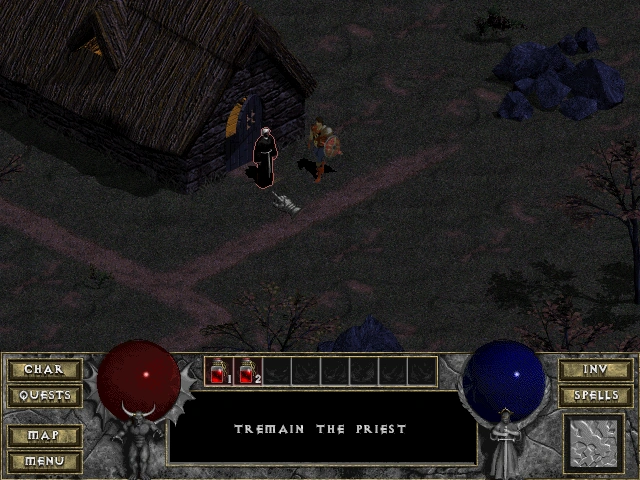
The quest never made it into the final release, but the surviving game files offer a glimpse into an alternate version of Tristram where even the town’s holy man wasn’t safe from the darkness.
Hellfire and Early Diablo Expansion Ideas
Not long after release, Diablo received an expansion called Hellfire. Developed by Synergistic Software rather than Blizzard North, it introduced new areas, quests, monsters, and the Monk class.
Hellfire occupies an interesting place in Diablo history. It expanded the original game considerably, but because it was developed outside Blizzard’s core team, it often feels like a curious side chapter rather than a central pillar of the storyline.
Even so, it demonstrated something important. Players wanted more Diablo. More dungeons. More loot. More monsters lurking around corners waiting to ruin a perfectly good evening.
The appetite for dark action RPG adventures was growing rapidly.
Diablo II Changed Everything
If Diablo established the formula, Diablo II perfected it.
Released in 2000, Diablo II expanded nearly every aspect of the original game. Instead of a single town and dungeon, players journeyed across multiple regions with distinct cultures, environments, and threats.
The game followed the aftermath of Diablo’s defeat. Unfortunately, sealing away an ancient evil turns out to be more complicated than checking a box marked “problem solved.”
The Dark Wanderer carried Diablo’s corruption across Sanctuary, leaving devastation in his wake. Players pursued him through deserts, jungles, icy mountains, and hellish dimensions while confronting the Prime Evils themselves.
Narratively, Diablo II felt bigger in every way. Sanctuary was no longer just a backdrop. It became a living world with ancient histories, competing factions, and deeper mythology.
I do think one of the biggest ways the storytelling was improved was through the cinematic cutscenes featuring the madman telling his story. As the storyline progressed, you could almost feel the darkness creeping up on him, which added to the dramatic tension, especially since you had to go through a whole act to find out what happened next.
There is, however, an accessibility detail worth mentioning here. Diablo II allowed players to display NPC dialogue as text, which was helpful for Deaf and hard-of-hearing players. Unfortunately, that accommodation did not extend to the game’s cinematic cutscenes in the original release. The story could be presented through text when speaking with characters in the game, but the major cinematic sequences remained primarily an audio-and-visual experience without captions.
As a Deaf player, that distinction matters. The game had already demonstrated that spoken dialogue could be accompanied by text, yet some of its most important storytelling moments did not receive the same treatment.
Mechanically, the game pushed the formula considerably further.
Character classes featured skill trees that encouraged specialization. Itemization became deeper and more rewarding. Online multiplayer flourished through Battle.net. Randomized environments gave adventures tremendous replay value.
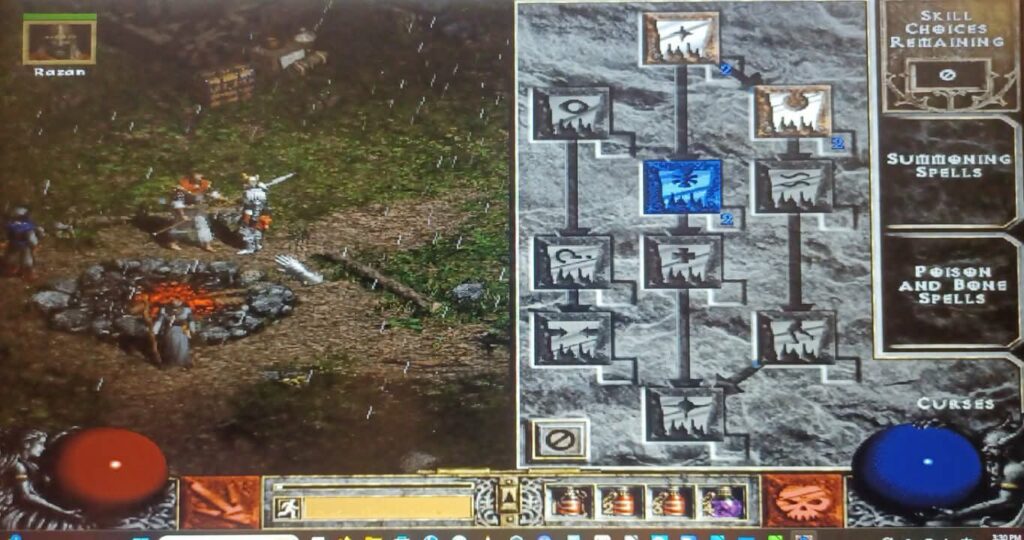
Many modern action RPGs still draw inspiration from systems that Diablo II helped popularize.
The Lasting Magic of Diablo II Loot
Ask longtime fans why they still adore Diablo II, and eventually the discussion will circle back to loot.
Possibly after a ten-minute detour explaining runewords.
Possibly after a thirty-minute detour explaining runewords.
The game’s item system struck an extraordinary balance between randomness and anticipation. Every defeated enemy carried the possibility of something valuable. Unique items felt exciting. Rare items felt meaningful. Legendary equipment became the stuff of community stories.
And then there was the Horadric Cube.
The Cube turned inventory management into its own little experiment in alchemy. Gems could be upgraded. Potions could be improved. Runes could be combined and used to create powerful runewords. Items could be transformed into something potentially more useful than what you started with.
It also served another extremely important purpose: more inventory space.
Well, technically, it was a small magical box with a specific set of transmutation abilities.
But to a player who had absolutely no intention of throwing away that gem, rune, potion, or vaguely interesting piece of equipment because surely it might be useful later, the Horadric Cube was also a portable excuse to hoard things.
And I took full advantage of that.
Players spent years chasing specific drops.
Some still do.
There is a special kind of optimism that emerges when someone defeats their ten-thousandth monster while sincerely believing the next one might finally drop the item they need.
Lord of Destruction Expanded Diablo Even Further
In 2001, Diablo II received its expansion, Lord of Destruction.
This expansion introduced two new classes, the Assassin and the Druid, while continuing the story through an additional act focused on the barbarian homelands near Mount Arreat.
Lord of Destruction also transformed the game’s systems. New item types, charms, runes, and mercenary improvements added even more depth.
For many fans, this version became the definitive Diablo experience.
The expansion strengthened the franchise’s identity around build experimentation, treasure hunting, and long-term character progression. It also helped establish expectations that future Diablo games would spend years evolving through updates and expansions.
By the time players finished battling Baal, Sanctuary felt larger, richer, and more alive than ever before.
Also of note, this is where hireable companions became much more useful.
And honestly, there is something rather fun about having your own personal entourage. A Summoner Necromancer can wander around with an entire army of skeletons and other minions, while a Postmaster-style Druid can surround himself with summoned creatures and essentially turn every dungeon into a small traveling zoo.
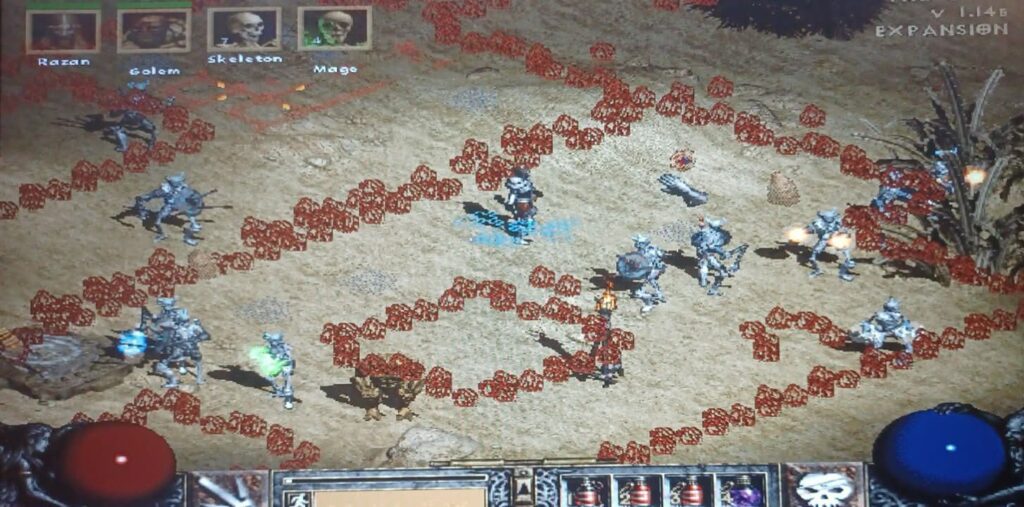
Of course, there is one tiny downside to having an entourage.
Sometimes you have had a terrible day. Sometimes you want to descend into a dungeon, point at a monster, and take out all your frustrations on a collection of pixels.
And then your entire entourage gets there first.
Excuse me.
I was going to kill that.
I have feelings about this.
A New Direction for Diablo III
When Diablo III finally arrived in 2012, expectations were enormous.
The gap between major entries had given fans plenty of time to imagine what the future might look like. Unsurprisingly, no single game could perfectly match millions of individual expectations.
Diablo III took the series in a somewhat different direction. The visuals became brighter and more stylized. Combat became faster and more explosive. Abilities could be swapped more flexibly, encouraging experimentation without forcing players to create entirely new characters.
The story dealt heavily with the ongoing conflict between Heaven and Hell, placing players in the middle of increasingly apocalyptic events.
Some fans immediately embraced these changes. Others debated them with the kind of passionate energy usually reserved for sports rivalries.
Mention Diablo III in the wrong online forum and you may accidentally summon a discussion thread that has been active for over a decade.
Diablo III and the Evolution of Combat
One of Diablo III’s greatest strengths was combat feel. Abilities looked spectacular. Enemies exploded dramatically. Character movement felt responsive and satisfying.
Every class possessed a distinct identity. Wizards unleashed devastating arcane power. Demon Hunters danced around the battlefield with deadly precision. Barbarians crashed through enemies like particularly angry freight trains.
The game emphasized action and spectacle in ways the earlier titles only hinted at.
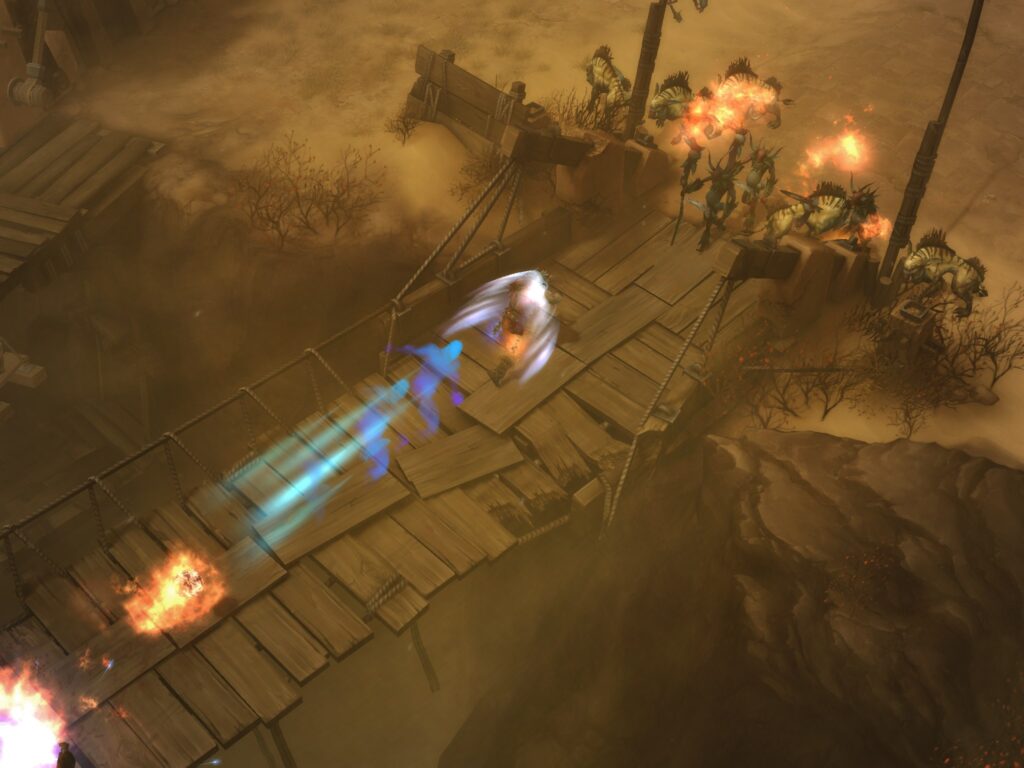
Image: Blizzard Entertainment, Diablo III, sourced from Blizzard Entertainment’s official GamesPress media archive, 30th Anniversary Diablo Series collection.
Over time, updates refined systems that players initially criticized. The controversial real-money auction house disappeared. Loot was redesigned. Progression became more rewarding.
The result was a game that steadily improved throughout its lifespan.
Reaper of Souls and the Diablo Renaissance
A major turning point arrived with the Reaper of Souls expansion.
This addition introduced Malthael, the fallen Angel of Wisdom, whose plan threatened humanity on an unimaginable scale. The darker tone resonated strongly with fans, helping restore some of the grim atmosphere associated with earlier entries.
Reaper of Souls also dramatically improved gameplay systems.
Adventure Mode provided flexible progression outside the main story. Greater Rifts delivered scalable endgame challenges. Seasonal play encouraged players to return regularly with fresh characters.
Many players consider Reaper of Souls the moment Diablo III fully realized its potential.
The game evolved from a controversial launch into a beloved action RPG with years of replayability.
The Eternal Collection and Modern Diablo Accessibility
The Eternal Collection bundled Diablo III with its expansions and updates, making it easier than ever for newcomers to experience the complete package.
By this point, Diablo III had accumulated years of refinement. New players encountered a polished experience packed with content, including cinematic subtitles that addressed the accessibility gap present in the original Diablo II.
As a Deaf player, I appreciate that distinction. Some of the franchise’s most important story moments had previously been inaccessible to players who couldn’t hear the dialogue. Having subtitles for those cinematic sequences made it easier to follow the story as it unfolded, rather than piecing together what happened from other sources.
Whether played on PC or consoles, the game became an easy recommendation for anyone interested in action RPGs. Plus, it introduced the series to an entirely new audience that had never ventured beneath Tristram Cathedral or battled Baal atop Mount Arreat.
Returning to Darkness with Diablo IV
When Diablo IV launched, Blizzard clearly understood one thing: Many players missed the darker atmosphere.
From its earliest reveals, Diablo IV emphasized bleak landscapes, grounded visuals, and unsettling horror. Snow-covered villages, blood-soaked rituals, and desperate survivors immediately recalled elements of the franchise’s earlier identity.
The central antagonist, Lilith, brought a fascinating presence to the story. Rather than functioning as a straightforward villain, she occupied a more morally complex role within Sanctuary’s mythology. Her arrival reshaped the world and forced players to question traditional assumptions about good and evil.
That ambiguity helped Diablo IV feel distinct while remaining connected to the larger lore.
Exploring Sanctuary in Diablo IV
One of the biggest changes in Diablo IV was its shared open-world structure.
Instead of moving through primarily isolated acts, players explored expansive interconnected regions filled with events, dungeons, side quests, and world bosses.
Sanctuary felt larger than ever before. Towns bustled with activity. Travelers crossed paths during adventures. New content appeared through seasonal updates and ongoing support.
The shift reflected broader trends in modern gaming while preserving the core Diablo loop of defeating monsters and collecting increasingly powerful gear.
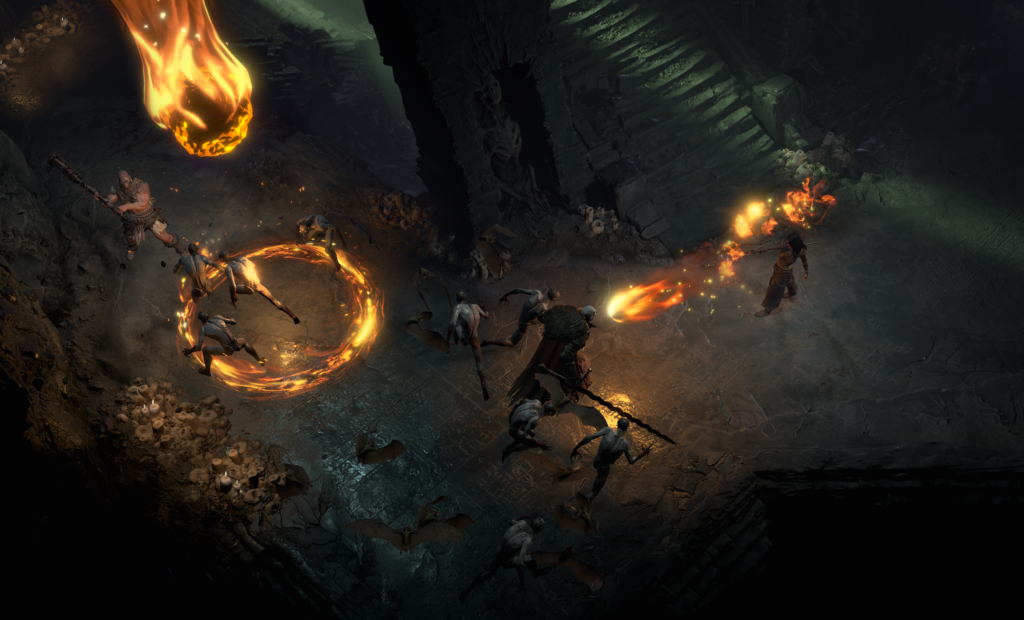
Image: Blizzard Entertainment, Diablo IV, sourced from Blizzard Entertainment’s official GamesPress media archive, 30th Anniversary Diablo Series collection.
Thankfully, players still spend a significant amount of time opening treasure chests.
Tradition matters.
Diablo and the Rise of Live-Service Debates
No discussion of modern Diablo would be complete without addressing monetization.
Diablo IV launched during an era when many major games adopted live-service structures. Seasonal content, cosmetic purchases, battle passes, and ongoing updates became central components of the experience.
Some players welcomed regular content additions. Others worried about how monetization might influence design priorities. The conversation remains a significant part of the game’s cultural identity.
What makes these debates particularly interesting is that they reflect how much gaming has changed since 1996. The original Diablo existed in a world where updates were relatively limited and expansions arrived separately. Modern games often evolve continuously over years. Whether this approach represents progress, compromise, or a mixture of both depends largely on individual perspectives.
What is undeniable is that Diablo continues adapting to changing industry expectations.
Why Diablo Continues to Matter
Many franchises achieve success.
Far fewer reshape an entire genre.
Diablo belongs to that second category.
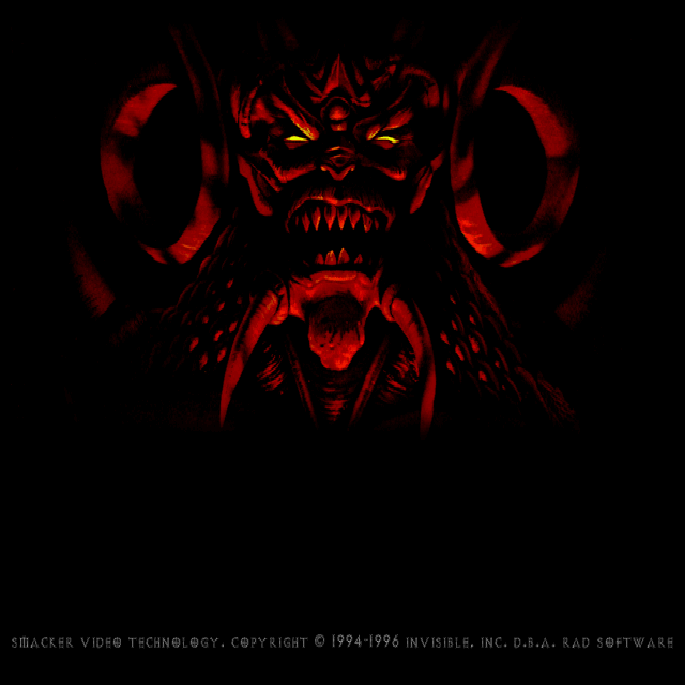
Image: Blizzard Entertainment, game art from Diablo, sourced from Blizzard Entertainment’s official GamesPress media archive, 30th Anniversary Diablo Series collection.
Its influence can be seen across countless action RPGs. Loot systems, procedural environments, seasonal structures, endgame progression loops, character builds, and cooperative monster-slaying all owe something to foundations that Diablo either created or popularized.
The franchise also demonstrated the power of atmospheric storytelling. Sanctuary feels memorable because it is not merely a setting. It is a world scarred by centuries of conflict, faith, corruption, and survival.
Players return because they care about what happens there.
Well, that and because finding rare loot triggers the same excitement as discovering forgotten money in a jacket pocket.
Possibly even more excitement.
The Legacy of Diablo Across Generations
From the lonely halls beneath Tristram to the windswept streets of Kyovashad, Diablo has continually reinvented itself while preserving its core identity.
Every major entry reflects its era. The original Diablo captured the mystery of early dungeon crawling. Diablo II expanded the genre’s possibilities. Diablo III embraced speed, spectacle, and accessibility. Diablo IV merged classic darkness with modern service-based design.
Not every change pleased every player. That is practically impossible for a franchise spanning multiple decades.
What remains remarkable is how consistently Diablo has stayed relevant.
New heroes continue taking up arms. Ancient evils continue returning. Legendary items continue dropping at exactly the moment players decide they are definitely going to bed after just one more dungeon.
And somehow, that one more dungeon becomes five.
And five dungeons become us being late for work.
And being late for work becomes calling in sick because, well…
We’re already five dungeons in.
Priorities.
Sanctuary remains a world defined by eternal conflict between Heaven and Hell, but the enduring appeal of Diablo comes from something much simpler. It captures the joy of adventure. The thrill of discovery. The satisfaction of becoming stronger through persistence.
Most importantly, it reminds us that no matter how terrifying the darkness may be, there is probably treasure hidden somewhere inside it.
And honestly, that might be the most Diablo lesson of all.
Now, my dear gamer friends, it’s 3 AM, and I’m off to play some Diablo.

Image: Blizzard Entertainment, Diablo logo, sourced from Blizzard Entertainment’s official GamesPress media archive, 30th Anniversary Diablo Series collection.
Supporting Autumnelf on Ko‑Fi helps fuel new essays, book projects, ocean‑life explorations, theatrical deep dives, and the creative quests that make Phantom Orca Quest a vibrant, multimedia experience.
Get Me a Spark of Magic
