Billy Elliot is one of those stories that sneaks up on you. You think you’re settling in for a sweet tale about a kid who likes ballet, and suddenly you’re knee‑deep in questions about class, gender, community, and the strange ways art becomes rebellion. It’s a film that pirouettes straight into the heart of a working‑class town and asks what happens when someone dares to move differently. And yes, I’m already emotional about it. No, I will not be taking questions. I’m too busy twirling.
The World Billy Elliot Dances Through
The world of Billy Elliot is not just a backdrop. It’s a pressure cooker. We’re in County Durham during the 1984–85 miners’ strike, a moment when entire communities were fighting for their livelihoods. The town feels tight, tense, and exhausted. You can practically hear the coal dust in the air. Every family is stretched thin, every household is bracing for impact, and every dream is weighed against survival.
Billy’s family is right in the middle of it. His father and brother are both miners, both on strike, both trying to hold onto dignity while the world around them threatens to collapse. Their home is full of love, but it’s also full of fear. And fear has a way of turning into rules. Rules about what boys should do. Rules about what counts as real work. Rules about what’s worth fighting for.
Billy’s dancing doesn’t fit into any of those rules. Which is exactly why it matters.
Masculinity Meets Billy Elliot’s Ballet Shoes
Masculinity in Billy Elliot’s world is rigid. It’s built on physical labor, toughness, and emotional restraint. It’s the kind of masculinity that says crying is weakness and softness is suspicious. Ballet, in this environment, is not just unusual. It’s a direct challenge.
Billy’s father sees ballet as frivolous. His brother sees it as embarrassing. The boys at school see it as something to mock. And Billy, bless him, sees it as joy. He sees movement. He sees possibility. He sees something that makes him feel alive in a way boxing never could.
The tension between Billy’s passion and his community’s expectations becomes one of the film’s most powerful engines. Every time Billy dances, he’s not just practicing. He’s pushing back. He’s carving out space where softness is allowed. He’s rewriting what masculinity can look like in a place that desperately needs new definitions.
And honestly, watching him do it feels like watching someone crack open a window in a room that’s been sealed shut for decades.
Class Struggle and Billy Elliot’s Leap Toward Art
Class is not just a theme in Billy Elliot. It’s the entire architecture of the story. Ballet is expensive. Ballet is elite. Ballet is associated with privilege. Billy’s world is none of those things.
When Mrs. Wilkinson tells Billy he has talent, she’s not just offering encouragement. She’s offering a lifeline. She’s offering a way out. But that way out comes with costs. Financial costs. Emotional costs. Social costs. And the biggest cost of all: the fear of leaving behind the people who raised you.
Billy’s father doesn’t oppose ballet because he hates art. He opposes it because he’s terrified. Terrified that Billy will be hurt. Terrified that Billy will be mocked. Terrified that Billy will fail. Terrified that Billy will succeed and never come back.
The miners’ strike amplifies all of this. The community is fighting for survival. How can anyone justify spending money on ballet lessons when the electricity bill is already a monster lurking in the corner? How can anyone think about dreams when reality is demanding every ounce of energy?
Billy’s dancing becomes a symbol of hope, but also a symbol of risk. And the film never lets us forget that hope and risk are always intertwined.
Dancing as Rebellion in Billy Elliot’s Community
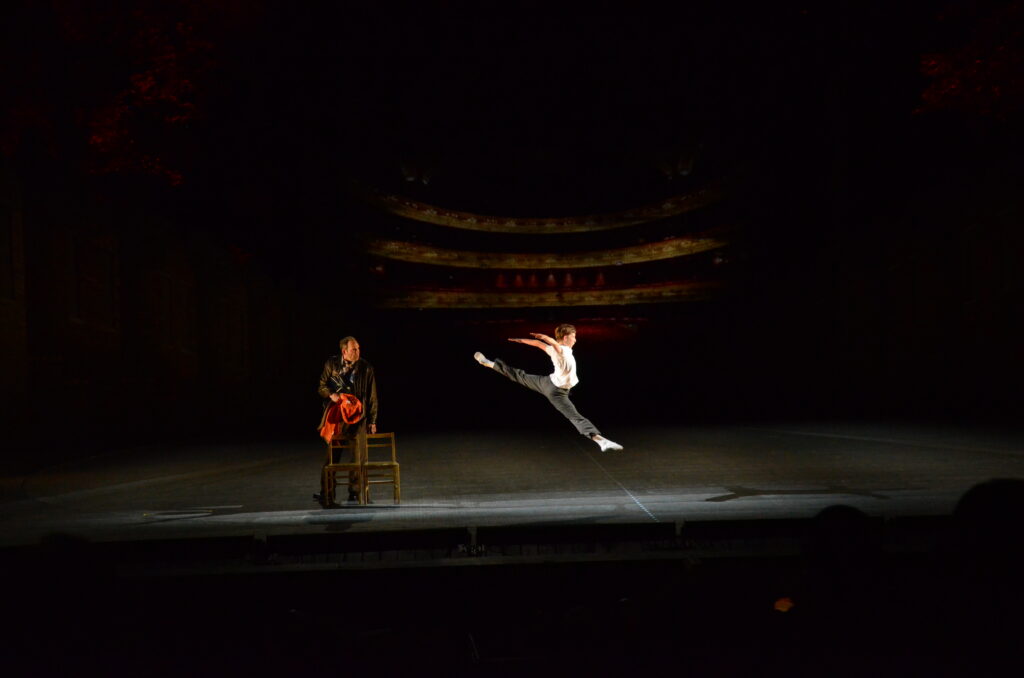
Art becomes rebellion in Billy Elliot’s journey because it disrupts the expected order. Billy’s dancing is not political in the traditional sense. He’s not trying to make a statement. He’s not trying to challenge the strike. He’s not trying to undermine his father’s authority. He’s just trying to dance.
But in a community where every action is scrutinized, even innocence becomes radical.
Billy’s dancing says: I want something different.
Billy’s dancing says: I refuse to be defined by the limits placed on me.
Billy’s dancing says: I am more than the future you’ve assumed for me.
And that is rebellion. Not the loud kind. Not the kind with picket signs. The quiet kind. The personal kind. The kind that starts with a single step and grows into a leap.
The film treats this rebellion with tenderness. It doesn’t punish Billy for wanting more. It doesn’t shame him for dreaming. It shows how dangerous dreaming can feel when you’re surrounded by people who have had their dreams crushed. And it shows how necessary dreaming is for survival.
Billy Elliot and the Power of Movement
Movement in Billy Elliot is more than choreography. It’s communication. Billy expresses what he cannot say. He dances anger. He dances grief. He dances confusion. He dances longing. He dances hope.
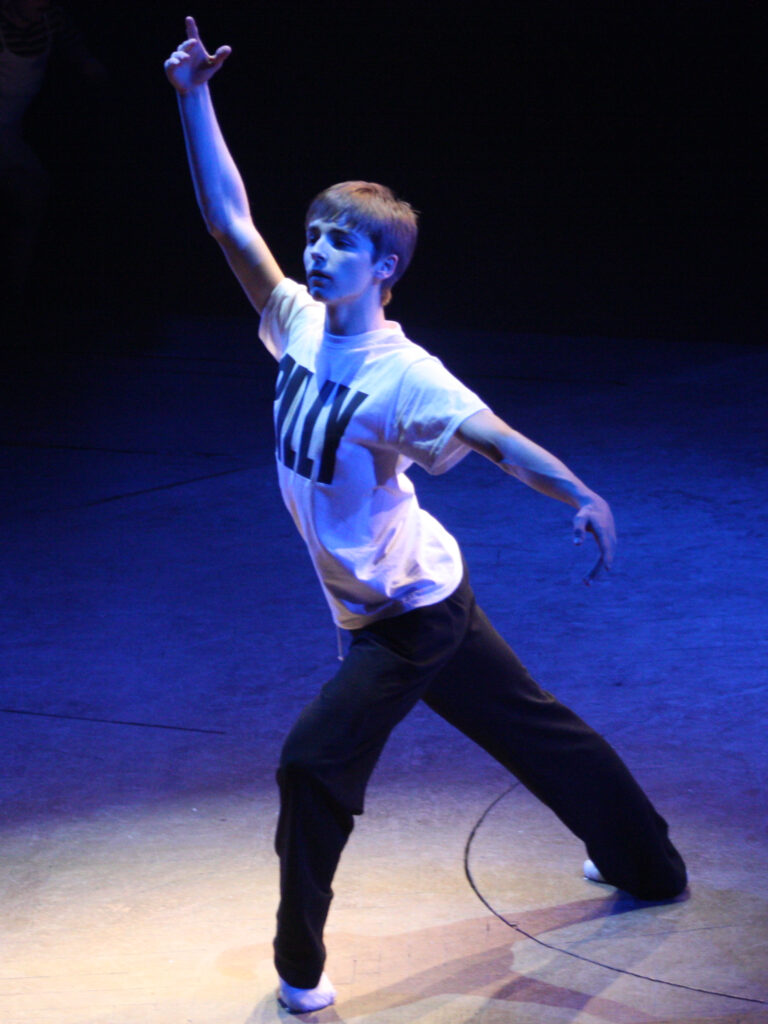
One of the most iconic scenes is Billy dancing in the alley, kicking at the walls, punching the air, channeling every ounce of frustration into motion. It’s messy. It’s raw. It’s beautiful. And it’s the moment you realize that dancing is not a hobby for him. It’s a language.
Billy’s father sees this too, eventually. He sees that Billy is not rebelling to hurt him. He’s rebelling because he needs to. Because he has something inside him that cannot be contained. Because he is meant for something beyond the boundaries of their town.
Movement becomes the bridge between father and son. It becomes the thing that finally makes Billy’s father understand. And once he understands, he becomes Billy’s fiercest advocate. That shift is one of the most moving parts of the story. It’s proof that love can evolve. It’s proof that masculinity can soften. It’s proof that class barriers can bend when someone believes enough.
Community, Conflict, and Billy Elliot’s Courage
The community in Billy Elliot is complicated. It’s supportive in some ways and suffocating in others. It’s full of people who care deeply but are trapped by circumstance. It’s a place where everyone knows everyone, which means everyone knows your business. And your business becomes gossip. And gossip becomes judgment.
Billy’s courage is not just in dancing. It’s in dancing publicly. Dancing visibly. Dancing in front of people who don’t understand him. Dancing in front of people who think ballet is ridiculous. Dancing in front of people who think boys should not move like that.
He keeps dancing anyway.
That courage is contagious. It spreads. It changes people. It changes Mrs. Wilkinson. It changes Billy’s father. It changes the boys at school. It changes the entire town, even if they don’t admit it.
Billy’s courage becomes a spark. And sparks, as we know, can start fires.
The Emotional Heartbeat of Billy Elliot
Emotion in Billy Elliot is woven into every scene. The grief of Billy’s mother’s absence. The frustration of the strike. The fear of failure. The joy of movement. The tenderness of unexpected support. The heartbreak of sacrifice.
Billy’s father pawning his belongings to pay for Billy’s audition is one of the most devastating moments in the film. It’s a moment of surrender. A moment of love. A moment of recognition. It’s the moment he chooses Billy’s future over his own pride.
And Billy’s audition itself is a masterpiece of vulnerability. He doesn’t give a polished performance. He gives a truthful one. He dances like someone who has fought for every step. He dances like someone who has something to prove. He dances like someone who is ready to leap.
The judges see it. We see it. And Billy, for the first time, sees himself.
Billy Elliot’s Legacy and Why It Still Matters
The legacy of Billy Elliot is not just about ballet. It’s about possibility. It’s about challenging the boundaries placed on us by class, gender, and community. It’s about the courage to want something different. It’s about the power of art to transform not just individuals, but entire families and towns.
Billy’s story resonates because it’s universal. We’ve all felt the pressure to conform. We’ve all felt the fear of disappointing people we love. We’ve all felt the pull of something that doesn’t fit neatly into the expectations around us.
Billy Elliot reminds us that rebellion doesn’t always look like shouting. Sometimes it looks like dancing. Sometimes it looks like softness. Sometimes it looks like joy.
And sometimes, it looks like a kid in ballet shoes refusing to give up.
A Final Step, A Final Leap
Billy Elliot is a portrait of how art becomes rebellion in a working‑class community, but it’s also a portrait of love. Messy love. Complicated love. Transformative love. The kind of love that learns. The kind of love that grows. The kind of love that eventually says: go. Leap. Dance. Become.
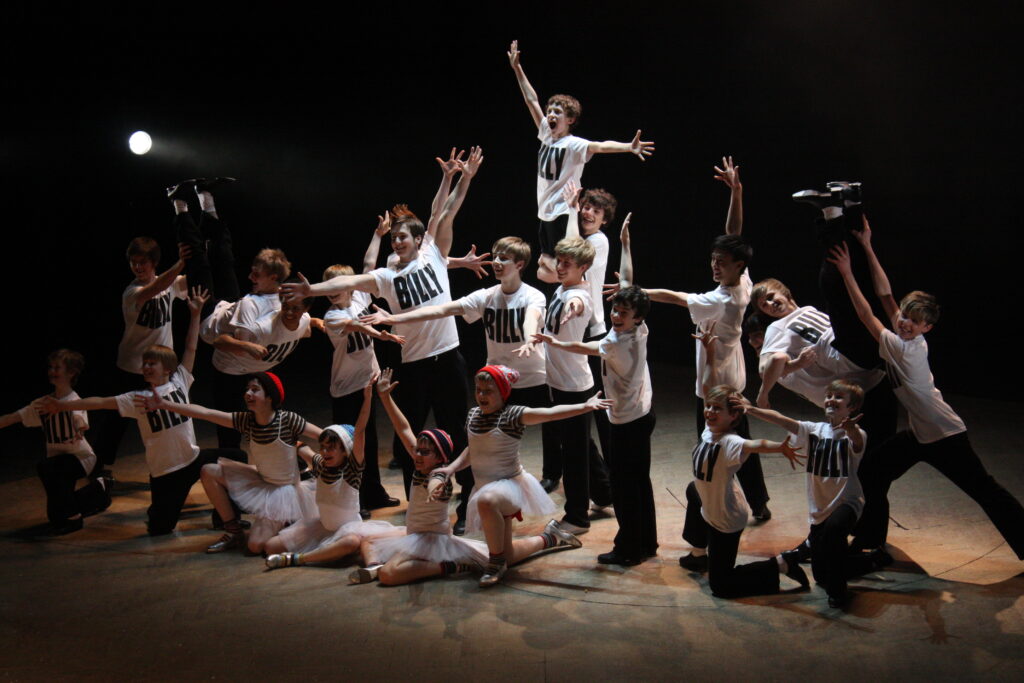
Billy’s journey is not just his own. It’s the journey of everyone who ever dared to want more. Everyone who ever felt out of place. Everyone who ever found a piece of themselves in movement, music, or art.
And if you’ve ever felt that spark, that tug, that little voice saying you’re meant for something different, Billy Elliot is here to remind you that stepping into that difference is not betrayal. It’s bravery.
It’s your dance. Your rebellion. Your leap.
Supporting Autumnelf on Ko‑Fi helps fuel new essays, book projects, ocean‑life explorations, theatrical deep dives, and the creative quests that make Phantom Orca Quest a vibrant, multimedia experience.
Get Me a Spark of Magic