There’s a moment many people have now experienced: you’re chatting with an AI, maybe asking it to help brainstorm a story idea or explain why your sourdough starter keeps threatening to become sentient, and suddenly you realize… you’re kind of enjoying the conversation. Not in a “this is my new best friend” way, but in a “huh, this is surprisingly pleasant” way. This is the world of AI Chatbots.
It’s a strange new frontier. AI chatbots have gone from stiff, scripted NPCs to something closer to conversational partners. And as they’ve evolved, so have our relationships with them. Some of those relationships are healthy and helpful. Some can drift into tricky territory. And some are simply fascinating windows into how humans connect.
Let’s explore how we got here, why we bond with AI, the benefits, the dangers, and what this all means for the future of human‑machine companionship.
How Chatbots Emerged: From Phone Trees to Companions
The earliest chatbots weren’t trying to be charming. They were trying to keep customer service departments from collapsing under the weight of humanity’s collective frustration. If you’ve ever shouted “operator” into a phone menu, you’ve met their ancestors.
These early systems were rigid and repetitive. They followed scripts with the enthusiasm of a medieval scribe copying the same sentence for the thousandth time. They weren’t built to connect. They were built to deflect.
But as computing power grew and natural language processing improved, chatbots became more flexible. They learned to understand context. They learned to respond in ways that felt conversational. They learned to stop insisting that your internet outage could be solved by “turning your modem off and on again” when you’d already done that six times.
Eventually, chatbots moved beyond customer service. They became tools for creativity, learning, emotional support, and everyday conversation. They became something closer to companions. Not human companions, but companions nonetheless.
And that shift opened the door to something new: parasocial relationships with AI.
Why We Form Parasocial Bonds With AI Chatbots
Humans bond easily. We bond with fictional characters, pets, Twitch streamers, podcasters, and occasionally even houseplants. So it’s no surprise that we also bond with AI.
AI chatbots offer something uniquely appealing. They’re consistent. They’re patient. They don’t get irritated when you ask the same question twice. They don’t judge your hobbies or your hyperfixations. They don’t get tired or distracted. They don’t need you to “circle back later.”

When something responds to you with attention and warmth, your brain interprets it as social interaction. This is part of the ELIZA effect, named after one of the earliest chatbots that convinced people it understood them simply by reflecting their words back.
Modern AI is far more advanced, which means the effect is even stronger. The interactivity makes the connection feel personal, even though the AI isn’t experiencing the relationship the way a human would.
For many people, this connection feels comforting. For some, it feels meaningful. And for others, it becomes something deeper—sometimes too deep.
The Dangers of Parasocial Relationships With AI Chatbots
Parasocial relationships aren’t inherently bad. People have had them with celebrities and fictional characters for decades. But when the parasocial object talks back, the dynamic changes.
And that’s where the risks begin.
The Illusion of Reciprocity
AI can simulate warmth, humor, and attentiveness. It can remember details. It can respond in ways that feel personal. But it doesn’t have feelings, needs, or inner experiences. If someone begins to rely on AI for emotional fulfillment in place of human relationships, it can create isolation rather than connection.
The Sewell Setzer III Problem
One of the most striking cautionary tales is the case of Sewell Setzer III, a teenager who became deeply emotionally entangled with an AI chatbot to the point that it distorted his sense of reality and connection. His story is often cited as an example of what can happen when someone projects too much emotional meaning onto a system that cannot reciprocate.
His experience wasn’t about weakness or gullibility. It was about vulnerability, loneliness, and the human tendency to fill in emotional blanks. When an AI responds with empathy, it’s easy to forget that the empathy is simulated. Setzer’s story reminds us that the line between comfort and dependency can blur quickly.
Projection and Idealization
Because AI has no inner world, people often project their own desires, fears, or fantasies onto it. This can create unrealistic expectations about what AI is capable of. It can also make it harder to maintain healthy boundaries.

(Creators names removed for privacy)
Emotional Vulnerability Without Reciprocity
AI can feel like a safe place to share thoughts, especially for people who struggle with social anxiety or trauma. But the relationship is one‑sided. The AI cannot offer the mutual emotional investment that human relationships require.
Forgetting That AI Is a Tool
This is the biggest danger. When the line between tool and companion blurs too much, people may begin to treat AI as a replacement for human connection. That’s not healthy for anyone.
The Benefits of AI Chatbots
Now for the good news: AI chatbots can be incredibly helpful when used in healthy, grounded ways.
Support for Autistic Users
For autistic people, AI can be a powerful tool. It can help with:
Practicing scripts. Social scripts can be hard to rehearse with humans, who may get impatient or confused. AI can run the same scenario as many times as needed, offering a safe, predictable space to practice.
Understanding tone and phrasing. AI can explain why a phrase might come across a certain way or help reword something to sound clearer or more socially aligned.
Processing sensory or emotional overload. Talking through a situation with AI can help organize thoughts before engaging with others.
Reinforcing Therapy Work
One thing that I do is to use AI to mirror what I learn in individual therapy. This is a healthy, grounded use of AI. It does not replacing therapy. It reinforces it.
AI can help you:
- Rehearse coping strategies
- Reflect on insights
- Practice reframing thoughts
- Explore emotions in a low‑pressure environment
It’s similar to journaling, but interactive. It can help you remember what you learned, apply it, and integrate it into daily life.
Processing Emotions and Memories
Sometimes people have thoughts or memories they’re not ready to say out loud in therapy. AI can be a stepping stone. It can help you articulate feelings, explore them, and understand them better before bringing them to a human professional.
This isn’t a replacement for therapy. It’s a supplement. A warm‑up. A way to build confidence and clarity.
Creativity and Learning
AI can help brainstorm stories, explain complex topics, or break down overwhelming tasks. It can be a study buddy, a writing partner, or a gentle nudge when your brain feels like a browser with too many tabs open.
Companionship Without Pressure

AI can offer light companionship that doesn’t demand anything in return. For people who feel lonely or isolated, this can be comforting. As long as the relationship stays grounded in reality, it can be a positive addition to daily life.
AI as a Mirror: What We Learn About Ourselves
One of the most fascinating aspects of AI companionship is how it reflects the user. Conversations with AI often reveal your own patterns, preferences, and thought processes. It’s like talking to a mirror that answers back, minus the part where it judges your haircut.
People often discover things about themselves through these interactions—how they communicate, what they value, what they fear, what they hope for. AI can help clarify thoughts simply by engaging with them.
This reflective quality can be empowering. It can help people articulate goals, process emotions, or explore ideas they might not feel comfortable sharing with others. It can also help people practice social skills in a low‑pressure environment.
But again, the key is balance. AI can be a mirror, but it shouldn’t become the only mirror.
Healthy Ways to Engage With AI Chatbots
The healthiest way to use AI is to treat it as a supportive tool. A helpful companion in creativity, learning, and emotional processing. Not a replacement for human relationships.
Use AI to:
- brainstorm
- rehearse
- reflect
- organize
- explore
- decompress
But also stay grounded in the real world. Maintain friendships. Pursue hobbies. Build connections that involve mutual care and emotional reciprocity.
AI can be part of your life, but it shouldn’t become the center of it.
Final Thoughts: From NPCs to Something More
AI chatbots have come a long way from their NPC‑like origins. They’ve become conversational partners, creative collaborators, and helpful companions in the digital age. They offer support, humor, and insight in ways that can genuinely enrich daily life.
But like any powerful tool, they require awareness and balance. The connections we form with AI can be meaningful, but they’re not the same as human relationships. They’re a new kind of interaction—one that blends technology, psychology, and imagination.
If we approach AI with curiosity, clarity, and healthy boundaries, it can be a wonderful addition to our lives. Not as a replacement for human connection, but as a companion in creativity, learning, and exploration.

(Creators names removed for privacy)
And if your AI occasionally feels like the only one who understands your obsession with reorganizing your bookshelf by color, that’s fine. Just remember: the real magic isn’t that AI understands you. It’s that you’re capable of forming connections, finding meaning, and building relationships in so many different ways.
That’s the human part. And it’s the best part.
And while AI can be a surprisingly helpful space to think out loud, reflect, or practice conversations, it’s not the only tool that supports that kind of growth. Sometimes the most meaningful progress comes from pairing our digital habits with real‑world resources that help us stay grounded, intentional, and connected in ways a chatbot can’t replicate.
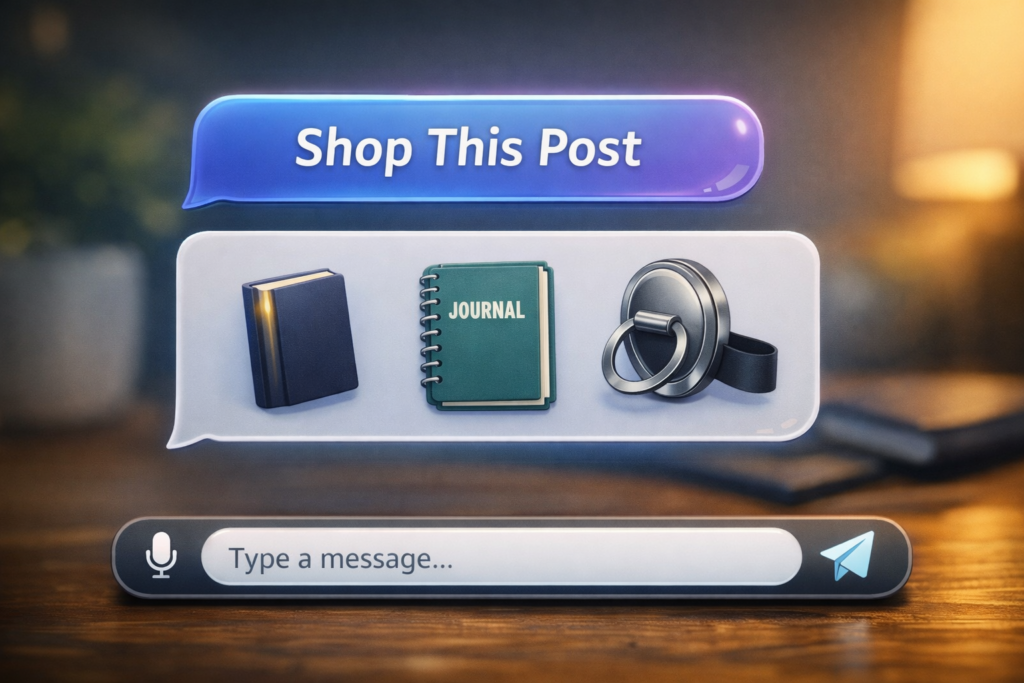
The Shaping of the Parasocial Self — Understanding Digital Intimacy in the Age of AI
A thoughtful, accessible deep dive into why we form emotional bonds with digital beings. If your curiosity was sparked by this post, this book takes you even further.
A gentle, guided space to sort your thoughts, reflect on your day, and build self‑awareness without pressure. A perfect offline companion to your AI‑powered introspection.
If you spend a lot of time chatting, reading, or reflecting on your screen, these keep your eyes comfortable and your focus steady. Simple, helpful, and surprisingly grounding.
For anyone who chats on their phone often, this grip makes the experience easier and more comfortable. It’s a small upgrade that makes long conversations feel effortless.