Picture this: you’ve packed your beach bag, grabbed your sunscreen, and headed to the coast for a day of salty air and crashing waves. You step out of the car expecting that familiar fresh ocean scent, only to be greeted by a smell that suggests something in the marine world has gone terribly, terribly wrong.
Welcome to one of the ocean’s less charming phenomena: Red Tide.
Despite sounding like the title of a disaster movie, a pirate uprising, or perhaps a very dramatic sports team mascot, Red Tide is a real natural event that occurs in coastal waters around the world. It can kill fish, sicken marine mammals, irritate human lungs, close fisheries, and leave scientists scrambling to understand exactly what is happening.
The fascinating thing is that this entire chain of events starts with organisms so small that you could fit thousands of them into a single drop of water.
That is one of my favorite things about marine science. The ocean constantly reminds us that size and importance are not always connected. A blue whale is impressive because it is enormous. A harmful algal bloom is impressive because it proves something microscopic can cause problems on a scale that affects entire coastlines.
Today, we’re diving into the science behind Red Tide, how it forms, why it can be dangerous, what it means for marine life, and why researchers spend so much time trying to understand these blooms.
And don’t worry. This is not going to feel like sitting through a college lecture. Think of this as a fun TED Talk delivered by someone standing knee-deep in the surf, gesturing wildly at the water while trying not to get splashed.
What Exactly Is Red Tide?
The term Red Tide is commonly used to describe certain harmful algal blooms, often abbreviated as HABs by scientists. A harmful algal bloom occurs when microscopic algae reproduce so rapidly that their population explodes within a relatively short period of time.
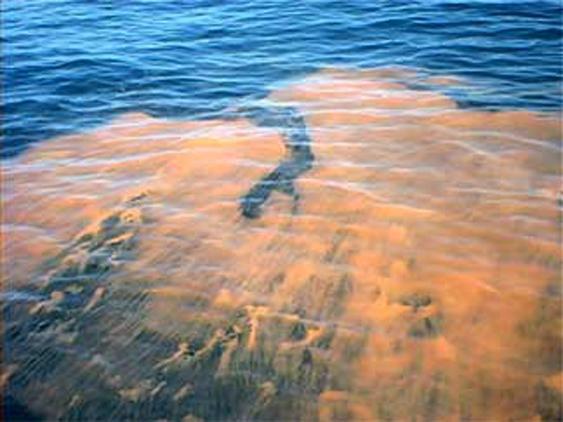
Now here’s a fun twist.
Not every Red Tide is actually red.
In fact, some blooms look reddish-brown, rust-colored, orange, green, or even completely normal to the naked eye. The phrase “Red Tide” stuck because some blooms create a visible red discoloration in the water, but color is not what makes these events important. The real issue is the algae themselves.
Many Red Tide events involve species capable of producing toxins. These naturally occurring chemicals can move through marine ecosystems, affecting fish, birds, sea turtles, marine mammals, and humans.
In other cases, the bloom may not be especially toxic, but the sheer number of algae present can still create environmental problems.
To understand why, imagine a city suddenly increasing its population by millions overnight. Resources would become strained. Infrastructure would struggle. Things would get chaotic very quickly.
A similar process can occur in the ocean. The algae multiply. They consume resources. They alter water chemistry. Eventually the ecosystem starts reacting to their presence. That’s when a bloom transforms from an interesting biological event into a much larger environmental story.
The Tiny Organisms Behind Red Tide
When many people hear the word “algae,” they picture seaweed.
That makes sense. Seaweed is algae. However, the organisms responsible for most Red Tide events are microscopic algae known as phytoplankton.
Phytoplankton are essentially the plants of the ocean. They drift through the upper layers of water where sunlight can reach them. Through photosynthesis, they capture energy from the sun and produce oxygen. In fact, scientists estimate that marine phytoplankton contribute a tremendous portion of Earth’s oxygen production. Every second breath you take may owe something to these tiny ocean drifters.
Most of the time, phytoplankton are incredibly beneficial. Red Tide develops when certain species begin reproducing at exceptional rates.
Along the Gulf Coast of the United States, one of the most well-known culprits is a species called Karenia brevis. This microscopic dinoflagellate produces powerful neurotoxins known as brevetoxins.
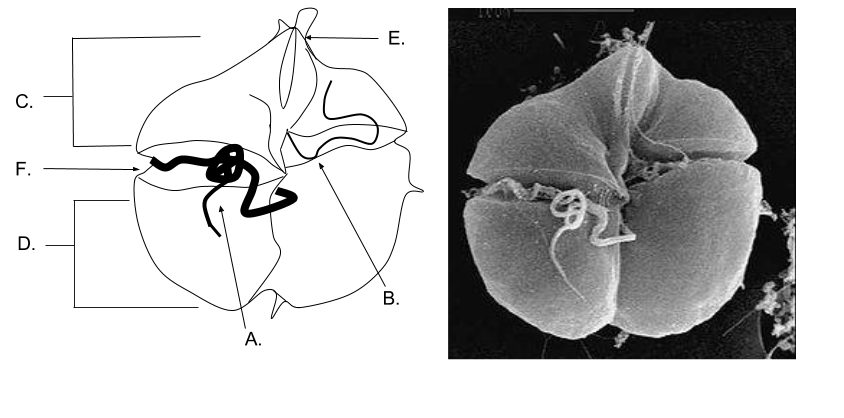
Dinoflagellates are particularly fascinating organisms. They possess whip-like structures called flagella that help them move through the water. Unlike many drifting plankton, some dinoflagellates can actively position themselves within the water column.
Think about that for a moment. The major environmental phenomenon we call Red Tide is often linked to microscopic organisms that can swim. Very, very slowly. But swim nonetheless.
Marine biology really does sound like science fiction sometimes.
How Harmful Blooms Begin
One of the biggest questions researchers investigate is surprisingly simple: Why does Red Tide happen when it does?
The answer involves a combination of environmental factors that create favorable growing conditions. Like plants in a garden, algae require certain ingredients to thrive. They need sunlight. They need nutrients. They need suitable temperatures. They need water conditions that allow growth and reproduction.
When these factors align, an algal population can expand rapidly. Water temperature often plays a role. Many bloom-forming species grow faster in warmer conditions. Sunlight availability matters because photosynthesis powers their growth. Water circulation influences where organisms accumulate and how nutrients are distributed. Nutrients such as nitrogen and phosphorus are particularly important. These nutrients function almost like fertilizer.
In healthy amounts they support productive marine ecosystems. In excessive amounts they can contribute to unusually large blooms.
Scientists continue studying how environmental changes influence bloom development because the relationship isn’t always straightforward. Every bloom is slightly different. Different species respond to different conditions, making prediction challenging.
Nature rarely gives researchers the courtesy of following a simple script.
The Connection Between Nutrients and Red Tide
This is where human activity enters the conversation.
Red Tide itself is not new. Harmful algal blooms existed long before the first human city was built. They occurred long before cars, factories, agriculture, or social media arguments. These blooms are a natural part of Earth’s history.
However, human activities can influence the conditions that support algal growth.
When rainwater washes across farms, lawns, roads, and developed areas, nutrients can enter rivers and eventually reach coastal environments. Wastewater and stormwater can also contribute nutrients under certain circumstances. Scientists often describe this process as nutrient enrichment.
Imagine you’ve planted a few flowers in a garden. Now imagine someone continually adds extra fertilizer. The flowers may grow faster and larger because more nutrients are available. In marine systems, algae can sometimes respond similarly.
This does not mean every Red Tide is caused by human activity. The reality is much more complex. What researchers do know is that nutrient availability can influence bloom dynamics, making nutrient management an important tool for protecting coastal ecosystems.
Why the Water Sometimes Changes Color
One of the most dramatic aspects of Red Tide is the visual transformation that can occur.
The ocean generally appears blue because water absorbs many wavelengths of light while reflecting blue wavelengths back toward our eyes. When billions of algae accumulate in the water, they alter how light is absorbed and reflected. Depending on the species involved, pigment concentrations can become high enough to shift the water’s appearance dramatically.
The result may be reddish water, rusty patches, brown streaks, orange swirls, or unusual discoloration stretching across large portions of coastline. The pigments responsible often serve important biological functions. Some help algae capture sunlight. Others protect cells from excessive solar radiation. When enough cells gather together, their combined pigments become visible from shore and sometimes even from space.
That is not an exaggeration.
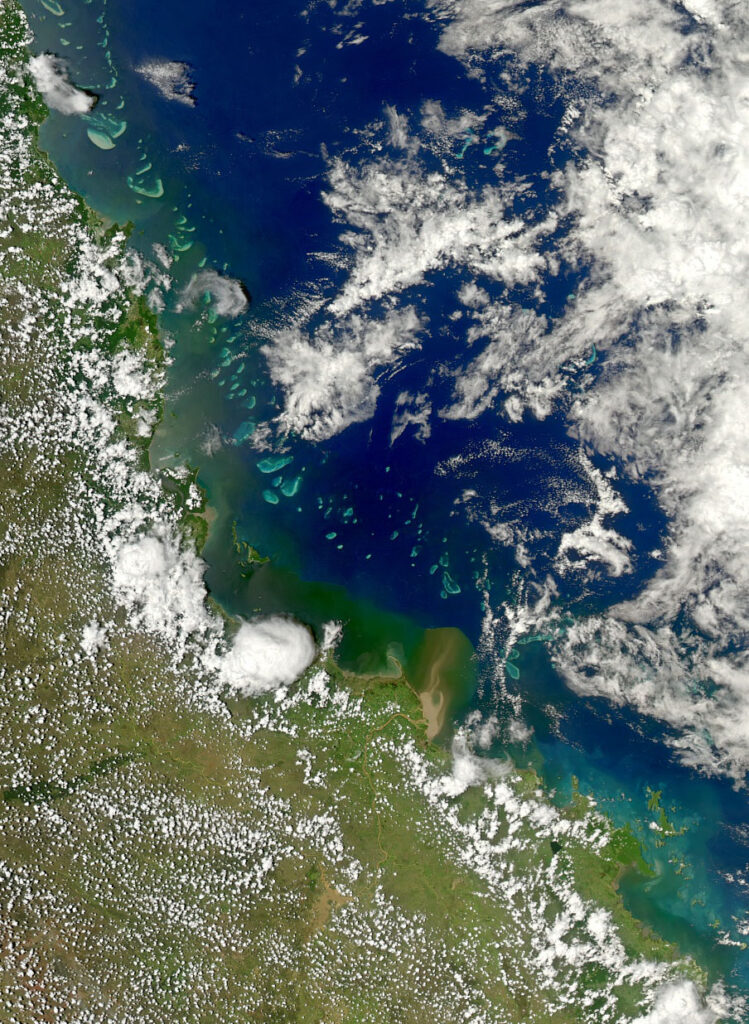
Large Red Tide events can occasionally be detected by satellites orbiting hundreds of miles above Earth. Which means humanity has reached the point where we use spacecraft to keep an eye on microscopic organisms. The ocean truly never misses an opportunity to be weird. And coming from a self-proclaimed weirdo, that says something. So, tell me again that marine biology isn’t just science fiction with extra paperwork. It’s both impressive and slightly absurd.
What Happens to Marine Ecosystems?
The environmental impact of Red Tide can be extensive. Some impacts happen while the bloom is active. Others continue even after the bloom begins to fade.
Fish are often among the most visibly affected animals. Brevetoxins and other algal toxins can interfere with nervous system function. Fish exposed to high concentrations may become disoriented, experience respiratory problems, or die. This is why significant fish kills frequently accompany major Red Tide events.
The effects do not necessarily stop there. Predators consume affected prey. Scavengers feed on dead organisms. Toxins may move through portions of the food web. The consequences can ripple outward through an ecosystem in ways that are sometimes difficult to predict.
A bloom that begins with microscopic organisms may ultimately affect animals weighing several tons.
There is something humbling about that reality. The ocean never lets us forget how interconnected everything truly is.
A Quick Pause
While we’re talking about everything being interconnected, have you considered connecting with me for even more oceanic weirdness?
If you sign up to join the Quest by email, I’ll send you a FREE Quest Gift Pack that includes an exclusive wallpaper, a behind-the-scenes Quest Log, a content calendar so you can keep an eye out for your favorite topics, and a newsletter that keeps you in the loop before anyone else.
After all, we just spent several paragraphs discussing how microscopic algae can affect animals weighing several tons. The ocean clearly likes making connections. Why not make one more?
Join the Quest and stay interconnected.
Why Marine Mammals Are So Vulnerable
Some of the most heartbreaking Red Tide stories involve marine mammals. It’s a grim reality check and a reminder that not everything in the ocean is dolphins, whale songs, and feel-good nature documentaries. After all, dolphins and orcas don’t exactly sing “Kumbaya” with the sea otters and jellyfish.
Dolphins, manatees, sea lions, seals, and whales can all be affected by harmful algal blooms. Marine mammals may encounter toxins through direct exposure or by consuming contaminated prey. Because many marine mammals occupy higher positions in the food web, they can accumulate toxins through repeated feeding.
In some cases, animals develop neurological symptoms.Researchers have documented disorientation, seizures, unusual behavior, and other serious health effects associated with toxin exposure.
For rescue organizations, Red Tide seasons often mean increased emergency responses. Wildlife professionals may spend weeks monitoring strandings, evaluating sick animals, and attempting rehabilitation efforts.
These events remind us that environmental changes do not occur in isolation. When ocean conditions shift, wildlife often feels the effects first.
The Hidden Threat of Oxygen Loss
One scientific aspect of Red Tide that receives less attention involves dissolved oxygen. Like humans, most marine organisms require oxygen.
Fish obtain oxygen from water through their gills. Many invertebrates depend on dissolved oxygen for survival as well. Algae produce oxygen during daylight through photosynthesis.
That sounds helpful. The problem emerges when enormous blooms begin dying. As algae die, bacteria decompose the organic material. This decomposition process consumes oxygen.
If enough oxygen is removed from the water, conditions can become stressful or even deadly for marine life. Scientists sometimes refer to these low-oxygen environments as hypoxic zones.
Fish may attempt to flee. Organisms unable to move quickly enough can become trapped.
What began as a bloom can eventually contribute to widespread ecological disruption. The ocean equivalent of an overcrowded party has now run out of breathable air. It’s like being trapped in a stalled elevator with no maintenance team coming and a broken call button. At first it’s frustrating. Then people start to get stressed. Maybe even a little panicky. The longer you’re trapped, the less fun the situation becomes.

That’s essentially what a hypoxic zone is. Oxygen levels continue to drop while animals struggle to escape. Fish may be able to swim away, but slower organisms don’t always get that chance. Nobody is having fun anymore.
How Red Tide Affects People
Humans typically experience Red Tide differently than marine animals. Usually, not in elevators, but definitely close to the oceans.
One of the most common complaints involves respiratory irritation. When waves break, tiny droplets of seawater become aerosolized and enter the air. During certain Red Tide events, toxins can become incorporated into those droplets. People on affected beaches may notice coughing, sneezing, watery eyes, or irritation of the nose and throat.
For many healthy individuals, symptoms subside after leaving the area. Those with asthma or other respiratory conditions may experience stronger reactions.
This is one reason health advisories are important during bloom events. Knowing current conditions allows people to make informed decisions about visiting affected beaches.
A day at the beach should create memories. Ideally not medical symptoms.
Seafood and Shellfish Concerns
Another reason scientists closely monitor Red Tide involves seafood safety.
Shellfish are filter feeders. They obtain food by pumping water through specialized structures that capture microscopic particles. During a harmful algal bloom, shellfish may accumulate toxins while appearing perfectly normal. You cannot necessarily see, smell, or taste contamination.
That is what makes monitoring programs so important.
Public health agencies routinely test shellfish-growing areas for dangerous toxin levels. When necessary, harvesting areas may be temporarily closed to protect consumers. These closures can be frustrating for local communities and fishing industries. They are also extremely important.
This is one of those situations where caution is unquestionably the correct approach.
Tracking Red Tide from Space
One of the coolest aspects of modern marine science is the technology used to monitor blooms.
Researchers employ satellites, drones, autonomous underwater vehicles, ocean buoys, laboratory testing, computer modeling, and good old-fashioned fieldwork. Satellite imagery allows scientists to observe changes in ocean color across vast regions.
Ocean buoys collect environmental data continuously. Water samples reveal which species are present and how concentrated they have become.
Computer models help researchers forecast bloom movement based on currents, winds, temperature, and other variables.
No single tool tells the entire story. The real power comes from combining multiple sources of information. It’s a bit like solving a giant ocean-sized mystery where every clue matters. Except the mystery occasionally smells very bad and washes fish onto beaches.
But yes, we have reached the point in our existence where we put satellites into space to measure algae color in the ocean. So thus far, we’ve gone from swimming microscopic alien algae to animals singing Kumbaya in the ocean, to stuck elevators, and now space technology measuring changes in oceanic color palettes. At this point, I’m starting to wonder if the ocean has been binge-watching Star Trek or reading too much Ray Bradbury.

California’s Experience with Harmful Blooms
I happen to live in San Diego. Here on the West Coast, harmful algal blooms are an ongoing concern. California regularly experiences bloom events involving multiple algal species, including some capable of producing domoic acid, another powerful marine toxin.
Domoic acid affects the nervous system and has been linked to illness in sea lions, dolphins, whales, and seabirds. Large bloom events along the California coast frequently attract attention from marine mammal rescue organizations and researchers.
The state’s highly productive coastal ecosystem provides ideal feeding habitat for countless species. Unfortunately, when harmful blooms occur, those same food webs can facilitate toxin movement through marine communities.
This is one reason marine scientists pay such close attention to bloom monitoring along the Pacific Coast. Understanding blooms helps protect both wildlife and people.
Is Climate Change Affecting Red Tide?
This is one of the most active areas of scientific research today. The honest answer is that researchers are still working to fully understand the relationship. Climate change influences ocean temperatures, rainfall patterns, storm intensity, ocean circulation, and numerous environmental processes.
Because harmful algal blooms respond to environmental conditions, scientists are investigating how these changing factors may influence bloom frequency, duration, intensity, and geographic distribution.
Some studies suggest certain species could benefit from warmer waters under particular conditions. Other relationships remain less clear. Science rarely provides simple yes-or-no answers, especially when studying something as complex as Earth’s oceans. Because Earth’s oceans are complicated.
What researchers do agree on is that long-term monitoring remains essential. The more data collected, the better scientists can identify trends and improve future predictions.
Can We Stop Red Tide?
Everybody wants the satisfying superhero ending where scientists discover a giant red button labeled “Disable Red Tide.” Where David Tennant’s Tenth Doctor can push the big red threatening button and save the whole ocean. Unfortunately, nature does not generally offer giant red buttons.
Because Red Tide is a natural phenomenon, eliminating it entirely is neither realistic nor necessarily desirable. Algae play critical roles within marine ecosystems.
The goal is not to remove algae. The goal is to understand blooms, reduce contributing factors where possible, and minimize harm. Improving water quality can help. Reducing excess nutrient runoff can help. Protecting wetlands can help because wetlands naturally filter water before they reach coastal environments.
Expanding monitoring programs can help communities prepare for bloom events. Supporting scientific research can help improve forecasting and response efforts.
We don’t get a time-traveling Gallifreyan, a sonic screwdriver, or a big red threatening button. We may never completely control Red Tide, but we can become far better at understanding it.
Why Red Tide Matters
At first glance, Red Tide might seem like a niche marine science topic: Discolored water. Some algae. A few fish kills. End of story.
Except it isn’t. Red Tide sits at the intersection of oceanography, biology, chemistry, ecology, public health, fisheries, wildlife conservation, and climate science. It demonstrates how connected natural systems truly are.
A microscopic organism affects fish. Fish affect birds. Birds affect ecosystems. Toxins affect marine mammals. Coastal economies feel the impact. Public health agencies respond. Researchers mobilize. Communities pay attention. All because something invisible began multiplying beneath the water’s surface. If that isn’t a reminder of nature’s complexity, I don’t know what is.
The Bigger Picture Beneath the Waves
One of the reasons I love marine science is that every topic eventually teaches the same lesson: Everything is connected.
The ocean is not just water. It is a living system composed of countless interactions happening simultaneously every second of every day. Red Tide provides a particularly dramatic example of that reality.
A bloom begins with microscopic algae. Those algae interact with sunlight, nutrients, currents, predators, bacteria, marine mammals, fisheries, and human communities.
Every action creates another reaction. Every species influences another species. Every environmental change echoes through the larger system. The more scientists study the ocean, the more interconnected it appears. Frankly, it is both beautiful and slightly intimidating.
Final Thoughts on Red Tide
Red Tide is one of the ocean’s most fascinating and frustrating natural phenomena. It begins with microscopic algae but can influence entire ecosystems, affect wildlife health, impact local economies, alter recreational opportunities, and challenge researchers trying to predict its behavior.
It is also a reminder that the ocean contains countless stories we cannot see from the shoreline. Beneath every wave exists a hidden world of plankton, fish, mammals, currents, chemistry, and biological interactions unfolding every moment of every day. Most of the time those processes remain invisible.
Then something like Red Tide comes along and suddenly the hidden world announces itself in a way nobody can ignore.
The next time you’re standing at the beach looking out over the horizon, remember that an extraordinary amount of life exists beneath that seemingly simple expanse of blue water.
Most of it works quietly behind the scenes. Occasionally, however, the ocean decides it would like everyone’s attention. And when Red Tide shows up, trust me, it gets it.
Help Keep the Quest Alive
If my essays, ocean-life explorations, theatrical deep dives, or stories have brought a little wonder into your world, I’d love your help creating more.
Every Spark of Magic helps support the time, research, and creativity behind Phantom Orca Quest—from new essays and book projects to the next deep dive into the worlds I love.
You don’t have to give to enjoy my work. But if you’d like to help keep these creative quests going, your support truly means a lot.
✨ Send a Spark of Magic on Ko-fi
Thank you for being part of the Quest.


