Rocky Horror has always felt like that one friend who shows up to the party in glitter, heels, and a grin that says they know something you don’t. You think you’re settling in for a quirky musical with aliens and fishnets, and suddenly you’re knee deep in a cultural revolution. It’s joyful chaos. It’s queer liberation with a rock soundtrack. It’s camp turned up so high the dial snaps off. And it’s the birthplace of midnight theater culture that still thrives decades later. Rocky Horror didn’t just make a splash. It cannonballed into the pool and invited everyone to join.
Queerness and Rocky Horror as a Cultural Spark
Queerness in Rocky Horror doesn’t whisper. It doesn’t politely raise its hand. It struts in, winks, and asks if you’re ready to dance. When the film arrived in 1975, queer communities were fighting for visibility, safety, and joy. Rocky Horror offered something rare for the time. It wasn’t a tragedy. It wasn’t a cautionary tale. It wasn’t a story where queer-coded characters were punished for existing. It was a celebration.
Frank N Furter is the glittery heart of that celebration. He’s gender fluid, seductive, theatrical, brilliant, and a complete menace in the most entertaining way. The film never frames his queerness as the reason he’s dangerous. He’s dangerous because he’s Frank N Furter. That’s just his vibe. His queerness is portrayed as powerful, magnetic, and fun. For many queer viewers, this was the first time they saw gender expression and sexuality portrayed without shame.
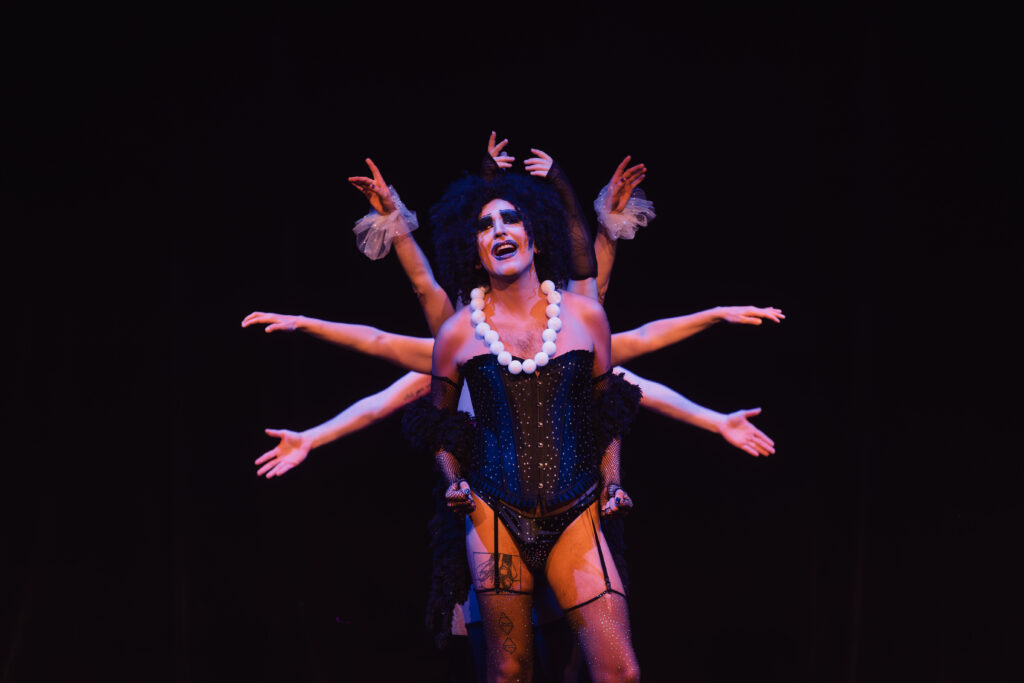
Rocky Horror became a spark. It showed queer audiences that joy was possible. It showed them that identity could be playful. It showed them that queerness could be central rather than hidden. And it gave them a place to gather, celebrate, and be loud about who they were.
Camp Aesthetics and Rocky Horror’s Glittery Legacy
Camp is one of those concepts that’s easier to experience than explain. It’s theatrical exaggeration. It’s sincerity wrapped in absurdity. It’s flamboyance turned into a philosophy. Rocky Horror is camp distilled into its purest form. It’s like someone took the idea of camp, shook it up with glitter, and poured it into a pair of fishnets.
The costumes alone could qualify as a thesis. Corsets, pearls, sequins, garters, and more glitter than should be legally allowed. The castle looks like a haunted mansion designed by someone who loves neon and dramatic lighting. The acting is intentionally exaggerated. The musical numbers swing between rock opera and burlesque. Everything is heightened. Everything is theatrical. Everything is camp.
But camp in Rocky Horror isn’t just visual. It’s emotional. It’s the idea that identity can be explored through exaggeration. It’s the belief that joy can be theatrical. It’s the understanding that sometimes the best way to express yourself is to be a little ridiculous. Camp gives people permission to play. Rocky Horror gave audiences permission to be bold, dramatic, and unapologetically themselves.
Midnight Theater and Rocky Horror’s Interactive Revolution
Rocky Horror didn’t just create a movie. It created a ritual. Midnight theater screenings began in the late 1970s, and they quickly transformed into something magical. People didn’t just watch Rocky Horror. They participated. They shouted callbacks. They threw rice. They danced in the aisles. They dressed up. They became part of the show.
Before Rocky Horror, movies were passive experiences. You sat quietly, you watched, and you maybe whispered to your friend about how the popcorn tasted like cardboard. Rocky Horror said no thank you to all that. It encouraged audiences to talk back, to engage, to become performers. Midnight screenings became safe spaces for queer people, theater kids, goths, punks, weirdos, and anyone who felt like the world didn’t quite know what to do with them.
The midnight theater phenomenon created community. People found friends, lovers, chosen family, and lifelong connections in those dark rooms lit by the glow of a campy musical. Rocky Horror became a sanctuary. It became a celebration. And it became a cultural tradition that continues to thrive.
The Evolution of Queer Representation
Queer representation has grown in leaps and bounds since Rocky Horror, but the film’s influence is still visible. It helped pave the way for queer characters who weren’t defined by tragedy. It showed that queer stories could be joyful, messy, sexy, funny, and weird. It demonstrated that queer characters could be central rather than peripheral.
Rocky Horror also influenced drag culture. The film’s aesthetics, performances, and theatricality helped shape drag shows, drag fashion, and drag storytelling. Many drag performers cite Rocky Horror as a foundational influence. It’s easy to see why. The film is essentially a drag show disguised as a sci fi musical. It’s campy, glamorous, exaggerated, and deeply queer.
Its influence extends into queer theater, queer cinema, queer nightlife, and queer fashion. It helped normalize gender fluidity, sexual exploration, and queer joy. It gave people permission to be bold. And it helped create a cultural landscape where queer stories could thrive.
A Campy Rebellion Against Norms
Rocky Horror is rebellious, but not in a destructive way. It’s rebellious in a joyful way. It rebels against norms, expectations, and limitations. It rebels against the idea that stories must be serious to be meaningful. It rebels against the notion that gender and sexuality must fit into neat boxes. It rebels against the idea that audiences must sit quietly and behave.
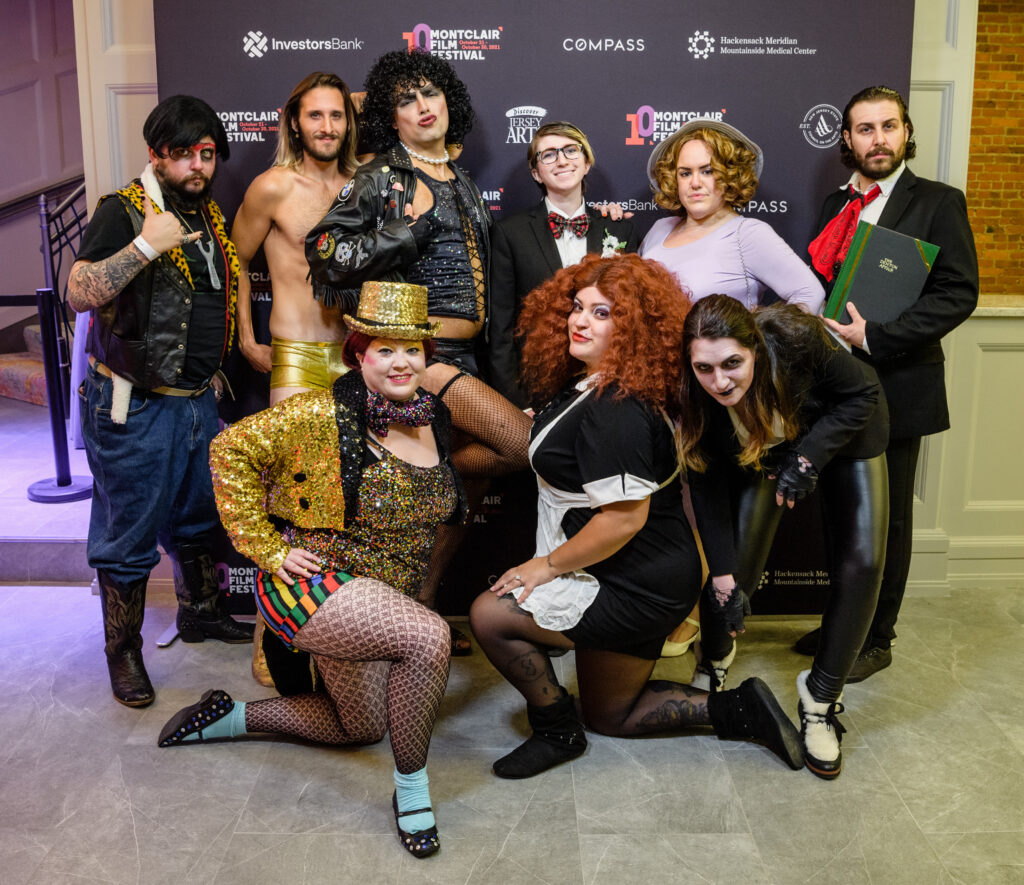
Its rebellion is campy, glittery, and theatrical. It’s rebellion with a wink. It’s rebellion with a corset. It’s rebellion with a musical number. And that rebellion helped shape cultural attitudes toward queerness, performance, and identity.
Rocky Horror’s rebellion also helped create a space for people who felt like outsiders. It gave them a place to belong. It gave them a community. And it gave them a story that celebrated their weirdness rather than hiding it.
Midnight Theater as a Queer Sanctuary
Midnight theater screenings became sanctuaries for queer people. They were places where people could explore identity, express themselves, and find community. They were places where people could dress up, dance, shout, laugh, and be themselves. They were places where people could escape judgment, fear, and isolation.
Rocky Horror screenings became queer spaces long before queer spaces were widely accepted. They offered safety, joy, and connection. They offered a place where people could experiment with gender, sexuality, and performance. And they offered a place where people could find others who understood them.
The midnight theater tradition continues today, and it remains a vital part of queer culture. It’s a place where people can celebrate identity, community, and joy. It’s a place where people can participate in a ritual that has lasted for decades. And it’s a place where people can experience the magic of Rocky Horror in all its glittery glory.
Rocky Horror’s Enduring Legacy
Rocky Horror’s legacy is enormous. It shaped queer representation, camp aesthetics, and midnight theater culture. It influenced drag, fashion, cinema, theater, and nightlife. It created a cultural tradition that continues to thrive. And it gave people a story that celebrates queerness, joy, and community.
Its legacy is also personal. For many people, Rocky Horror was their first experience with queer culture. It was their first time seeing gender fluidity portrayed as something fun and desirable. It was their first time seeing queer joy on screen. And it was their first time feeling like they belonged.
Rocky Horror continues to inspire new generations. It continues to offer joy, liberation, and community. It continues to be a place where people can explore identity. And it continues to be a glittery, campy, chaotic celebration of queerness.
Rocky Horror as a Celebration of Identity
Identity in Rocky Horror is fluid, playful, and joyful. The film encourages people to explore who they are. It encourages them to be bold, dramatic, and expressive. It encourages them to embrace their weirdness. And it encourages them to celebrate their identity rather than hide it.
This celebration of identity is one of the film’s most enduring qualities. It offers a space where people can be themselves. It offers a story that celebrates queerness. And it offers a tradition that continues to bring people together.
The Power of Community
Community is at the heart of Rocky Horror. The film created a cultural tradition that brings people together. It created a space where people can connect, celebrate, and belong. And it created a ritual that continues to thrive.
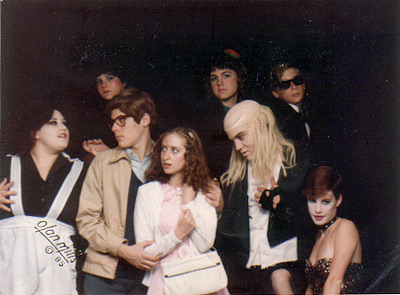
Rocky Horror’s community is diverse, joyful, and welcoming. It includes queer people, theater kids, goths, punks, weirdos, and anyone who feels like they don’t quite fit into mainstream culture. It offers a place where people can be themselves. And it offers a place where people can find others who understand them.
Rocky Horror’s Joyful Weirdness
Rocky Horror is weird in the best possible way. It’s joyful weirdness. It’s liberating weirdness. It’s weirdness that invites you to join in rather than sit back and observe. Its weirdness is part of its charm. It’s part of its legacy. And it’s part of what makes it so beloved.
Rocky Horror embraces weirdness, celebrates it, and turns it into something magical. It’s weirdness with heart. It’s weirdness with glitter. And it’s weirdness that continues to inspire joy.
Supporting Autumnelf on Ko‑Fi helps fuel new essays, book projects, ocean‑life explorations, theatrical deep dives, and the creative quests that make Phantom Orca Quest a vibrant, multimedia experience.
Get Me a Spark of Magic
