Oregon Trail Refuses to Pick a Lane

Some franchises know exactly what they are.
Star Wars is a movie franchise. Dungeons & Dragons is a tabletop roleplaying game. Mario is a video game series that occasionally remembers its protagonist is supposed to be a plumber.
Then there’s Oregon Trail. Oregon Trail started as a video game. Then it became a card game. Now, apparently, it is a musical. At this point, I’m convinced the franchise wakes up every morning, spins a wheel labeled “forms of media,” and commits fully to whatever it lands on.
And honestly? Good for it. Not everything needs to pick a lane.
Sometimes the things that become cultural icons are the things that evolve in unexpected directions. Still, the idea of Oregon Trail: The Musical initially sounds like the result of somebody losing a dare.
Of all the educational games that existed in school computer labs, this was the one that got songs?
The game best known for wagon repairs, hunting buffalo, dangerous river crossings, and dysentery somehow became live theater? That’s certainly a choice.
Then again, the more I thought about it, the more I realized something surprising. Not only does Oregon Trail work as a musical, it might actually make more sense as a musical than many adaptations we’ve seen over the years.
The Computer Game That Defined a Generation
Before we talk about the musical itself, we need to talk about why anyone would even consider turning Oregon Trail into a theatrical production in the first place.
The answer starts in a school computer lab.
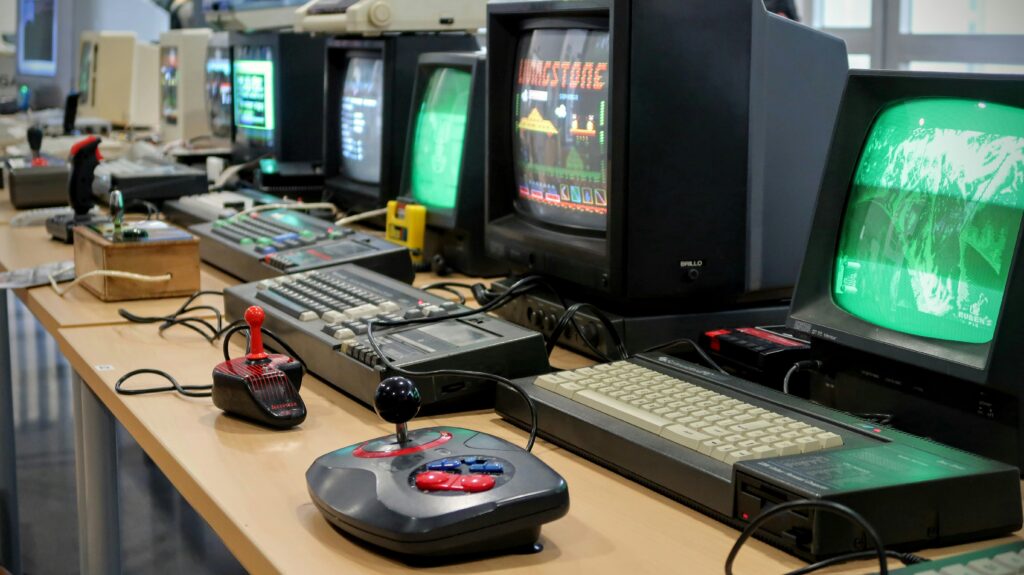
For generations of students, Oregon Trail was not just a game. It was an educational institution.
Long before achievements, battle passes, downloadable content, and whatever other nonsense modern gaming has invented, students were gathering around school computers trying desperately to keep virtual pioneers alive.
The premise was simple.
Players led a wagon party from Missouri to Oregon during the nineteenth century. Along the way they managed supplies, hunted for food, crossed rivers, treated illnesses, and made decisions that frequently resulted in catastrophic consequences.
Educational games often struggle because they lean too heavily toward either education or entertainment. Oregon Trail somehow struck a balance between the two.
Students learned history while simultaneously discovering that every decision carried consequences. Food mattered. Preparation mattered. Planning mattered. And crossing a river without thinking things through was often a terrible idea.
The game wasn’t just teaching facts. It was teaching experience. That matters because people remember experiences far longer than they remember dates and vocabulary words.
Then Someone Turned It into a Card Game
The really fascinating thing about Oregon Trail is how adaptable its core concept turned out to be.
Years after becoming a gaming icon, the franchise expanded into tabletop gaming with the Oregon Trail card game. On paper, that sounds a little strange. Then you remember what the original game actually was: It was resource management, risk assessment, and teamwork. It was trying to survive long enough to reach your destination before the universe found another creative way to ruin your day.
Those same ideas translate remarkably well to a card game. Players still encounter disasters. Players still struggle with limited resources. Players still suffer from setbacks that appear out of nowhere. It’s still incredibly frustrating, just like the DOS game. Hence, the medium changes, but the experience feels familiar.
Which is actually an important clue when we’re talking about the musical. Because the reason Oregon Trail can jump between formats so easily is that the real appeal was never the computer screen. The appeal was always the story. And stories travel well.
The Musical Nobody Asked For But Everybody Is Talking About
Now we arrive at the latest stop on this strange journey.
The musical.
When people first hear the phrase “Oregon Trail musical,” the reaction tends to follow a predictable pattern: First comes confusion. Then skepticism. And then they laugh. They let curiosity take hold. Thencomes the realization that this might actually be amazing.
Because once the initial shock wears off, an interesting question emerges: Why wouldn’t Oregon Trail become a musical?
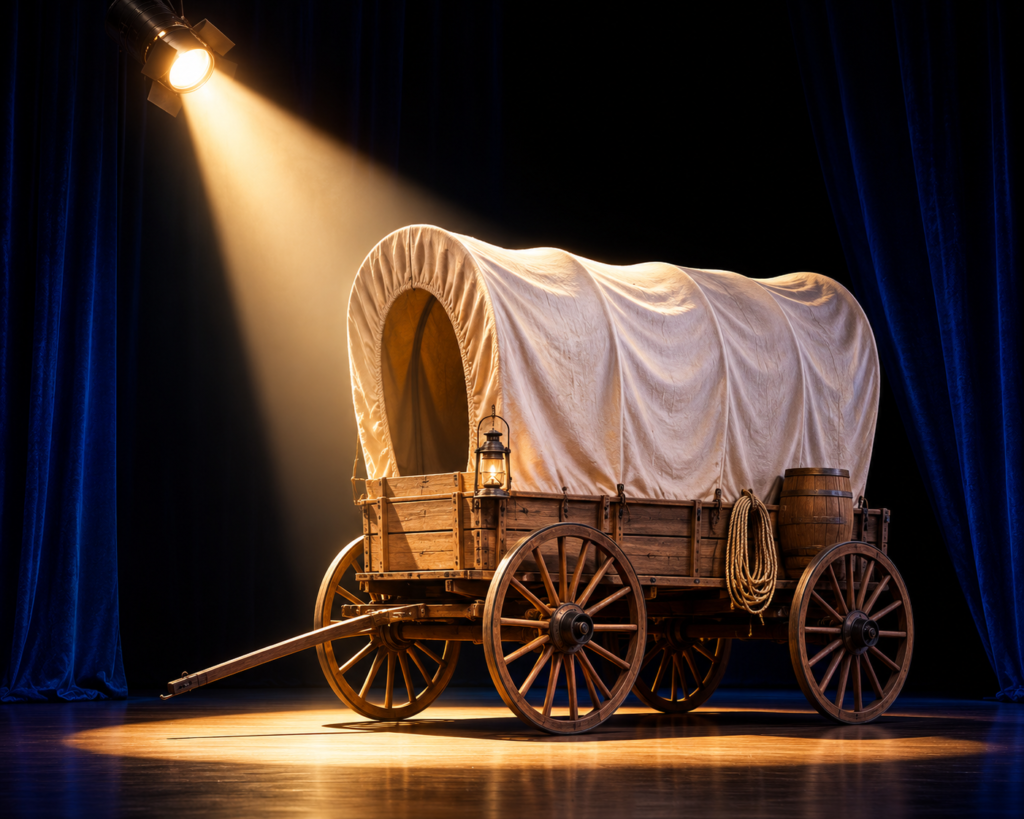
Think about the story structure. A group of people leave home. They’re pursuing a dream. The journey is dangerous. Relationships are tested. Challenges emerge. Hope rises and falls. People evolve through adversity.
That’s not just a video game. That’s practically the blueprint for musical theater.
Strip away the computer graphics and educational framing, and you’re left with a classic adventure story filled with emotional stakes. Broadway has built entire careers on less.
Why Oregon Trail Actually Works on Stage
The deeper you look, the more obvious it becomes that Oregon Trail contains nearly everything a musical needs.
Musicals thrive on journeys. Characters start in one place and end in another. Sometimes the location changes. Sometimes the people change. Usually both.
That’s exactly what happens on the Oregon Trail. The pioneers leave behind the familiar and venture toward an uncertain future. Each mile presents a new challenge. Every obstacle forces decisions. Every setback reveals character.
A musical doesn’t need lasers or dragons to create compelling drama. It needs people pursuing something meaningful. The settlers on the Oregon Trail were pursuing entirely new lives. Those stakes inherently carry emotional weight.
The audience understands what’s at risk. The characters understand what’s at risk. That kind of tension almost creates itself.
The Comedy Was Already Built In
Of course, one reason the musical concept works so well is because Oregon Trail has always had an accidental sense of humor.
Historically, the actual Oregon Trail was incredibly difficult. The real experiences of pioneers involved tremendous hardship and sacrifice.
The game, however, created a generation of students who experienced those hardships through a unique lens. The educational aspect remained important, but so did the absurdity. Every player eventually developed a relationship with disaster. You’d spend twenty minutes carefully managing supplies.
Everything would appear stable.
Then suddenly a wheel would break, someone would get sick, food would run low, and the entire journey would collapse into chaos. The unpredictability became part of the fun.
When audiences attend an Oregon Trail musical, they bring those memories with them. Everyone knows trouble is coming. They may not know exactly when. They may not know exactly how. But they know somebody somewhere is about to make a very questionable decision. And almost certainly someone, somewhere will die of dysentery.
That anticipation creates comedy before a joke is even delivered.
The Audience Is Already In On It
One of the most interesting aspects of adapting Oregon Trail is how much cultural baggage audiences already bring into the theater.
Most stories have to establish their world from scratch. This one doesn’t.
Generations of players already understand the basics. They know what wagon trains are. They know the challenges of the journey. And they know the dangers. Most importantly, they know the memes.
The phrase “You have died of dysentery” has become so culturally entrenched that it often overshadows the educational origins of the game itself.
That’s a rare achievement. Few educational games become part of the larger cultural conversation. Even fewer remain there for decades.
The musical can play with that shared knowledge in ways that reward longtime fans while remaining accessible to newcomers. That’s a delicate balancing act, but it offers enormous creative opportunities.

And speaking of enormous creative opportunities, mine current quest is bringing these blogs to life. Wanna help? Join me by sending me a spark.

Beneath the Laughs Is a Surprisingly Human Story
What makes Oregon Trail especially compelling as theatrical material is that beneath all the jokes lies a deeply human story.
Strip away the game mechanics. Remove the memes. Forget the pop culture references for a moment.
What remains?
A group of people taking a chance on an uncertain future. That’s universally relatable. Most of us have never traveled across a continent in a covered wagon. Yet, most of us do know what it feels like to step into the unknown. We’ve changed jobs. Moved homes. Started relationships. Ended relationships. Pursued goals with no guarantee of success. Taken risks because standing still no longer felt like an option.
That emotional core gives the musical substance. Without it, the production would simply be a collection of jokes. With it, the story becomes something larger.
Oregon Trail and the Power of Nostalgia
Let’s be honest. Nostalgia is carrying some serious weight here. Not all of it. But definitely some of it.
People have strong emotional connections to Oregon Trail because it represents a shared experience. Many of us encountered it at roughly the same stage of life. We associate it with classrooms, childhood, friendships, and the strange excitement of getting educational software time instead of regular lessons.
The game became part of a generation’s collective memory. The musical taps directly into that connection. It isn’t merely adapting a game. It’s adapting a memory.
That’s significantly more powerful.
People don’t just remember the game. They remember how they felt while playing it. And theater is exceptionally good at bringing emotions back to life.
A Love Letter to an Unlikely Classic
In many ways, Oregon Trail: The Musical feels like a celebration of the source material’s unlikely success.
Nobody expected a classroom game to become a cultural icon. Nobody expected students decades later to still be talking about wagon trains and river crossings. We certainly didn’t expect internet memes based on nineteenth-century diseases.
And yet here we are.
The musical acknowledges that legacy. It understands that the audience already has a relationship with the material. Rather than pretending otherwise, it embraces that history. That’s often the smartest approach when adapting beloved properties.
Treat the audience like old friends being invited back rather than strangers requiring orientation.
Why We’re Seeing More Adaptations Like This
The existence of an Oregon Trail musical also reflects a larger trend in entertainment.
Creators are increasingly looking for stories in unusual places. Video games have become movies. Movies have become Broadway productions. Books become television series. Television series become stage shows. Everything appears to be adapting into everything else.
My favorite actor, Mahesh Babu, once said in an interview, “Everyone is acting in everyone’s movies.” I think the same goes for literally every form of media at this point.
Part of this is simply the result of familiar intellectual properties having built-in audiences. But another factor is that creators have become better at identifying the heart of a story.
The medium matters less than the emotional experience. Once you identify what people love about something, you can begin exploring that idea through other forms.
The heart of Oregon Trail was never the computer graphics. It was the journey. And journeys have always belonged on stage.
The Unexpected Lesson of Oregon Trail’s Evolution
Perhaps the most fascinating thing about Oregon Trail is what its evolution tells us about storytelling.
Great stories aren’t defined by their format. They’re defined by their ability to connect.
A powerful story can exist in a book. It can exist in a film. It can exist in a game. Or even around a card table. And yes, apparently, it can exist under stage lights accompanied by music.
Every version reaches audiences differently while preserving the central experience.
That’s not accidental. That’s what happens when a premise taps into something fundamental about human nature. People are endlessly fascinated by journeys. We always have been.
More Than Just a Gimmick
The easiest reaction to hearing about Oregon Trail: The Musical is to assume it’s purely a novelty. That it’s simply a funny idea. A weird experiment. A punchline.
But the best adaptations move beyond their gimmicks. The novelty gets people’s attention. The storytelling keeps it.
If the production relied solely on the absurdity of its premise, interest would fade quickly. Instead, the very things that made Oregon Trail memorable in the first place provide fertile ground for meaningful storytelling: Adventure. Struggle. Community. Perseverance. Hope.
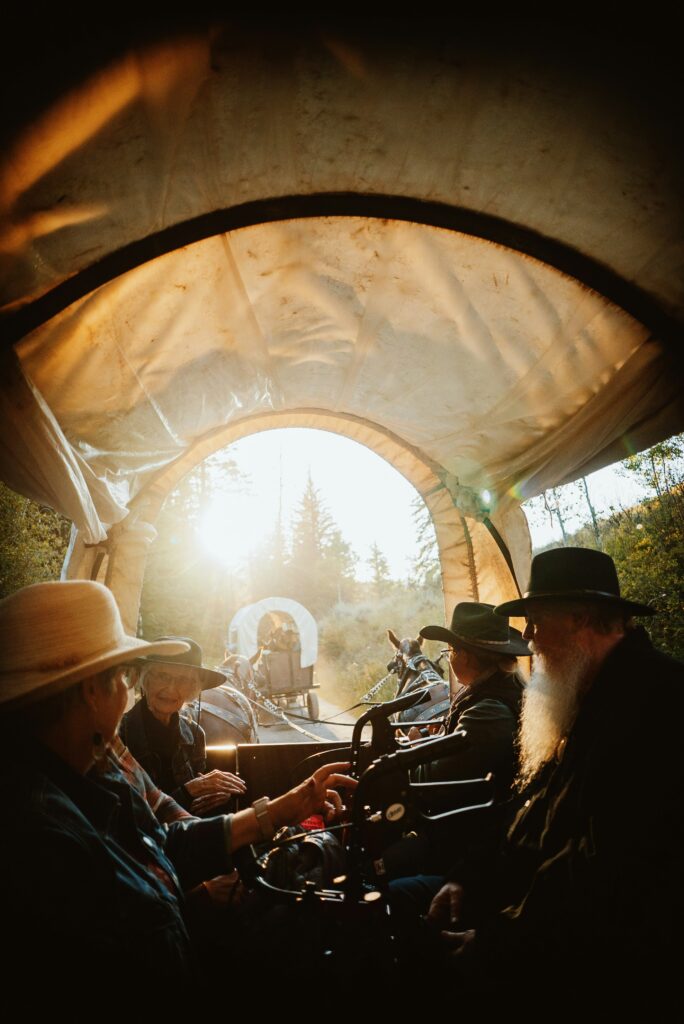
Photo by Evan Wise on Unsplash
These aren’t accidental ingredients. They’re timeless ones.
The Trail Keeps Going
Looking back, the journey of Oregon Trail itself is almost as interesting as the historical journey it depicts.
A video game became a classroom phenomenon. The classroom phenomenon became a card game. The card game helped keep the franchise alive. And now the entire concept has marched confidently onto a stage and decided it deserves a spotlight and a musical number.
There’s something beautifully fitting about that. A franchise built around travel continues traveling. One built around exploration continues exploring. And a franchise about taking chances continues taking them.
Final Thoughts on Oregon Trail: The Musical
At first glance, Oregon Trail: The Musical sounds absolutely ridiculous.
Then you spend a little time thinking about it and realize that it’s only slightly ridiculous. And honestly, that’s part of its charm.
The production exists because Oregon Trail has spent decades proving that it can survive almost any medium.
Video game? Successful.
Card game? Also successful.
Musical? Well, somebody believed in the idea enough to make it happen. That’s worth appreciating.
More importantly, the musical reminds us that stories don’t have to stay where they started. Sometimes they grow. Sometimes they evolve. And sometimes they wander into places nobody expected.
In that sense, the transformation from video game to card game to musical may be the most Oregon Trail thing imaginable.
After all, the entire franchise is built around one big lesson: You never really know where the journey is going to take you. You just pack what supplies you can, gather your companions, point yourself west, and hope things work out.
Preferably without dysentery.
Though if Oregon Trail has taught us anything, it’s that hope and reality occasionally take different routes.
Help Keep the Quest Alive
Speaking of franchises, let’s talk a little about this one. If you enjoy my content, I would love to invite you to send me a spark to help it continue.
Every Spark of Magic helps support the time, research, and creativity behind Phantom Orca Quest—from new essays and book projects to the next deep dive into the worlds I love.
You don’t have to give to enjoy my work. But if you’d like to help keep these creative quests going, your support truly means a lot.
✨ Send a Spark of Magic on Ko-fi
Thank you for being part of the Quest.
