Walk into a game store today, browse a crowdfunding site for five minutes, or spend an evening scrolling through tabletop communities online, and you’ll quickly discover something remarkable. There are a lot of table top roleplaying games, or TTRPGs, out there. Not just a lot of them, either. There are fantasy games, sci-fi games, horror games, westerns, superheroes, romance-focused games, mystery games, games about being magical cats, games about running a coffee shop, and games where the world has already ended several times and is somehow still hanging on.
For anyone new to the hobby, it raises an obvious question: why are there so many TTRPGs? After all, if one game already lets you pretend to be a hero and roll dice with your friends, why does the industry need thousands more? Shouldn’t a handful of systems cover everything?
As it turns out, the answer says a lot about creativity, storytelling, and human nature itself. The explosion of the TTRPG hobby isn’t some weird accident. It’s the natural result of what happens when imaginative people are given a framework and then immediately start wondering how they can make it their own.
And honestly? That’s kind of beautiful.
The First Big Misconception
One of the biggest misunderstandings people have about the TTRPG hobby is the idea that all roleplaying games are essentially the same thing with different coats of paint. After all, when someone says TTRPG, most people think Dungeons & Dragons. For many people, D&D isn’t just a roleplaying game, it’s the roleplaying game. It’s the Kleenex of tabletop gaming, the thing that became so successful that it ended up representing an entire hobby in the public imagination.
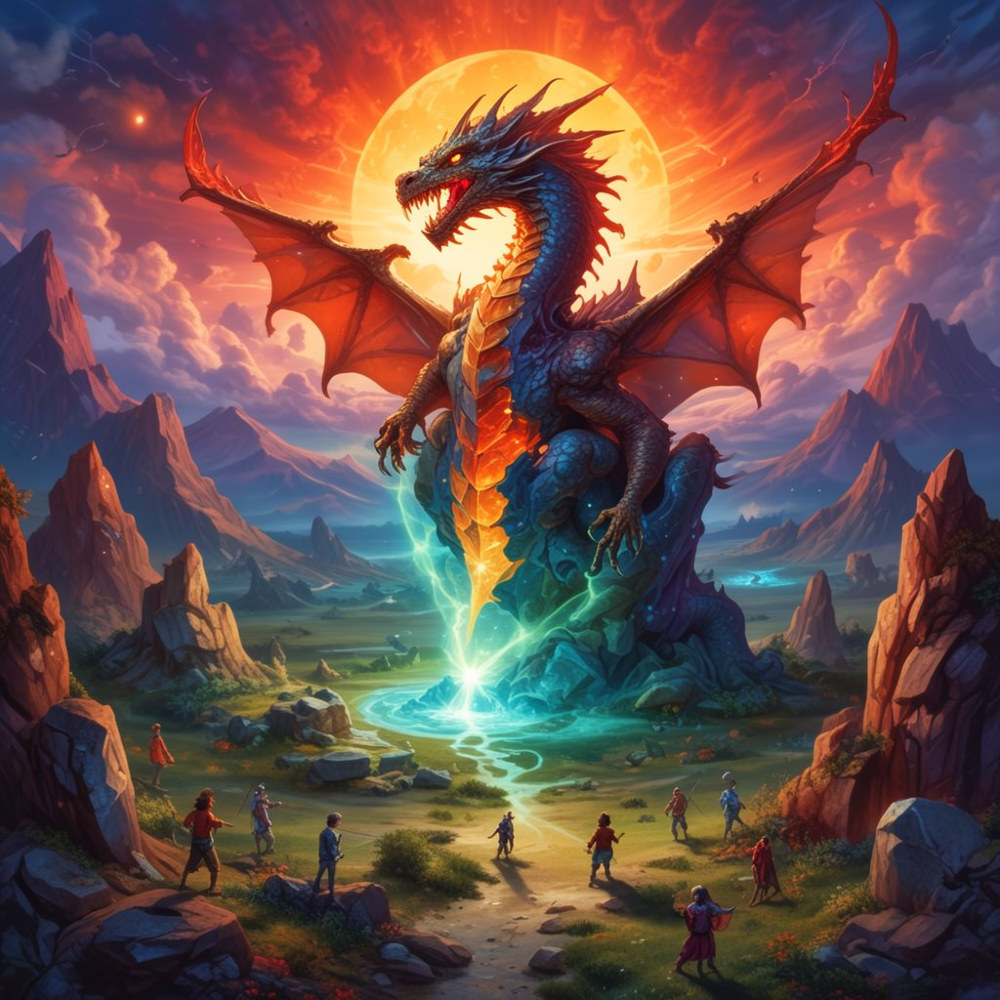
Fantasy illustration of a giant dragon towering over a group of adventurers in a rocky landscape at sunset. Used to represent the classic fantasy image many people associate with tabletop roleplaying games.
From the outside, it’s easy to see why someone might think that. Most games involve players creating characters, rolling dice, making decisions, and participating in a shared story. On a surface level, they appear remarkably similar.
But saying every TTRPG is basically the same because they use dice is a bit like saying every sport is the same because they use a ball. Basketball and golf both involve getting an object to a target. Nobody would confuse them. The same thing happens with roleplaying games.
Some systems emphasize tactical combat. Others barely include combat at all. Some focus on collaborative storytelling. Others dive deep into simulation. Certain games want you to feel like a powerful hero. Others want you to feel scared, vulnerable, and one bad decision away from disaster.
The rules aren’t just mechanics. They’re tools designed to create specific emotional experiences. When designers want to create a different experience, they often end up creating a different game.
Different Stories Need Different Engines
Imagine trying to tell every story using the exact same format.
A romantic comedy and a horror movie don’t feel the same. A superhero blockbuster isn’t structured like a murder mystery. A documentary doesn’t operate like a fantasy epic.
Storytelling naturally changes depending on the experience you’re trying to deliver. The same principle applies to a TTRPG.
A game about brave adventurers kicking down dungeon doors benefits from different mechanics than a game about political intrigue. Likewise, a game centered on personal relationships may need entirely different systems than one focused on giant mechs battling across ruined planets.
Sure, you can theoretically force almost any story into one universal system. Gamers are incredibly stubborn and resourceful people. We’ve been making systems do things they were never intended to do for decades.
But that’s often like using a butter knife as a screwdriver. Can it work? Sometimes. Is it the ideal tool? Probably not. Many designers create new games because they want mechanics that naturally reinforce the kind of stories they love telling.
The Endless Cycle of “What If?”
The tabletop gaming community suffers from a wonderful condition called curiosity.
Every designer starts asking questions.
What if combat were faster? What if combat were slower? What if there were no classes? What if character progression focused entirely on relationships? What if everyone shared control of the story? What if nobody controlled the story? What if success wasn’t binary? What if failure was actually more interesting?
A huge percentage of TTRPG creation stems from people experimenting with these kinds of ideas.
Game design often resembles a giant conversation stretching across decades. One creator sees a rule and thinks it’s brilliant. Another looks at the same rule and thinks they can improve it. A third believes the entire concept should be thrown out the window.
The result is a constant cycle of innovation, criticism, experimentation, and inspiration. Every new game becomes a response to older games. And every new designer secretly believes they have finally solved the puzzle.
Spoiler alert: nobody ever solves the puzzle. That’s why the conversation keeps going.
The Influence of Dungeons & Dragons
Any discussion about the growth of the TTRPG hobby inevitably circles back to one giant elephant sitting in the room. That elephant happens to be carrying a twenty-sided die.

Whether people love it, dislike it, or have moved on from it entirely, Dungeons & Dragons has had an enormous impact on modern tabletop gaming. For many players, it serves as their first introduction to the hobby.
Ironically, the success of D&D is one of the biggest reasons there are so many other TTRPGs.
Think about it for a moment.
A massively popular game introduces millions of people to roleplaying. Some of those players eventually start wondering whether another system might fit their preferences better. Others enjoy the hobby so much that they decide to design something themselves.
Every generation of creators contains people who began as players. The larger the player base becomes, the larger the pool of future designers becomes as well.
In a strange way, every successful game helps create future competitors. That’s not a bug. That’s a feature. Creative hobbies thrive on inspiration.
The Indie Revolution
For much of gaming history, publishing a roleplaying game required significant resources. After all, printing books wasn’t cheap. Distribution was difficult. Marketing was complicated. Reaching potential customers often meant working through traditional channels.
Then the internet showed up and cheerfully kicked the door off its hinges.
Suddenly, independent creators could publish games digitally. Online storefronts gave designers a way to sell products directly to audiences. Crowdfunding allowed creators to test demand before committing to large production costs.
The barriers became dramatically lower.
That doesn’t mean making a successful TTRPG became easy. Designing a good game is still extraordinarily difficult. Writing, balancing, editing, testing, marketing, and publishing remain major challenges. But now creators could actually get their ideas in front of people.
The result was an explosion of innovation.
Many modern roleplaying games simply wouldn’t exist without digital distribution and crowdfunding platforms making publication more accessible.
Why One Game Can’t Do Everything
Every so often, someone proposes the ultimate solution.
Why not just create one universal TTRPG that handles every genre, every storytelling style, every level of crunch, and every possible player preference?
It’s a tempting idea.
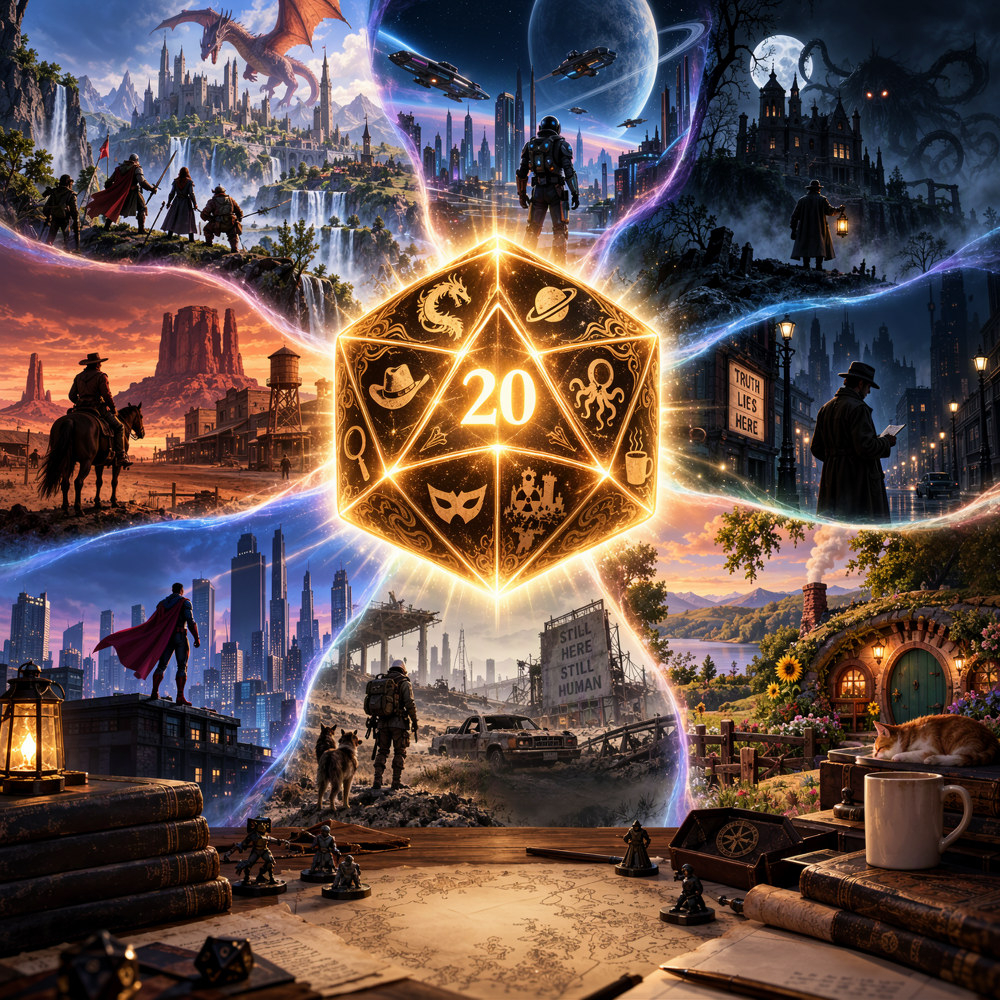
The problem is that human beings are annoying. And I mean that in the nicest possible way. Different players want wildly different experiences. Some people love detailed character creation. Others want to start playing within ten minutes. Some enjoy tactical combat with maps, miniatures, and extensive rules interactions. Others would happily throw all of that into a volcano if it meant spending more time developing character relationships. Some players love mathematical optimization. Others would rather eat the character sheet than calculate modifiers.
No universal game can perfectly satisfy every audience because those audiences often want contradictory things. What one player considers a feature, another sees as a flaw.
That’s why the hobby keeps branching outward.
The Creative Playground Effect
Something fascinating happens when people discover a TTRPG they enjoy. Sooner or later, they start changing things. A house rule appears. Then another. Maybe a new class. Perhaps a custom setting. Before long, they’re tweaking mechanics and experimenting with ideas.
Game masters have been modifying published material for as long as roleplaying games have existed. Eventually some creators reach a dangerous conclusion.
“If I’ve already changed half the rules, maybe I should just make my own game.”
History suggests this thought has been responsible for approximately seventeen billion roleplaying systems. Okay, that’s not a real statistic. But it certainly feels plausible. I, for one have played A LOT of role playing systems: Dungeons & Dragons, Shadowrun, GURPS, Vampire: The Masquerade, Sailor Moon, Pathfinder, Star Trek RPG, Rifts, and even The Realms of Armistace. Despite that, I know I have barely scratched the surface of what is out there. Every time I think I’ve got a decent handle on the hobby, I discover another dozen systems doing something clever, unusual, or completely unexpected.
The hobby actively encourages creative participation. Unlike many forms of entertainment, a TTRPG often invites players to become co-creators. Once you’ve tasted that level of creative freedom, designing your own material starts feeling surprisingly natural.
When Passion Projects Become Published Games
Not every roleplaying game begins with a business plan.
Many begin because somebody became obsessed with an idea. They had a setting they loved. A mechanic they couldn’t stop thinking about. A specific emotional experience they wanted players to feel. An unusual genre combination that kept bouncing around inside their head at three in the morning. These passion projects frequently produce some of the hobby’s most memorable innovations.
Large publishers understandably face market pressures. Independent creators sometimes have more freedom to take risks. A niche concept that might seem commercially questionable can still attract a dedicated audience. And thanks to modern publishing tools, that audience can often be found.
The result is a hobby filled with wonderfully specific games. There are TTRPGs that should not exist. Thankfully, they exist anyway.
The Rise of Niche Communities
Entertainment has become increasingly personalized. People no longer consume media through only a handful of massive channels. Communities form around highly specific interests. Cult classics and fandoms are everywhere.
The tabletop world reflects that same trend. Players who love cosmic horror can find communities built around cosmic horror. Fans of narrative-driven storytelling can find games specifically supporting that style. Science fiction enthusiasts, mystery lovers, historical gamers, and countless others can locate experiences tailored to their preferences.
As communities become more specialized, demand grows for systems supporting those interests.
Designers respond by creating games aimed at those audiences, even when they’re completely unofficial fan projects. Fandoms have been adapting their favorite worlds into tabletop experiences for years. Anyone old enough to remember the height of the “Harry Potter versus Twilight” debates probably remembers how fiercely divided parts of the internet could be. You were apparently supposed to pick a side, as if enjoying both magical schools and sparkly vampires would somehow destabilize the universe. Naturally, fans of both franchises wanted ways to spend even more time exploring those worlds.
Harry Potter fans created projects such as Hogwarts: An RPG, Harry Potter: The Roleplaying Game, and Witchcraft & Wizardry. Meanwhile, Twilight fans often turned to existing vampire-focused systems like Vampire: The Masquerade, modifying the rules to tell stories inspired by the Cullens or entirely new vampire covens of their own creation.
Quick Intermission: If you’re enjoying this article and would like to support future deep dives into tabletop gaming, fandom history, and all the wonderfully nerdy rabbit holes I fall down, consider supporting my work here: Send a Spark of Magic on Ko-fi.
Now, back to our regularly scheduled fandom debates.
The cycle continues. More communities create more games. More games create more communities. Everyone ends up with a backlog of rulebooks they’ll probably never fully read. Such is the eternal destiny of tabletop gamers.
The Real Product Isn’t the Rules
Here’s a perspective that changed how I think about the hobby: The actual product of a TTRPG isn’t the rulebook. It’s the experience created around the table. Rulebooks are tools. Dice are tools. Character sheets are tools. The goal is the shared experience.
Once you start viewing games through that lens, the existence of countless systems suddenly makes much more sense.
Different experiences require different tools. A horror game wants players to feel tension and uncertainty. A superhero game wants players to feel extraordinary. A mystery game wants players piecing together clues. A tragic drama may want players wrestling with impossible choices.
The mechanics help generate those feelings.
That emotional target is often far more important than whether the game uses twenty-sided dice, six-sided dice, cards, tokens, or interpretive dance. Although if someone publishes a successful interpretive dance TTRPG or musical theater TTRPG with orcas included, I genuinely want to read it.
Are There Too Many TTRPGs?
Some people argue the market is overcrowded.
On a practical level, there is some truth to that concern. Thousands of games compete for attention. Many excellent projects struggle to find audiences. Consumers only have so much time and money.
Yet abundance isn’t necessarily a problem. Nobody complains that bookstores contain too many novels. Nobody proposes reducing movies to six approved genres. Creative spaces flourish when creators can experiment.
Most TTRPGs aren’t trying to replace one another. They’re exploring different ideas and serving different audiences. The sheer variety available today means players can find experiences that would have been almost impossible to discover decades ago.
More choice can occasionally feel overwhelming. But it’s also a sign of a healthy, creative, passionate community.
And honestly, my answer will always be no, because there are always new ideas, new fandoms, new characters to play around with, new worlds being built every single day. A TTRPG leaves you room to say “What if?” And that is a question that I don’t think will ever truly have an answer to. Nor, would I want it to. TTRPGs exist because players and designers keep asking it. So, keep asking and keep playing and keep building.
What This Says About Human Imagination
Ultimately, I think the enormous number of TTRPGs tells us something wonderful about people. Given a storytelling framework, humans immediately begin asking questions.
How can we improve it? How can we personalize it? How can we twist it into something new? How can we tell stories nobody has told before?
Creative expression rarely stops with consuming existing work. It often inspires new creation. That’s exactly what has happened throughout the history of the tabletop roleplaying hobby.
Players become game masters. Game masters become designers. Designers inspire new players. And the cycle keeps moving. Each generation adds new ideas, new perspectives, and new experiments. Some games fade away. Others become classics. A few change the hobby forever All of them contribute something to the ongoing conversation.
Final Thoughts on the Ever-Expanding Hobby
So, why are there so many TTRPGs?
Because storytelling is endlessly flexible. Because players want different experiences. Because designers have different ideas. Because technology lowered publishing barriers. Because creative people enjoy experimenting. Because hobbyists love asking “what if?”
Most importantly, there are so many TTRPGs because the hobby was never meant to stand still.
Roleplaying games aren’t manufactured products moving down a conveyor belt. They’re creative expressions shaped by the people who build them. Every new system represents someone trying to capture a particular feeling, solve a perceived problem, explore an unusual idea, or tell a story in a different way.
Some games become household names. Others remain hidden gems discovered by small groups of enthusiastic fans. Both have value.
The next great roleplaying game might come from a major publisher. It might also come from someone sketching notes in a coffee shop right now, convinced they’ve finally cracked the code everyone else missed.
They probably haven’t. But that’s okay. The fun isn’t finding the final answer. The fun is rolling the dice and seeing what happens next.
And if the history of the TTRPG hobby has taught us anything, it’s that someone, somewhere, is already working on the next fascinating answer to the question nobody knew they were asking.
Help Keep the Quest Alive
If my essays, ocean-life explorations, theatrical deep dives, or stories have brought a little wonder into your world, I’d love your help creating more.
Every Spark of Magic helps support the time, research, and creativity behind Phantom Orca Quest—from new essays and book projects to the next deep dive into the worlds I love.
You don’t have to give to enjoy my work. But if you’d like to help keep these creative quests going, your support truly means a lot.
✨ Send a Spark of Magic on Ko-fi
Thank you for being part of the Quest.
