Grinding has a reputation for being the broccoli of gaming. You know it’s good for you, you know it helps you grow, but you still find yourself staring at the screen wondering why you’re chopping down your nine hundredth mob in Diablo II with the same enthusiasm you had for the first. And if you’re anything like me, Diablo II isn’t just a game you played. It’s a game that imprinted on your soul. The click of a loot drop, the glow of a new rune, the thrill of seeing a Stone of Jordan appear in chat. These moments feel electric, even though they’re built on hours of repetition.
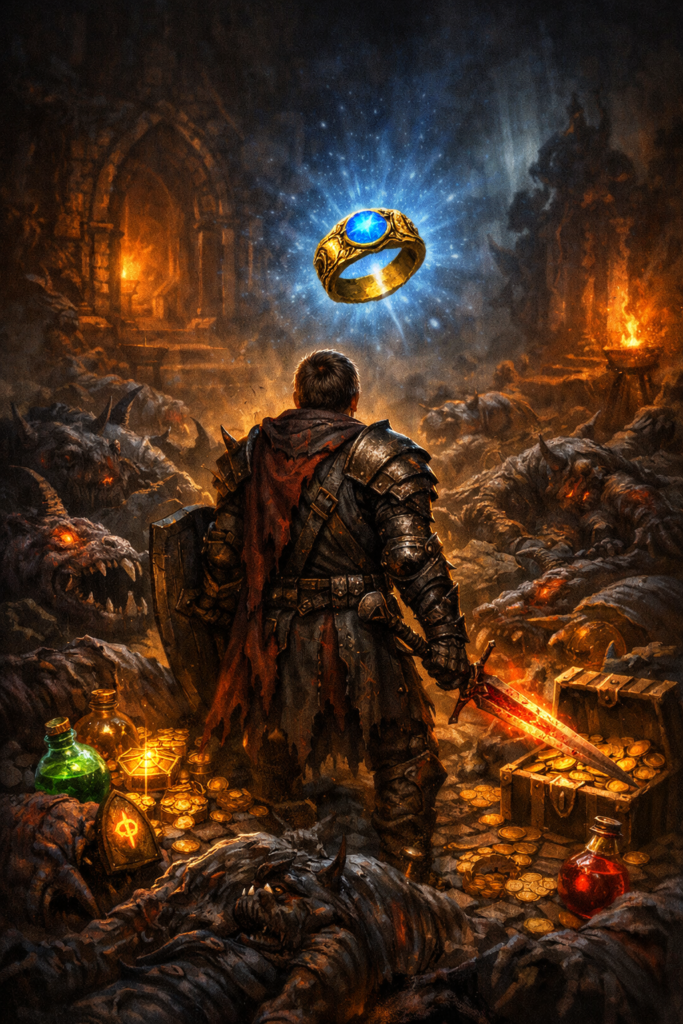
But here’s the twist. Grinding isn’t mindless. It isn’t pointless. It taps into a deep psychological loop that makes repetition feel good. It’s a dance between anticipation and reward, between dopamine and progress, between the player and the promise of something just around the corner. And that dance is why gamers keep coming back for more.
Today we’re diving into the psychology of grinding, exploring why repetition feels rewarding, how dopamine fuels the loop, and why even the most tedious tasks can feel strangely satisfying. Along the way we’ll wander through Diablo II, Breath of the Wild and Tears of the Kingdom, RIFT, World of Warcraft, EverQuest, Fortnite, Minecraft, and a few other familiar worlds. Grab your potions, sharpen your pickaxe, and let’s talk about why grinding feels so good.
The Dopamine Loop That Keeps Us Clicking
Dopamine is often described as the brain’s pleasure chemical, but that’s not quite accurate. Dopamine is the chemical of anticipation. It’s the spark that fires when you think something good might happen. It’s the feeling of leaning forward, not the feeling of leaning back. And grinding is built on anticipation.
Every time you defeat an enemy, open a chest, mine a block, or gather materials, your brain whispers that something valuable might be waiting. It doesn’t matter if the drop rate is one percent or point zero one percent. The possibility is enough to keep the dopamine flowing.
Diablo II is the perfect example. You can run Mephisto a hundred times and get nothing but blue boots and disappointment. But the hundred and first run might drop something legendary. That tiny chance keeps your brain humming with anticipation. It’s the same reason slot machines work, except grinding doesn’t require you to sit in a smoky casino listening to someone named Carl talk about his lucky socks.
Breath of the Wild and Tears of the Kingdom use a different flavor of dopamine. Instead of loot drops, they reward exploration. Every hill might hide a Korok. Every cave might contain a new weapon. Every sky island might offer a puzzle. The reward isn’t guaranteed, but the possibility is always present. And that possibility is enough to keep players wandering for hundreds of hours.
The dopamine loop doesn’t care what the reward is. It cares that a reward might happen. Grinding is built on that “might.”
Grinding: Progress as Pleasure
Humans love progress. We love watching numbers go up. We love filling bars. We love checking boxes. It’s why leveling systems exist. It’s why experience points feel satisfying. It’s why even the simplest tasks can feel rewarding when they contribute to something bigger.
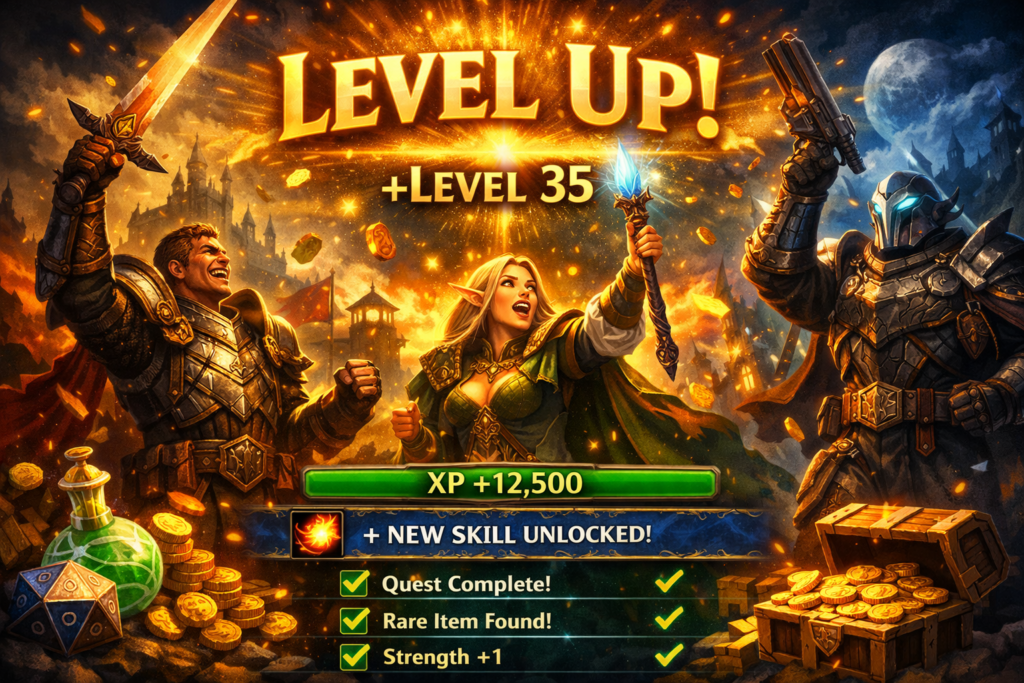
World of Warcraft, EverQuest, and RIFT all understand this deeply. Every kill gives experience. Every quest moves you forward. Every new ability feels like a step toward becoming the hero you imagine yourself to be. Even when the tasks are repetitive, the progress feels meaningful.
This is why grinding doesn’t feel like wasted time. It feels like investment. You’re building something. You’re improving your character. You’re inching closer to a goal. And your brain loves that.
Minecraft takes this idea and turns it into a sandbox. You grind for materials not because the game tells you to, but because you want to build something. You want to create a house, a castle, a farm, a giant statue of a chicken wearing sunglasses. The repetition becomes meaningful because it contributes to a vision.
Fortnite uses progress in a different way. The grind isn’t about leveling a character. It’s about improving your skills. Every match teaches you something. Every encounter sharpens your reflexes. Every victory feels earned. The repetition becomes practice, and practice becomes mastery.
Progress is pleasure. Grinding is progress. Therefore grinding is pleasure. It’s simple math, and thankfully it doesn’t require a calculator.
The Comfort of Predictability During Grinding
Life is chaotic. Games are controlled. Grinding offers a predictable loop that feels safe and comforting. You know what you’re doing. You know what the goal is. You know what the outcome might be. There’s a rhythm to it, a flow, a sense of stability.
EverQuest players often talk about the comfort of pulling mobs in a familiar zone. The repetition becomes meditative. You fall into a pattern. You know when to attack, when to heal, when to retreat. It’s almost soothing.
Minecraft mining has the same effect. You dig, you find ore, you dig more, you find more ore. The world becomes quiet. The task becomes simple. The mind relaxes. It’s like knitting, but with more lava.
Breath of the Wild’s cooking system is another example. You gather ingredients, toss them into a pot, and listen to that cheerful little jingle. It’s predictable. It’s comforting. It’s a tiny moment of joy.
Predictability isn’t boring. It’s calming. Grinding gives players a space where they can focus, unwind, and enjoy the rhythm of repetition.
Grinding Is Mastery Through Repetition
Grinding isn’t just about rewards. It’s about mastery. Repetition builds skill. Skill builds confidence. Confidence builds enjoyment.
Fortnite players grind matches to improve aim, movement, and strategy. Breath of the Wild players grind combat encounters to learn timing and technique. Diablo II players grind bosses to perfect their builds and optimize their routes.
Mastery feels good. It feels powerful. It feels earned. Grinding gives players the space to practice, refine, and grow.
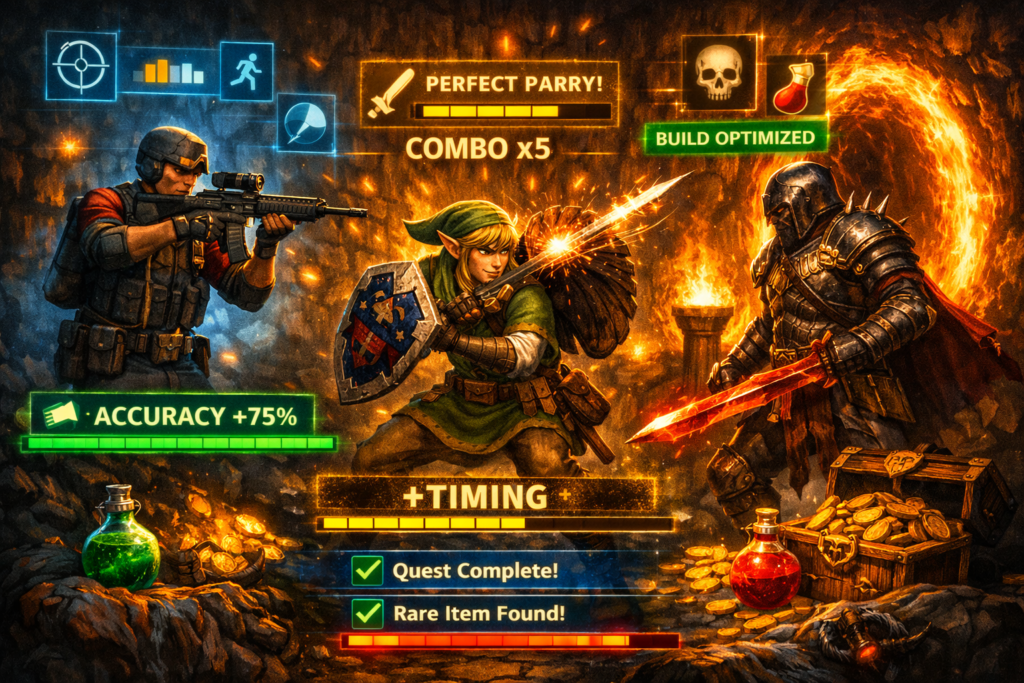
Even games like Dark Souls, which aren’t traditionally considered grind-heavy, rely on repetition to teach players how to survive. You fight the same enemies, learn their patterns, and eventually overcome them. The repetition becomes mastery.
Grinding is training disguised as entertainment. And it works.
The Social Side of Grinding
Grinding isn’t always a solo activity. Many games turn repetition into a social experience. World of Warcraft raids, EverQuest dungeon crawls, and Fortnite squad matches all rely on teamwork.
Grinding together builds camaraderie. You share victories. You share failures. You share the joy of finally getting that rare drop after hours of effort. The repetition becomes a bonding experience.
Even Minecraft servers turn grinding into community building. Players gather resources together, build towns together, and create shared goals.
Social grinding feels rewarding because humans are social creatures. We like working together. We like achieving things together. We like celebrating together.
Grinding becomes more than repetition. It becomes connection.
Why Mind Numbing Tasks Feel Satisfying
Here’s the big question. Why do the most tedious tasks feel satisfying? Why do players spend hours farming materials, killing mobs, or gathering resources?
The answer is simple. Grinding taps into multiple psychological systems at once. Dopamine, progress, predictability, randomness, mastery, and social connection all combine to create a loop that feels good.
It’s not mind numbing. It’s mind engaging. It’s a blend of anticipation, accomplishment, and comfort. It’s a space where players can relax, focus, and enjoy the journey.
Grinding feels satisfying because it gives players control. It gives them goals. It gives them rewards. It gives them progress. It gives them meaning.
And sometimes it gives them a shiny new sword.
The Final Boss of Understanding
Grinding isn’t just a mechanic. It’s a psychological experience. It’s a loop built on anticipation, reward, progress, and mastery. It’s a dance between repetition and randomness. It’s a space where players can grow, explore, and connect.
Diablo II taught us that loot can feel magical. Breath of the Wild taught us that exploration can feel endless. World of Warcraft taught us that progress can feel powerful. Fortnite taught us that practice can feel rewarding. Minecraft taught us that creation can feel meaningful.
Grinding feels good because it taps into what makes us human. We love progress. We love possibility. We love mastery. We love connection. And we love the thrill of seeing something new drop after hours of effort.
So the next time you find yourself mowing down waves of enemies, mining through endless tunnels, or running the same boss for the fiftieth time, remember this. You’re not wasting time. You’re participating in one of the most fascinating psychological loops in gaming.
And if you happen to find a Stone of Jordan along the way, well, that’s just dopamine saying hello.
Supporting Autumnelf on Ko‑Fi helps fuel new essays, book projects, ocean‑life explorations, theatrical deep dives, and the creative quests that make Phantom Orca Quest a vibrant, multimedia experience.
Get Me a Spark of Magic