What if I told you that one of the most important forests on Earth doesn’t grow on land? No hiking boots. No trail maps. No bug spray. Just cold ocean water, filtered sunlight, and towering golden giants swaying beneath the waves.
When most people hear the word Kelp, they think of sushi rolls, health foods, or maybe that mysterious seaweed that wraps itself around your ankles at the beach and immediately turns you into an Olympic sprinter. Fair enough. Kelp has earned a reputation for being the ocean’s long, slippery prankster.

But Kelp is so much more than floating seaweed.
Hidden beneath the surface of coastal waters around the world are vast underwater forests that rival the beauty and complexity of any woodland on land. These remarkable ecosystems support countless species, provide shelter for marine life, help protect shorelines, and may even play an important role in understanding climate challenges.
In many ways, a Kelp forest functions much like a rainforest. It creates habitat, supports biodiversity, and forms the foundation of an entire ecosystem. The only difference is that instead of birds flitting between branches, you’ll find fish navigating through underwater canopies while sea otters drift overhead like furry little supervisors making sure everyone stays productive.
Today, we’re diving into the incredible world of Kelp forests and exploring why these underwater ecosystems deserve far more attention than they usually receive.
What Exactly Is Kelp?
Let’s begin with a fun fact that tends to surprise people.
Kelp is not actually a plant.
I know. It certainly looks like one. It has structures that resemble roots, stems, and leaves. It grows toward sunlight and performs photosynthesis. If Kelp applied for a job as a plant, most of us would approve the application immediately.
Scientifically speaking, though, Kelp belongs to a group known as brown algae. While it behaves similarly to plants in many ways, it falls into a completely different category of life.
What makes Kelp particularly impressive is how quickly it grows. Some species are capable of growing up to two feet per day when conditions are ideal. That’s an astonishing growth rate by almost any standard.
Imagine planting something in your garden on Monday and discovering by Friday that it had become taller than your neighbor’s fence. That’s the kind of growth we’re talking about.
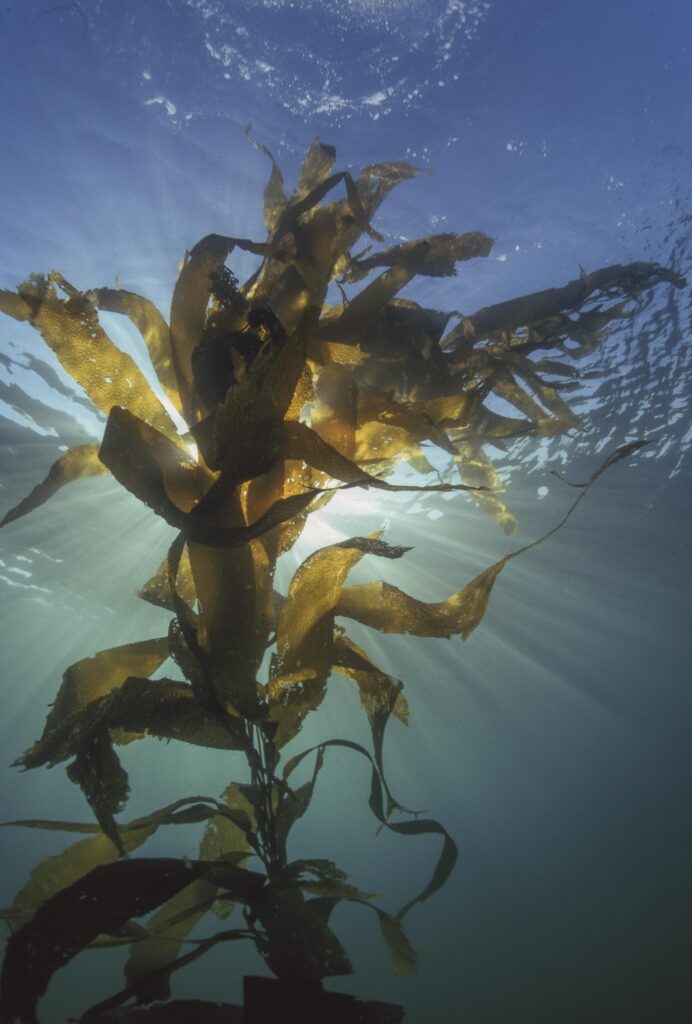
Kelp thrives in nutrient-rich coastal waters where sunlight can reach the upper portions of the ocean. Given enough light and nutrients, these algae can grow into large underwater structures that eventually form dense forests stretching across entire shorelines.
The result is one of the most productive and important ecosystems on the planet.
Entering an Underwater Forest
One of the most magical things about a Kelp forest is how alive it feels.
Divers often describe their first experience in a Kelp forest as stepping into another world. Sunlight filters through the canopy above in shimmering beams. Long fronds bend and sway with the rhythm of the ocean currents. Shadows dance across the seafloor while schools of fish move effortlessly between the towering algae.
Everything feels dynamic.
Nothing stands still.
Unlike a forest on land where trees remain largely rooted in place, every part of a Kelp forest moves with the water. The entire ecosystem seems to breathe.
Near the surface, thick canopies form where the blades gather sunlight. Below that, fish and marine mammals travel through open corridors among the towering stalks. Closer to the seafloor, countless organisms make their homes among rocks and holdfasts, creating layers of habitat that support life from top to bottom.
It’s easy to understand why underwater photographers, marine biologists, and ocean explorers become obsessed with these ecosystems.
They feel almost mythical.
If fantasy movies need inspiration for enchanted forests, they could save themselves some time and simply visit a Kelp forest.
Why Kelp Forests Matter So Much
The beauty of a Kelp forest is easy to appreciate.
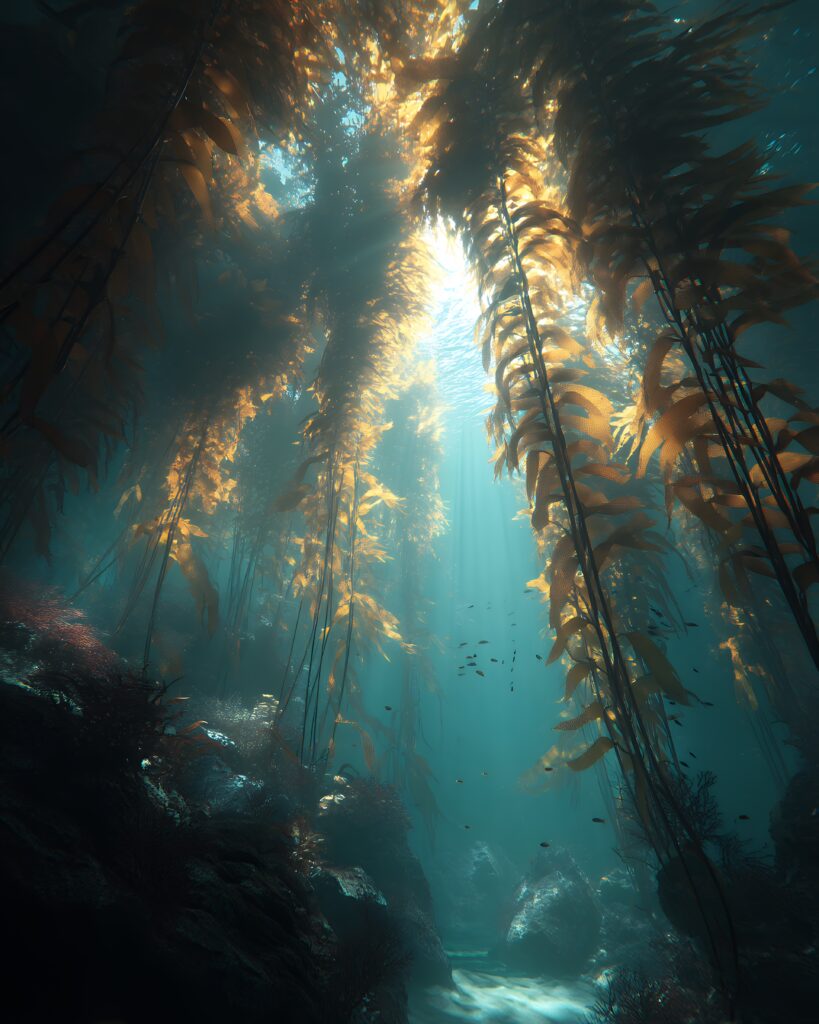
Its importance is even more impressive.
These underwater ecosystems provide habitat for thousands of marine species. They act as nurseries for young fish, hunting grounds for predators, and protective shelters for countless organisms trying to avoid becoming someone else’s lunch.
Without healthy Kelp forests, many marine species would struggle to survive.
These ecosystems also help protect coastlines. The dense growth of Kelp absorbs wave energy before it reaches shore, reducing some of the impact created by powerful ocean swells. In a sense, Kelp forests act like nature’s shock absorbers, standing between coastal communities and the relentless force of the sea.
At the same time, Kelp contributes to nutrient cycling throughout marine environments. As it grows, dies, decomposes, and interacts with surrounding organisms, it helps support a web of life that extends far beyond the boundaries of the forest itself.
For something many people dismiss as seaweed, Kelp carries a surprisingly heavy workload.
The Incredible Creatures That Live Among Kelp
A Kelp forest isn’t just a collection of algae.
It’s a thriving underwater city.
Look closely and you’ll discover a remarkable diversity of life moving throughout the ecosystem. Sea otters float among the fronds while harbor seals and sea lions weave effortlessly through the underwater passages. Colorful fish take refuge within the vegetation, while crabs patrol the seafloor and octopuses hide among rocky crevices.
Every species has a role.
One of the most famous residents is the sea otter. These charismatic marine mammals have become conservation icons, and for good reason. Sea otters consume large numbers of sea urchins, which happen to have a particular fondness for eating Kelp.
When sea otter populations decline, sea urchin populations often increase dramatically. Large numbers of urchins can strip entire areas of Kelp, transforming vibrant underwater forests into barren seascapes that support far less biodiversity.
By controlling sea urchin populations, sea otters help maintain the balance that allows Kelp forests to thrive.
It’s one of nature’s best examples of how deeply interconnected ecosystems truly are.
Also, it’s hard not to root for the sea otters. Any animal that spends part of its day floating on its back and cracking snacks open on its stomach seems to have life figured out.
The Engineering Marvel of Kelp
The structure of Kelp is surprisingly sophisticated.
At the base is a holdfast, which anchors the organism securely to rocks on the seafloor. Despite looking somewhat like roots, holdfasts don’t absorb nutrients from the ground. Their primary purpose is simply to keep the Kelp from being carried away by ocean currents.
Above the holdfast rises the stipe, which resembles a stem and acts as the main support structure. Extending from the stipe are broad blades that capture sunlight and perform photosynthesis.
Many species also possess small gas-filled structures called pneumatocysts. These tiny natural flotation devices help lift the blades toward sunlight near the ocean surface.
The entire design is remarkably efficient.
Nature essentially built a solar-powered, self-anchoring, rapidly growing organism capable of thriving in one of the most dynamic environments on Earth.
Engineers study elegant solutions all the time, but Kelp has been perfecting its design for millions of years.
Kelp and Climate Change
Whenever conversations turn toward climate change, forests usually receive most of the attention.
That’s understandable.
Trees play a critical role in absorbing carbon dioxide and supporting healthy ecosystems.
However, underwater habitats deserve recognition as well.
Like plants on land, Kelp absorbs carbon dioxide through photosynthesis. As these immense forests grow, they capture carbon and convert it into living biomass. Scientists continue studying exactly how marine ecosystems contribute to long-term carbon storage and climate regulation, and Kelp remains a major area of interest.
Healthy Kelp forests may also support more resilient marine ecosystems, helping species adapt to changing environmental conditions.
While Kelp alone won’t solve climate change, it serves as an important reminder that solutions and opportunities often exist in places we don’t think to look.
Sometimes the heroes are hidden beneath the surface.
Challenges Facing Kelp Forests
Despite their importance, Kelp forests face significant threats.
One of the greatest challenges is rising ocean temperature.
Most Kelp species thrive in cooler waters. When marine heat waves occur or ocean temperatures remain elevated for extended periods, Kelp can become stressed, making it harder for forests to recover and grow.
Climate-related changes aren’t the only concern.
Pollution continues to affect coastal ecosystems around the world. Runoff carrying contaminants, plastics, and excessive nutrients can alter water quality and place additional pressure on marine habitats.
At the same time, disruptions within the food web can create unexpected consequences. When predator populations decline, herbivores such as sea urchins may increase dramatically. Excessive grazing can devastate Kelp forests and prevent recovery.
These challenges demonstrate an important ecological lesson.
Every component of an ecosystem matters.
When one piece changes, the effects often ripple throughout the entire system in ways that are difficult to predict.
A Hotspot of Biodiversity
The word “biodiversity” gets used frequently in environmental conversations, but it can sometimes feel abstract.
A Kelp forest makes biodiversity easy to understand.
It’s life in every direction.
Tiny invertebrates cling to blades and stalks. Fish seek shelter among dense growth. Predators search for prey. Algae compete for light and space. Decomposers recycle nutrients back into the ecosystem.
Every surface seems occupied.
Every corner appears busy.
This incredible diversity helps make Kelp forests among the most productive ecosystems on Earth. The variety of species creates resilience, allowing the ecosystem to continue functioning even when environmental conditions change.
Think of biodiversity as nature’s insurance policy.
The more species involved, the greater the likelihood that an ecosystem can adapt and endure.
Kelp forests embody that principle beautifully.
The Unexpected Ways Humans Use Kelp
Humans have relied on Kelp for centuries, and modern society continues to find new uses for it.
Today, Kelp appears in an astonishing range of products. It contributes to food production, agriculture, cosmetics, pharmaceuticals, and industrial manufacturing. Ingredients derived from Kelp often help stabilize textures, improve consistency, and enhance product performance.
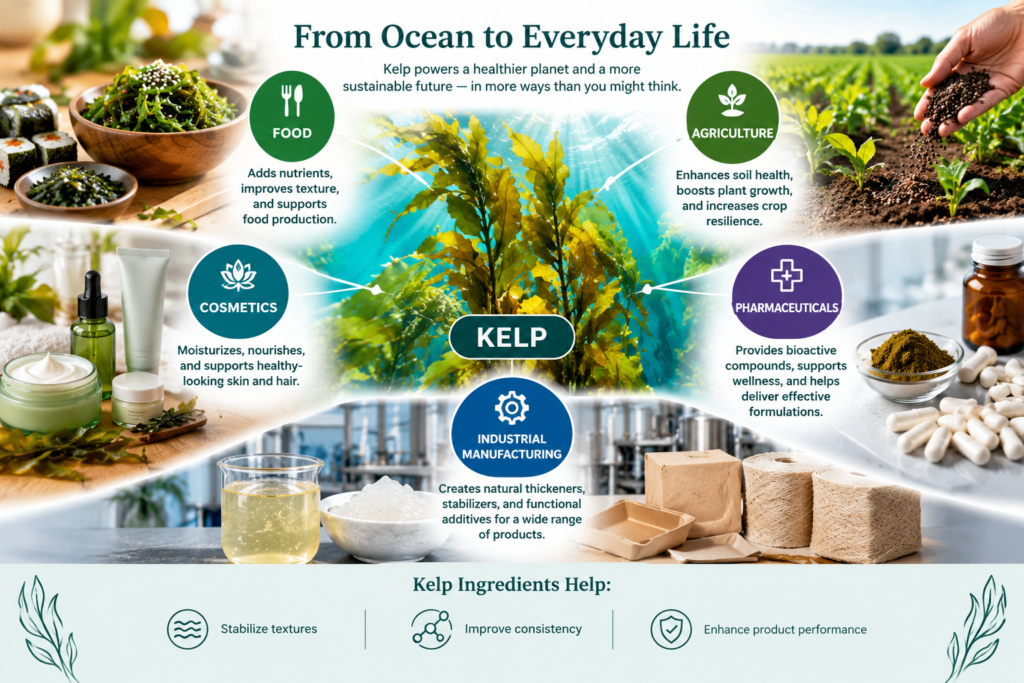
There’s a decent chance that Kelp has quietly participated in your daily routine without you realizing it.
Whether it’s helping create a smoother food product, supporting agricultural practices, or contributing to personal care items, Kelp continues to prove its usefulness in ways that extend far beyond the ocean.
Not bad for an organism that spends its entire life underwater.
One of Earth’s Most Productive Ecosystems
Scientists frequently describe Kelp forests as some of the most productive ecosystems on the planet.
When you examine how they function, it’s easy to understand why.
Sunlight powers rapid growth. That growth supports herbivores. Herbivores provide food for predators. Dead organic matter becomes nourishment for decomposers. Nutrients are recycled continuously through a complex network of interactions.
Energy moves efficiently through the ecosystem.
Resources are reused.
Life supports more life.
The result is an incredibly productive system capable of sustaining an extraordinary range of organisms.
Nature rarely wastes opportunities, and Kelp forests are a perfect example of ecological efficiency at work.
Why Conservation Matters
Protecting Kelp forests is about much more than preserving beautiful diving locations.
It’s about maintaining healthy oceans.
These ecosystems support fisheries, strengthen biodiversity, and help coastal environments remain resilient. Communities around the world depend on the services Kelp forests provide, whether they realize it or not.
Conservation efforts are increasingly focused on restoring damaged habitats, improving water quality, establishing protected marine areas, supporting sustainable fisheries management, and understanding the ecological relationships that keep these forests healthy.
The encouraging news is that Kelp ecosystems often demonstrate remarkable resilience when conditions improve.
Given time, protection, and careful stewardship, many underwater forests have the ability to recover.
In a world where environmental challenges often dominate headlines, that optimism is worth celebrating.
Lessons from a Forest Beneath the Waves
One of the most fascinating things about a Kelp forest is the lesson it teaches about connection.
Nothing exists in isolation.
Sea otters influence sea urchins. Sea urchins influence Kelp. Kelp influences fish populations. Fish populations influence larger predators. The health of the ecosystem depends on countless relationships working together simultaneously.
It’s a powerful reminder that nature operates as a network rather than a collection of separate pieces.
Humans are part of that network too.
The choices we make on land affect rivers, coastlines, and oceans. Actions taken thousands of miles away can eventually influence ecosystems beneath the waves.
That realization isn’t discouraging.
It’s empowering.
If our actions can contribute to environmental problems, they can also contribute to meaningful solutions.
Looking Toward the Future
Researchers around the world continue working to better understand Kelp forests and the challenges they face.
New technologies allow scientists to map underwater habitats with unprecedented detail. Conservation organizations are experimenting with restoration projects designed to help damaged ecosystems recover. Marine biologists are studying the complex interactions that determine whether a forest thrives or struggles.
Many questions remain unanswered.
How will changing ocean conditions influence future growth? Which conservation strategies will provide the greatest benefit? How can coastal communities balance environmental protection and human needs?
These questions ensure that the story of Kelp is still being written.
And honestly, that’s part of what makes it so exciting.
The ocean remains one of the least explored places on Earth. Every year, scientists discover new insights that deepen our understanding of marine ecosystems and their importance.
Final Thoughts on the Kelp Forest
The next time you think about forests, don’t stop at the trees.
Think about the vast underwater world of Kelp swaying quietly beneath the waves. Think about sea otters floating among the fronds, fish weaving through hidden passageways, and entire ecosystems thriving just beyond our usual view.
Kelp forests are beautiful, productive, resilient, and incredibly important. They support marine life, protect coastlines, contribute to ecological balance, and remind us that some of Earth’s greatest wonders exist where few people ever look.
Most of us may never have the opportunity to swim through a Kelp forest.
But simply knowing these magical underwater worlds exist makes our planet feel a little more extraordinary.
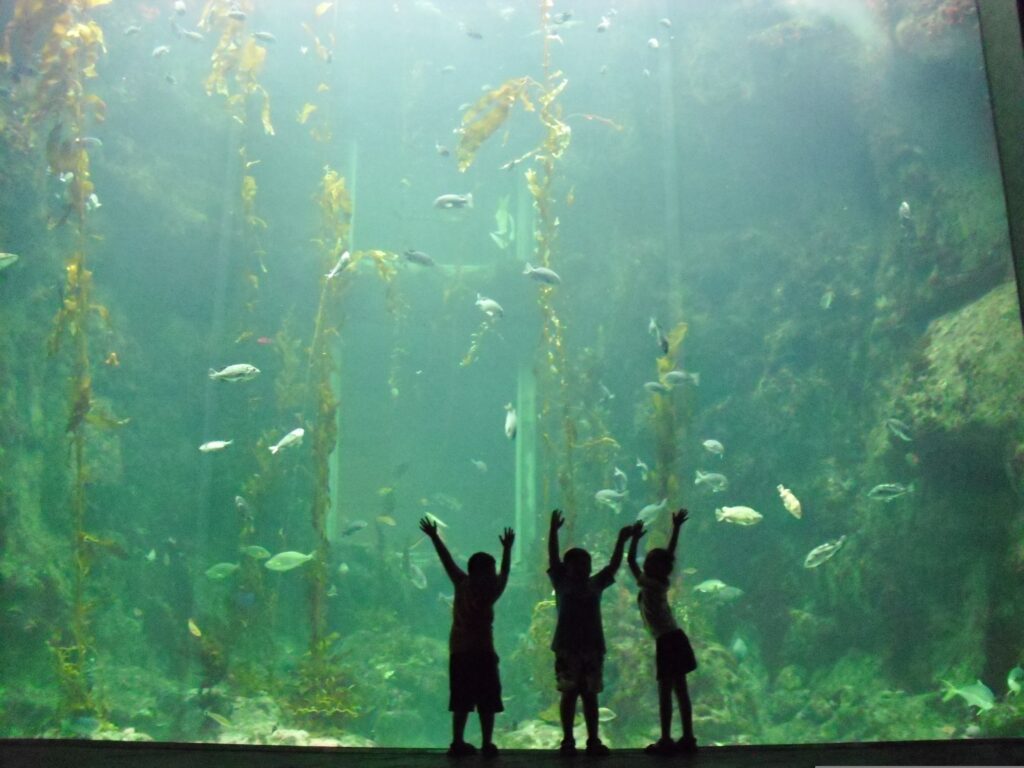
And in an age filled with screens, notifications, deadlines, and endless distractions, it’s comforting to remember that beneath the ocean’s surface, giant forests of Kelp are still dancing with the currents, quietly supporting life and performing their ancient work.
Not bad for a bunch of algae.
Supporting Autumnelf on Ko‑Fi helps fuel new essays, book projects, ocean‑life explorations, theatrical deep dives, and the creative quests that make Phantom Orca Quest a vibrant, multimedia experience.
Get Me a Spark of Magic
